


By Their Own Compass co-host Jeremiah Jenne moonlights as the “Archivist” at The China Books Review, where each month he unearths treasures from the vast annals of writing about China. Sometimes he dusts off the classics everyone claims to have read, and other times he salvages forgotten gems that deserve rescue from obscurity. These literary excavations dovetail perfectly with what we're doing at By Their Own Compass—tracing the footsteps of those who ventured beyond the familiar and recorded what they found.
Whether you're plotting your own journey to China or simply enjoy armchair travel through others' eyes, these reviews offer windows into worlds both vanished and surprisingly familiar. Here are some recent standouts from Jeremiah's literary expeditions:"
Graham Peck: Two Kinds of Time
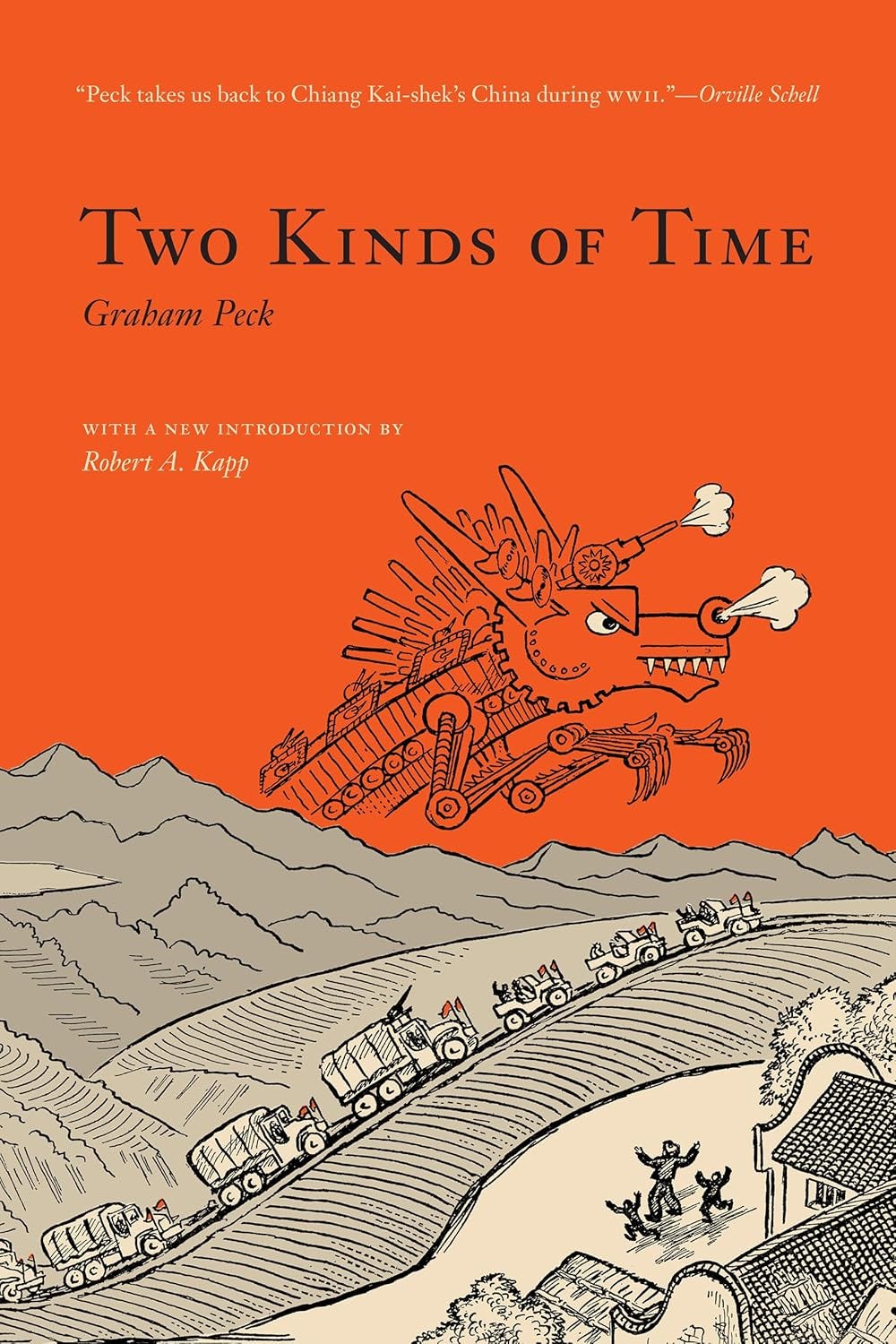
Graham Peck's memoir begins with a striking meditation on perspective:
By one Chinese view of time, the future is behind you, above you, where you cannot see it. The past is before you, below you, where you can examine it. Man's position in time is that of a person sitting beside a river, facing always downstream as he watches the water flow past.
This vivid account chronicles Peck's experiences in China between 1940 and 1945. The son of an industrialist, he initially set out to circle the world with $2,000 of his father's money, supplemented by income as a sketch artist. He got as far as China and stayed, later returning to work with the U.S. Office of War Information during WWII.
As a memoirist, Peck is an amiable companion, just catty enough to tell you how he really feels but not so jaded that he's lost his humanity. His descriptions bring scenes to life with cinematic panache:
The urgent sirens howled out, baying up and down the city's peninsula like a pack of nervous wolves, the last of the little figures on the reddish cliffs across the river vanished into their black cave-mouths, like fleas into the fur of an animal.
Peter Goullart: Forgotten Kingdom
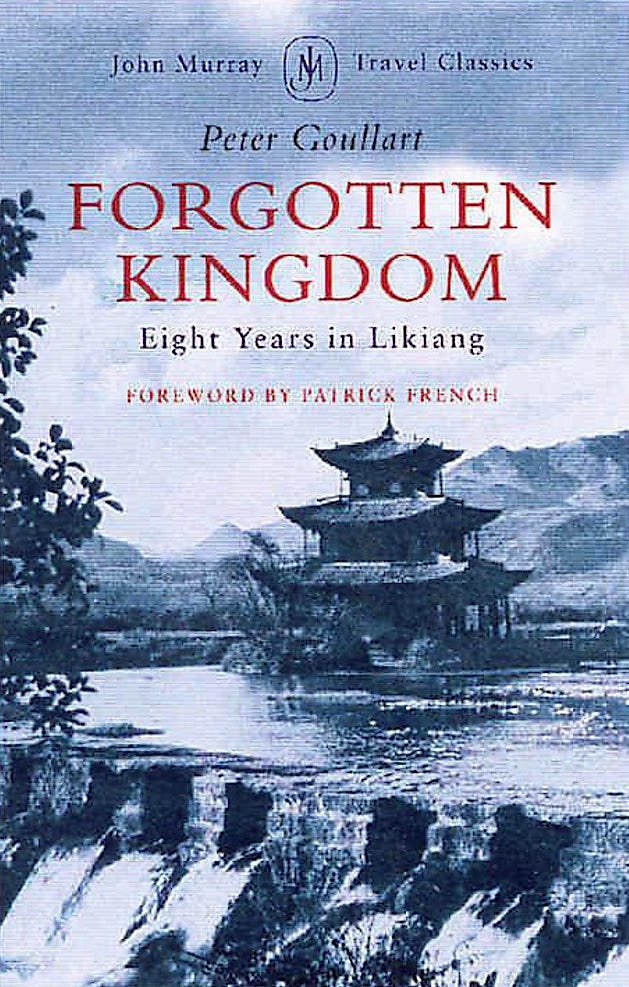
Peter Goullart wasn't the first outsider to discover the charms of Lijiang in China's southwestern Yunnan province, with its towering Jade Dragon Snow Mountain and wild rivers cascading through the valley. It was here, among the Nakhi people, that this Russian exile—born in 1901 but raised in Paris and Shanghai after his family fled the Bolshevik revolution—finally found a home.
In his 1955 memoir, Goullart writes:
In the beautiful valley of Likiang, then still untouched by the complexities and hurry of modern life, Time had a different value. It was a gentle friend and a trusted teacher... the days passed like hours and the weeks like days; a year was like a month, and my ten years spent there went by like one.
Goullart succeeded in his work organizing rural enterprises by building personal relationships, never missing an opportunity to forge a connection. His dark humor helped diffuse difficult situations, as when dealing with a Tibetan patient in denial about his syphilis diagnosis:
'No, no!' he cried. 'It is only a cold.'
'How did you get it?' I asked.
'I caught it when riding a horse,' he replied.
'Well,' I said, 'it was the wrong kind of horse.'
Ellen La Motte: Peking Dust
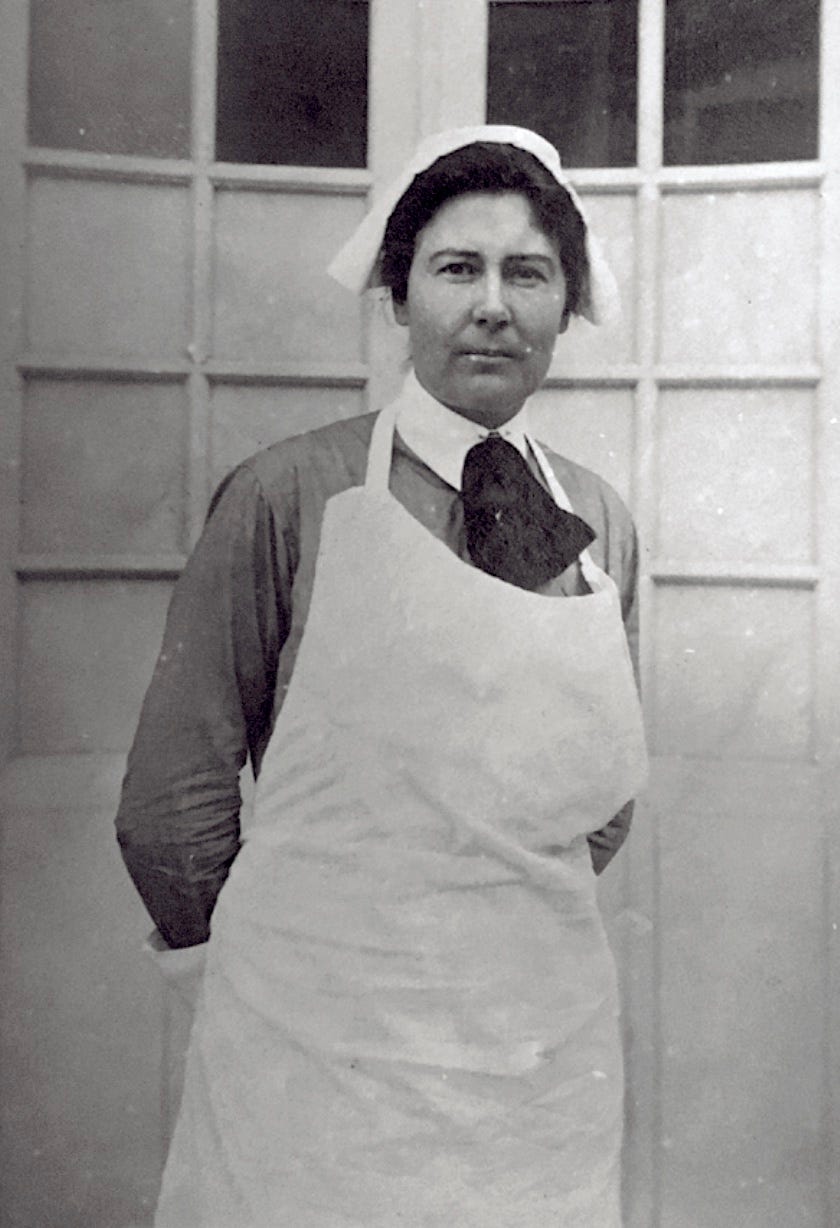
If only all China memoirs could include the kind of caveat emptor with which Ellen La Motte begins her 1919 travelogue:
Two classes of books are written about China by two classes of people. There are books written by people who have spent the night in China, as it were, superficial and amusing, full of the tinkling of temple bells; and there are other books written by people who have spent years in China and who know it well, — ponderous books, full of absolute information, heavy and unreadable. This book falls into neither of these two classes, except perhaps in the irresponsibility of its author.
By the time La Motte arrived in Beijing in 1916, she had already served as one of the first female health officials in Baltimore, marched with suffragettes, and been labeled a subversive agent by both the British and U.S. governments. A peripatetic traveler with a fiendishly keen intellect, she refused to suffer fools or hypocrisy.
Stepping onto the train platform at Beijing station, La Motte was swept away:
If you have ever stayed here long enough to fall under the charm and interest of this splendid barbaric capital, if you have once seen the temples and glorious monuments … all other parts of China seem dull and second rate.
Her sharp commentary on the opium trade and European imperialism remains striking today:
Oh, disabuse your mind of the fact that China is a sovereign state! She is bound hand and foot, helpless, mortgaged up to the hilt. Every foreigner in China knows it, and the Chinese know it themselves only too well...
Marco Polo: Travel Writer? Fraud? Sexpat?
The classics are called classics for a reason. Most historians fall between skeptical scoffers and true believers regarding whether Marco Polo made it to China. Whether he completed the journey or not, his account of Asian civilizations remains one of the most influential books ever published in a European language.
(Here at By Their Own Compass, we tend to lean toward believing he made the journey and then just got carried away telling the story of his trip. Think of Marco as a 13th-century influencer who overly curates his social media feeds.)
Despite its title, The Travels of Marco Polo is not a travelogue but more of a medieval guidebook to the Mongolian realms—one that's especially interested in sex and business opportunities. He sets the template for expat authors eager to regale audiences with their insights, from not-so-casual racism to wildly exaggerating his insider connections with Kublai Khan.
With all his lurid details about the sex trade and local customs, how did Marco Polo miss the Great Wall, Chinese script, footbinding, and chopsticks? These famous omissions have fueled scholarly suspicion, yet the myth of Marco Polo has endured for seven centuries.
We're just getting started on our literary expedition, and we won't be staying in China. Future posts will unearth forgotten travelogues from across continents and centuries. Which historical traveler would you like to hear about next? Please drop us a comment with your suggestions. If any of these books catch your fancy (links above), your purchase helps fuel our podcast— think of it as buying your podcast hosts a cup of tea for the road.
What a treasure trove of travel writing! For anyone interested in a more modern take on navigating life in China as a foreigner, I’d love to recommend my own memoir, Beijing Bound: A Foreigner Discovers China. It’s a personal look at the joys, challenges, and everyday surprises of living, teaching, and learning Mandarin in Beijing. If you're curious about what it’s like to experience China not as a tourist, but as a resident trying to find their footing, it might be a good companion read to the classics listed here. Thanks for such a thoughtful roundup!