


Good morning, film location pilgrims, aspiring made men, and anyone who's ever wondered whether visiting places that celebrate terrible people means you're an intellectually curious traveller who lives on the edge or simply a well-educated ghoul.
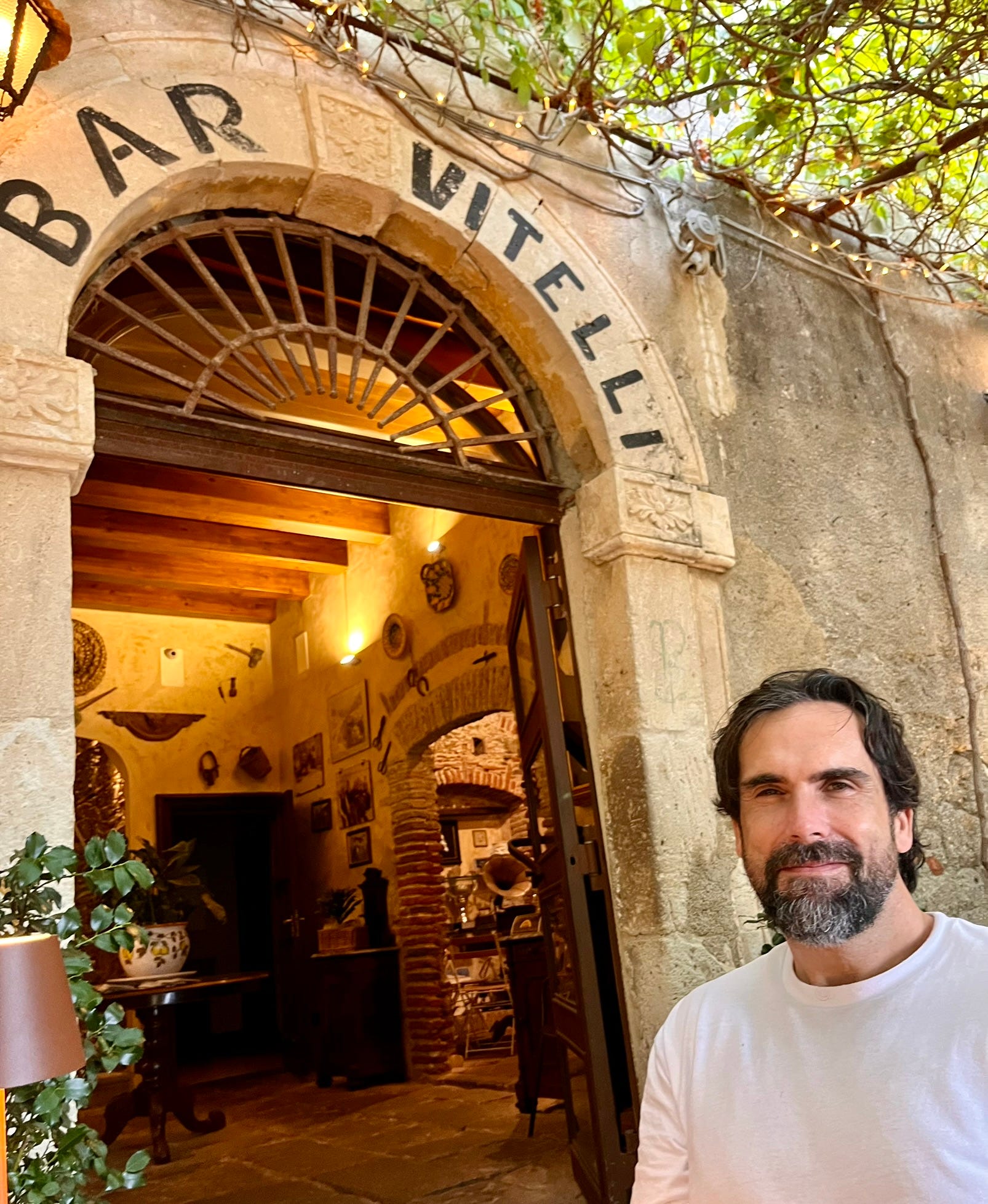
Your correspondent has just returned from Sicily. Like most Gen-X males raised by cable telly and a Blockbuster and/or Our Price membership, he is an enormous fan of gangster pictures, especially The Godfather. There's something undeniably thrilling about sitting at the Bar Vitelli in Savoca, Sicily, where Michael Corleone met the father of his future bride, Apollonia, or the church where the couple wed surrounded by the entire village.*
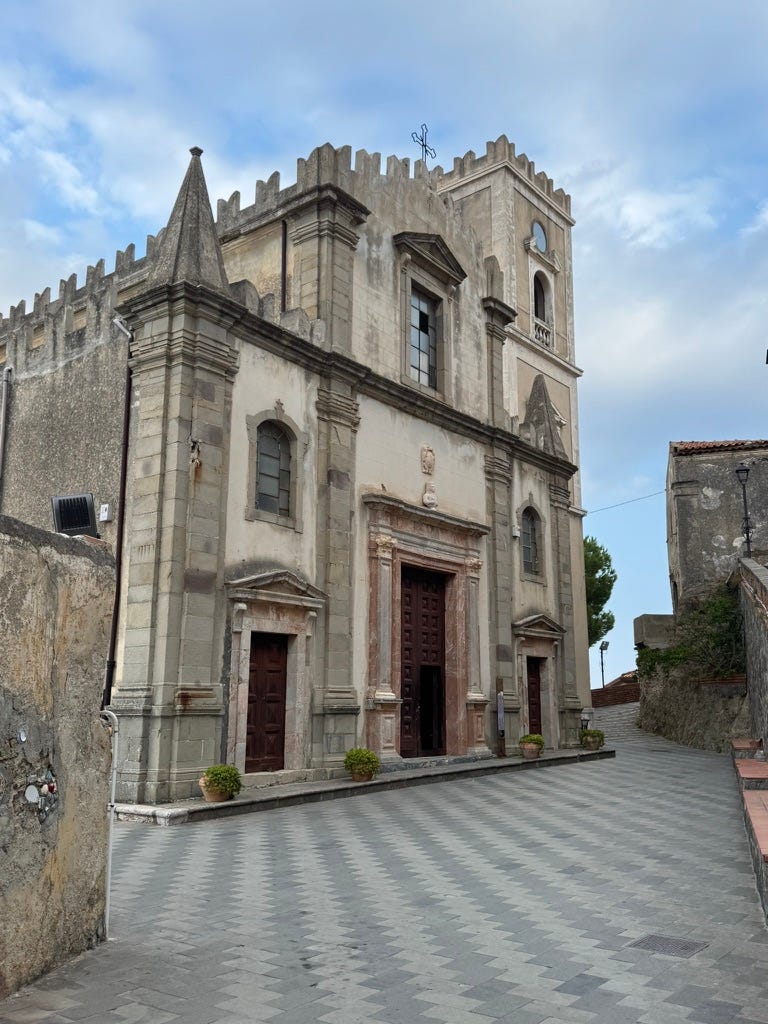
Why didn't we just visit Corleone? The real village that was the ancestral home of the famous fictional crime family? It turns out that Corleone, located about 60 kilometres south of Palermo, didn't fit director Francis Ford Coppola's vision of Sicily. Coppola felt that the 1970s-era streets lacked the timeless, rural atmosphere required for a period piece set in the years immediately after World War II. The hilltop villages of Savoca and Forza d'Agrò in Eastern Sicily offered stunning landscapes and iconic architecture. It also helped that the cast and crew could stay in the nearby resort town of Taormina, with its hotels and expansive views of the Mediterranean.

In fact, that gorgeous coastline presented something of a problem when shooting. Since the real Corleone is located in Sicily's mountainous interior, Coppola had to frame several famous shots in Savoca and Forza d'Agrò carefully to avoid the sweeping ocean vistas. It’s hard to convince the audience of rural deprivation when there are multiple yachts anchored in the background.
By participating in this kind of tour, your correspondent couldn't help but wonder if he was fetishizing something Sicilians might not be so eager to acknowledge or, even worse, succumbing to the cliché of every package tourist who has ever seen a movie. Fortunately, for the latter, the hosts of By Their Own Compass generally benefit from a distinct lack of shame. The former posed a trickier question: At what point does our fascination with thorny historical questions tip over the touchline into dark tourism?
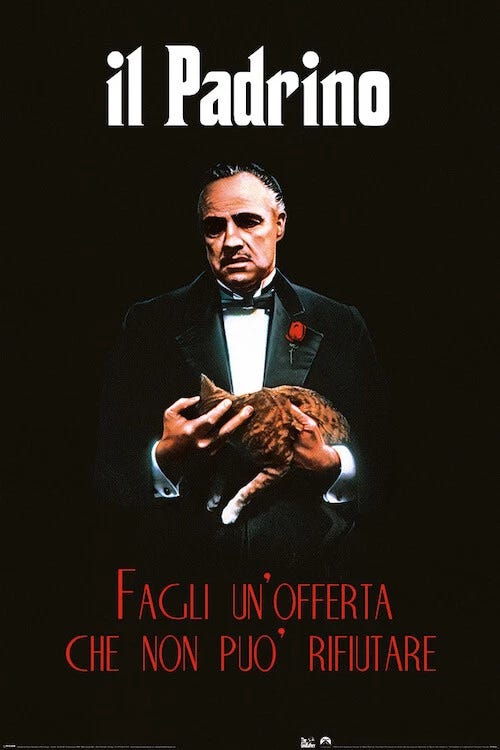
It helps our conscience that, in terms of accuracy, The Godfather is to the story of the Sicilian Mafia what Godzilla is to a documentary about iguana breeding. The scope of its ambitions makes irrelevant any creative liberties taken by the auteur. The Godfather movies are more about the American dream, the perversion of capitalism, and an operatic tragedy of destroying that which is loved the most. Godfather I is the best Hollywood film ever made, except, perhaps, for The Godfather, Part II.**
For Sicilians, the mafia is not an iconic collection of well-turned-out gentlemen who intersperse moments of brutal violence with highly quotable conversations about family, honour, and the importance of cannoli preservation. The rise of La Cosa Nostra is closely tied to the history of the island in the 19th and 20th centuries. During periods when the power of the legitimate government was fuzzy at best, the Mafia was one of the few organizations with the power and reach to provide services and protection for the people. Inevitably, as their power grew and the potential for riches overwhelmed the group’s more altruistic instincts, the mafia evolved to become both the arsonist and the fire brigade. What Hollywood figures like Scorsese, Coppola, and David Chase considered a nearly endless wellspring of plot lines and colourful characters, many Sicilians knew instead as a parasitic entity willing to assassinate judges, magistrates, and anyone else who threatened the outfit’s myriad and diversifying business interests.
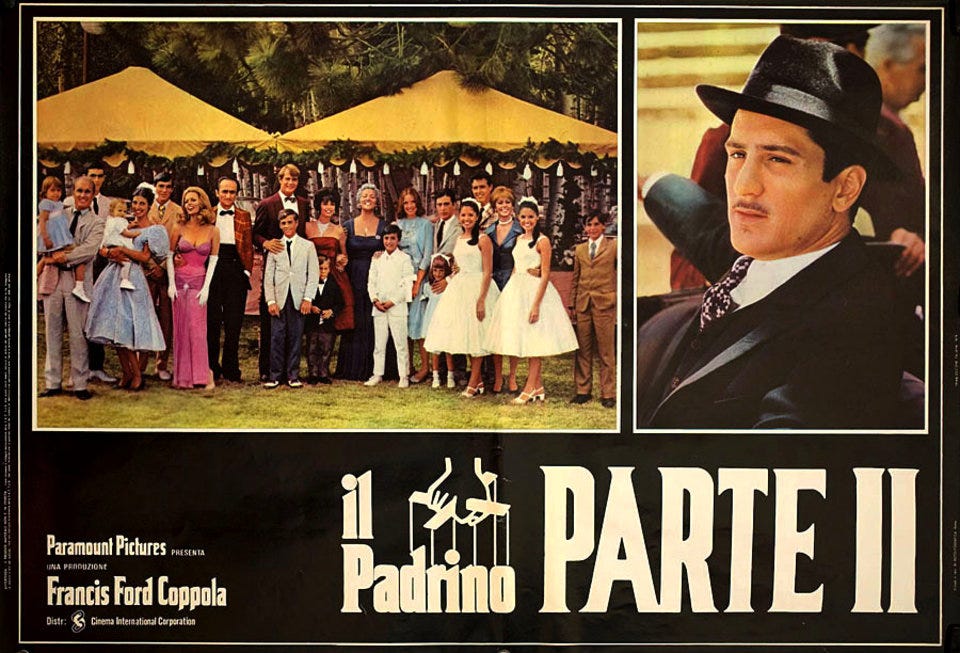
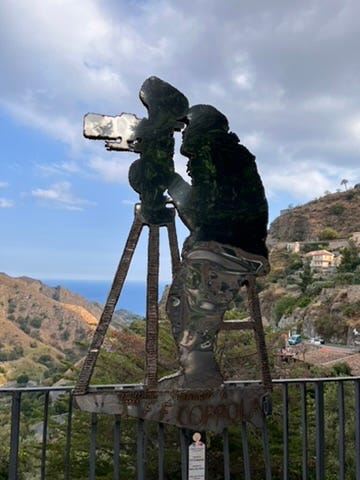
In Hollywood, Sicily became a palimpsest, a canvas on which second-generation Italian-American directors painted over the island's reality with a nostalgia for a homeland they knew only through family photos, food, and stories. Coppola was rather notoriously clueless about mob culture. (Although legend has it that a few of Joe Colombo's boys were eager to help educate Francis on the finer points of their fraternal organisation's history and values.) Ask a Sicilian, and they'll tell you Vito Corleone should not be called “Don Corleone,” but “Don Vito.” And this was only the first in a rather long list of gentle correctives your correspondent received from Rosario, his excellent, informed, and incredibly patient Sicilian guide on “Il Tour del Padrino.”
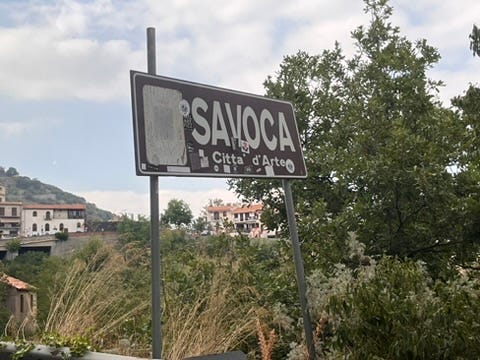
Our guide's take on Godfather tourism was, perhaps unsurprisingly, a positive one. But his rationale echoed what we heard from others on the island, including a few longtime friends your correspondent met up with during our trip. One was from Sicily, the other runs a restaurant in Catania. Our admittedly unscientific survey suggested most residents of Sicily were not particularly bothered. They understand that the film is an American invention and is not really about them or the Mafia, a word that is not heard once in The Godfather. It's also possible that after more than fifty years since the film's release and decades of tourists spending money on "Godfather Pasta," coffee cups with pistol-grip handles, and T-shirts featuring Marlon Brando, criticizing the questionable taste of the tourists, including your correspondent, would be a bit pointless.
And then there is the nature of organized crime in Sicily today.
Many of the people we spoke with told us that the Sicilian Mafia has moved upstairs in the 21st century. No longer involved in street-level thuggery, Mafia leaders now focus on real estate, politics, and diverting as much EU development aid as possible to projects under their control. Turf wars, shakedowns, drugs, and prostitution are increasingly the domain of the Calabrian 'Ndrangheta (now considered Europe's most powerful crime syndicate) or the Neapolitan Camorra. The Sicilian Mafia has gone thoroughly corporate, its stranglehold over the island's economic development stronger than ever, but in a less visible way.
We did not encounter, at least as far as we know, any Dons, molls, made men, capos or soldiers. Which is more than we can say about the first time we were looking for proper Italian food in Dallas, Texas, and were directed to Campisi's Egyptian Room.***
In fact, the only parasitic operation we encountered in Sicily was the positively vicious swarm of late-summer mosquitoes that patrolled the garden at our Airbnb. We had a great view overlooking the ocean, and, in true Sicilian fashion, we sacrificed familial blood to enjoy it.
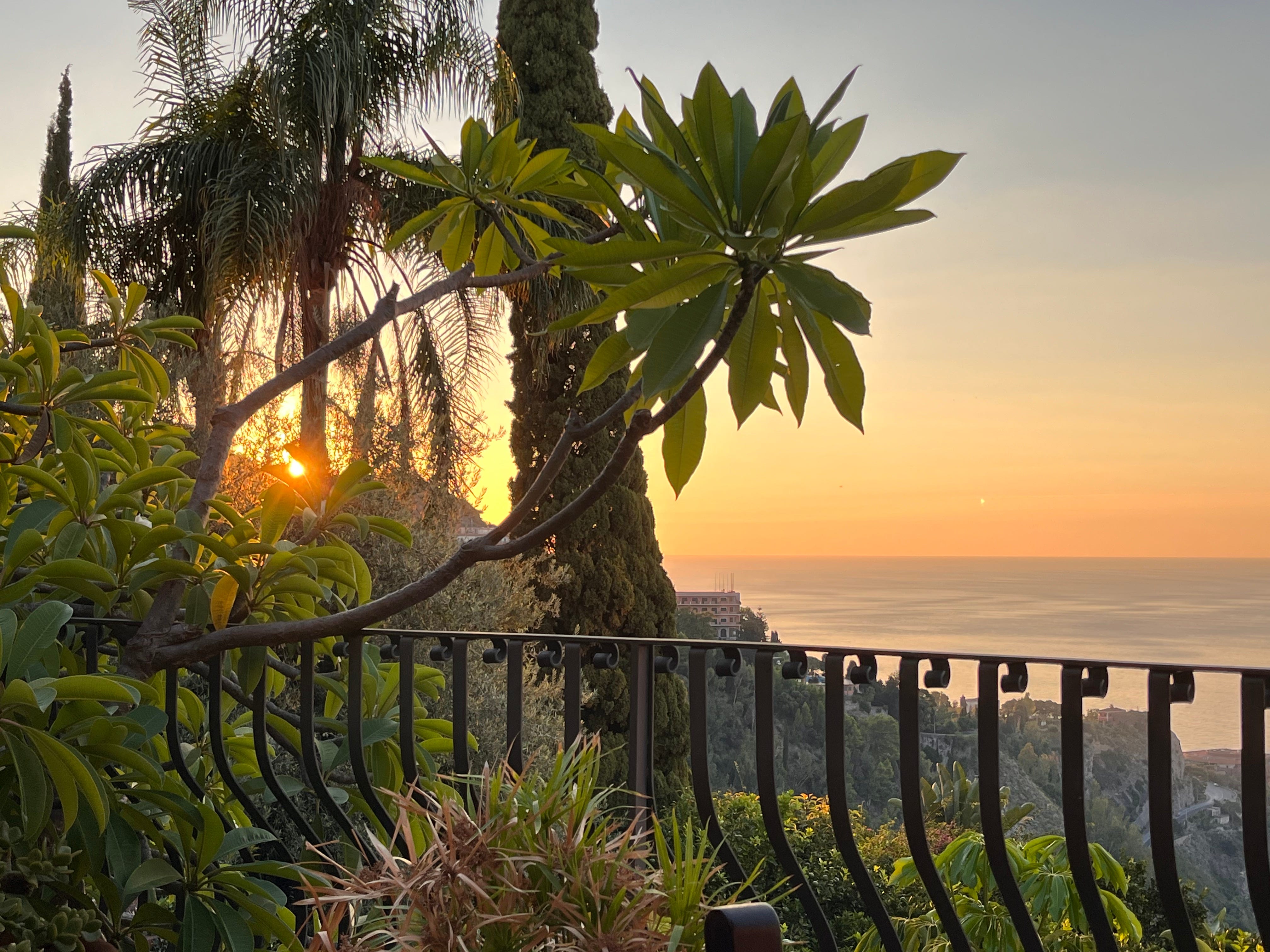
Fortunately, your correspondent travels with industrial-strength insect repellent purchased from an establishment in Middle America frequented by individuals who consider firearms, bright red hats, and camouflage-patterned overalls as fashion accessories. No health, safety, or environmental niceties here. This stuff is the insect equivalent of napalm, incinerating the little bloodsuckers to toxic char before they can even start the landing cycle. The ingredients in this magic salve have undoubtedly taken years off our lives, but it does make sitting in the garden at sunset, overlooking the Sicilian coastline with a glass of Nero d'Avola, considerably more pleasant.
Until next time, we remain your correspondents in the grand tradition of going places and then thinking rather too much about what it all means.
*Whilst trying to forget that Simonetta Stefanelli, the actress who played Apollonia, was just 16 when she appeared in The Godfather, including filming a nude scene with her on-screen husband, played by 31-year-old Al Pacino.
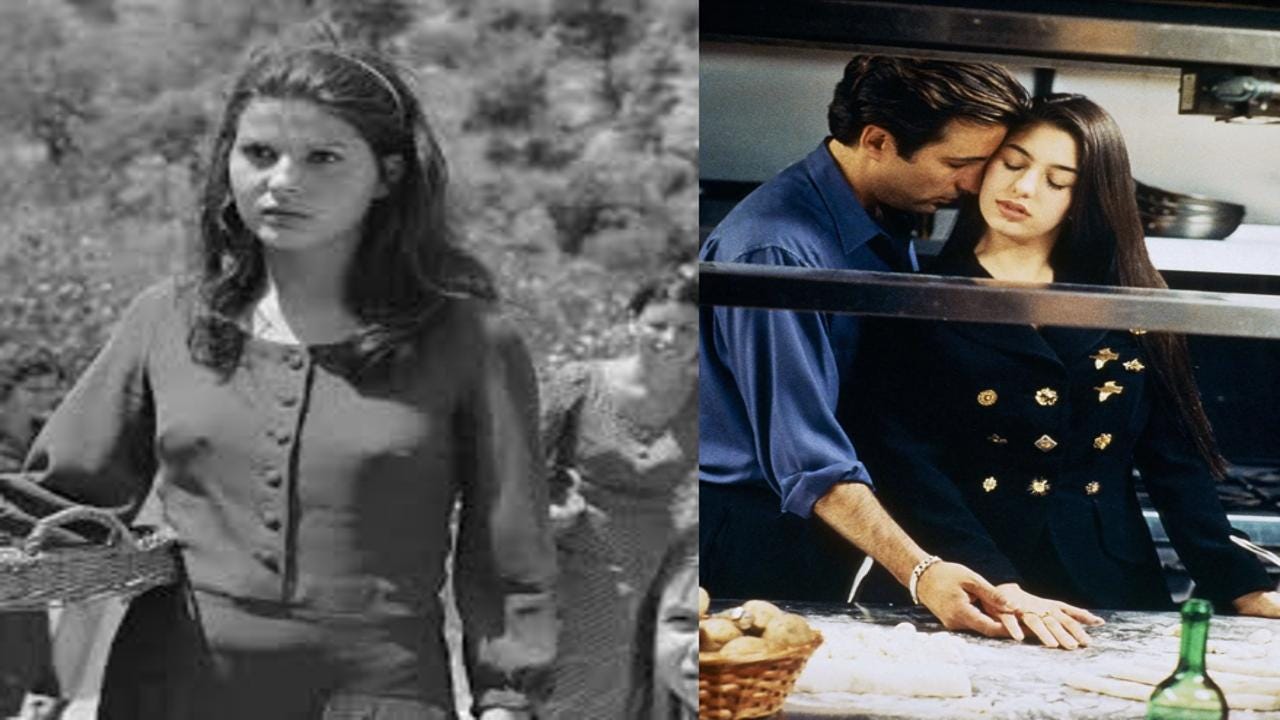
**Then there is The Godfather III. We have faith there exists an alternate universe in which Winona Ryder's 1980s lifestyle choices (necessitating the last-minute decision to have directorial daughter Sofia Coppola play one of the leads) and Robert Duvall's ego (requiring the even more baffling decision to cast professional tanner - yes, you read that right - George Hamilton in a major role) were somehow not a thing. Sofia Coppola is an amazing filmmaker, but her adolescent acting skills were better suited to narrating documentaries about, say, iguana breeding. The less we write about this, the lower our blood pressure and bar tab. Moving on.
***True story.