


Good morning from the Valley of the Kings, where foreign archaeologists built their own palaces to escape the hot sun while cracking open the previous palaces of Egyptian pharaohs like peanuts at the pub.
Your correspondent has just arrived in Egypt, awake since an hour that should be considered illegal, nevertheless spritely marching through tombs, and receiving an education on ancient royal dysfunction and the latest techniques in tourism management.
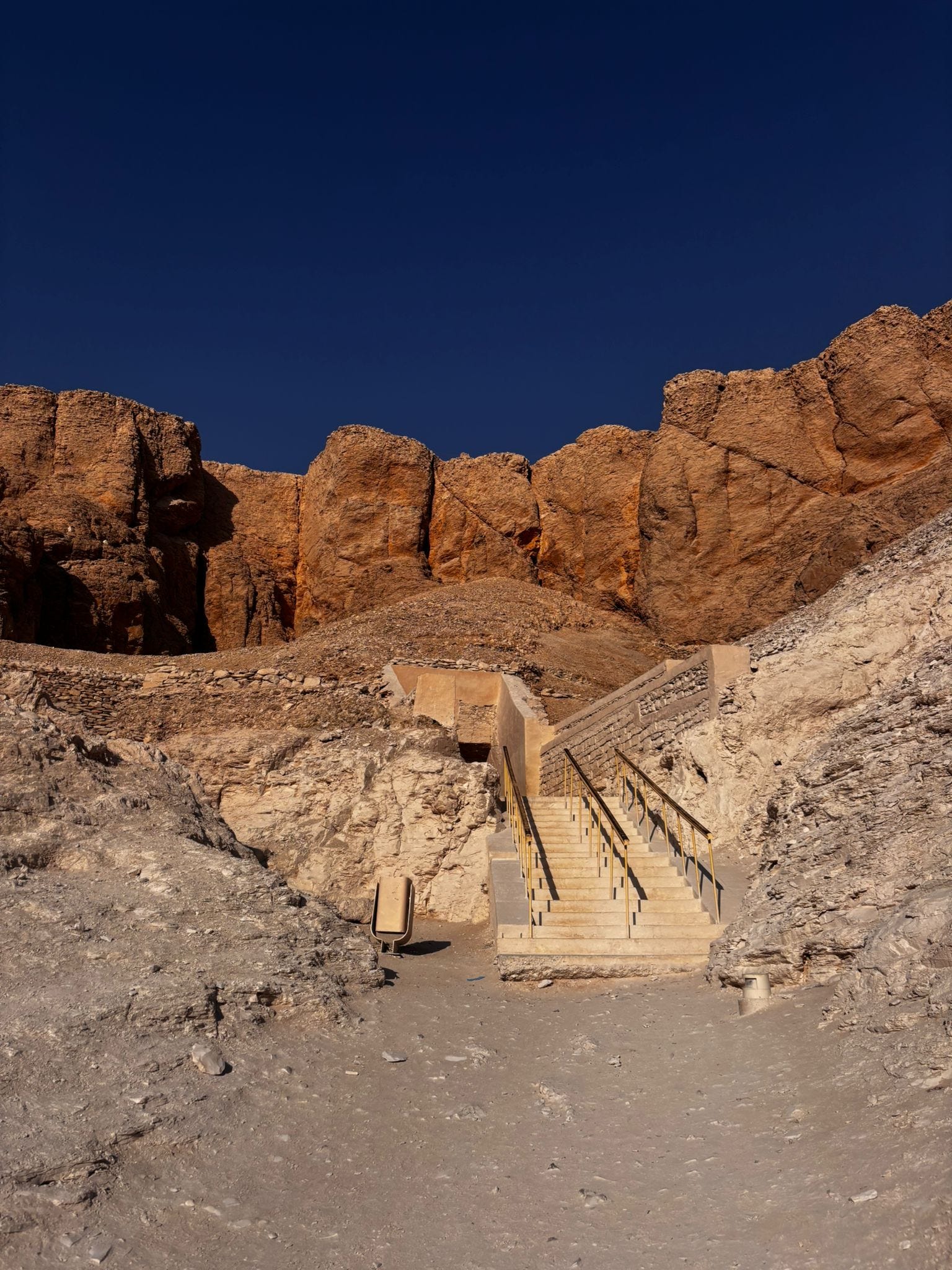
Despite the heat, it’s an auspicious time to be tomb-hopping. On November 22, 1922 (103 years ago this week, should you be keeping score), British archaeologist Howard Carter peered through a small hole he’d made in a sealed doorway, held up a candle, and was asked by his patron Lord Carnarvon if Carter could see anything inside.
“Yes,” Carter replied with what might be archaeology’s greatest understatement. “Wonderful things.”
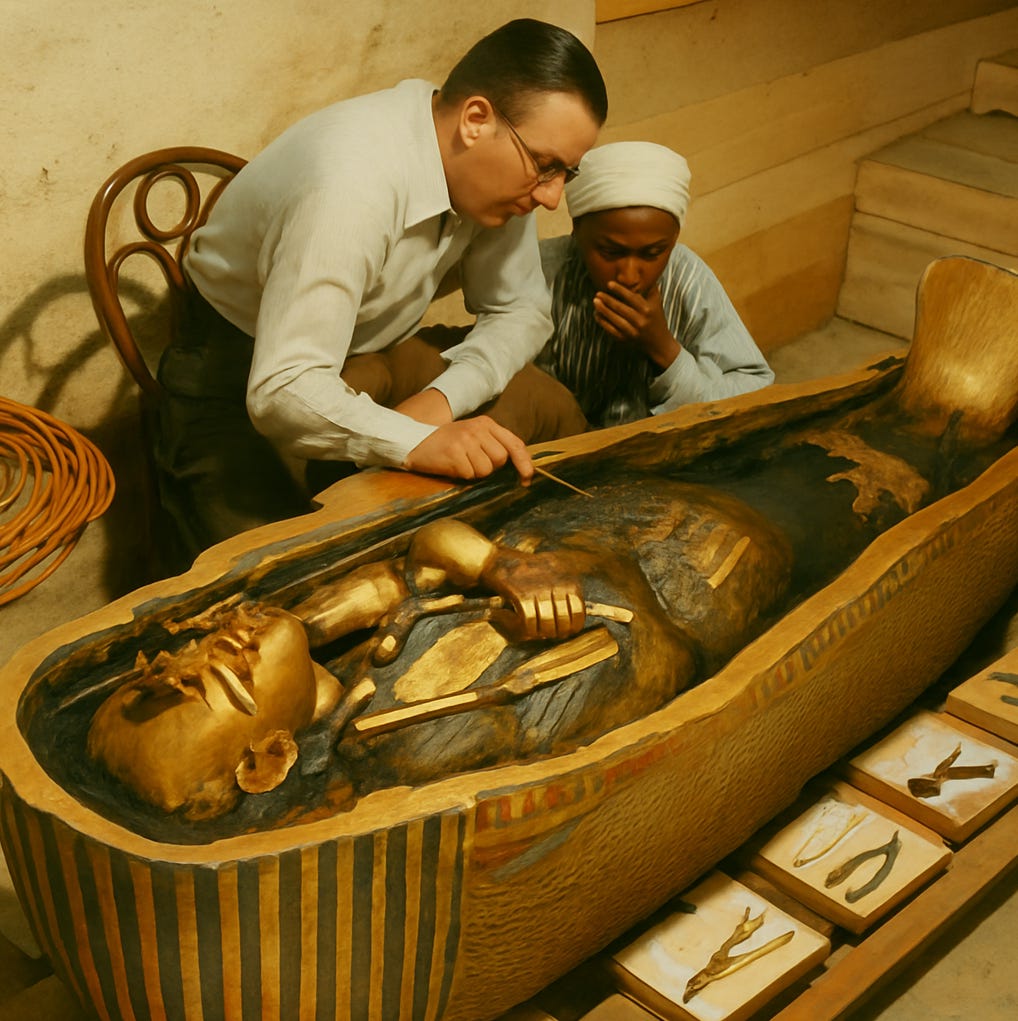
Carter’s “wonder” turned out to be the virtually intact tomb of Tutankhamun, a boy king who died around 1323 BCE at approximately 18 years old. The discovery made Carter an instant celebrity and launched a global mania for ancient Egypt that still hadn’t completely ebbed when your correspondents were at school dances learning to “Walk like an Egyptian” many, many years later.*
And despite American comedian Steve Martin’s interpretation of King Tut, it is highly doubtful the young God-King did much dancing. He was, as your correspondent learned this week, rather magnificently broken. The unlucky young pharaoh was born with a club foot, a misshapen body, and a family tree that looked more like a telephone pole.
We hadn’t realised quite how inbred he was. His parents were siblings. His grandparents were siblings. One imagines ancient Egyptian courtiers awkwardly avoiding eye contact whilst their pharaoh limps past and everyone silently agreeing never to mention that perhaps—just perhaps—marrying one’s sister for three consecutive generations may have been a tactical error. It seems the Ptolemaic Dynasty’s enthusiasm for keeping bloodlines pure made Habsburg marriages seem like a picture of genetic diversity.
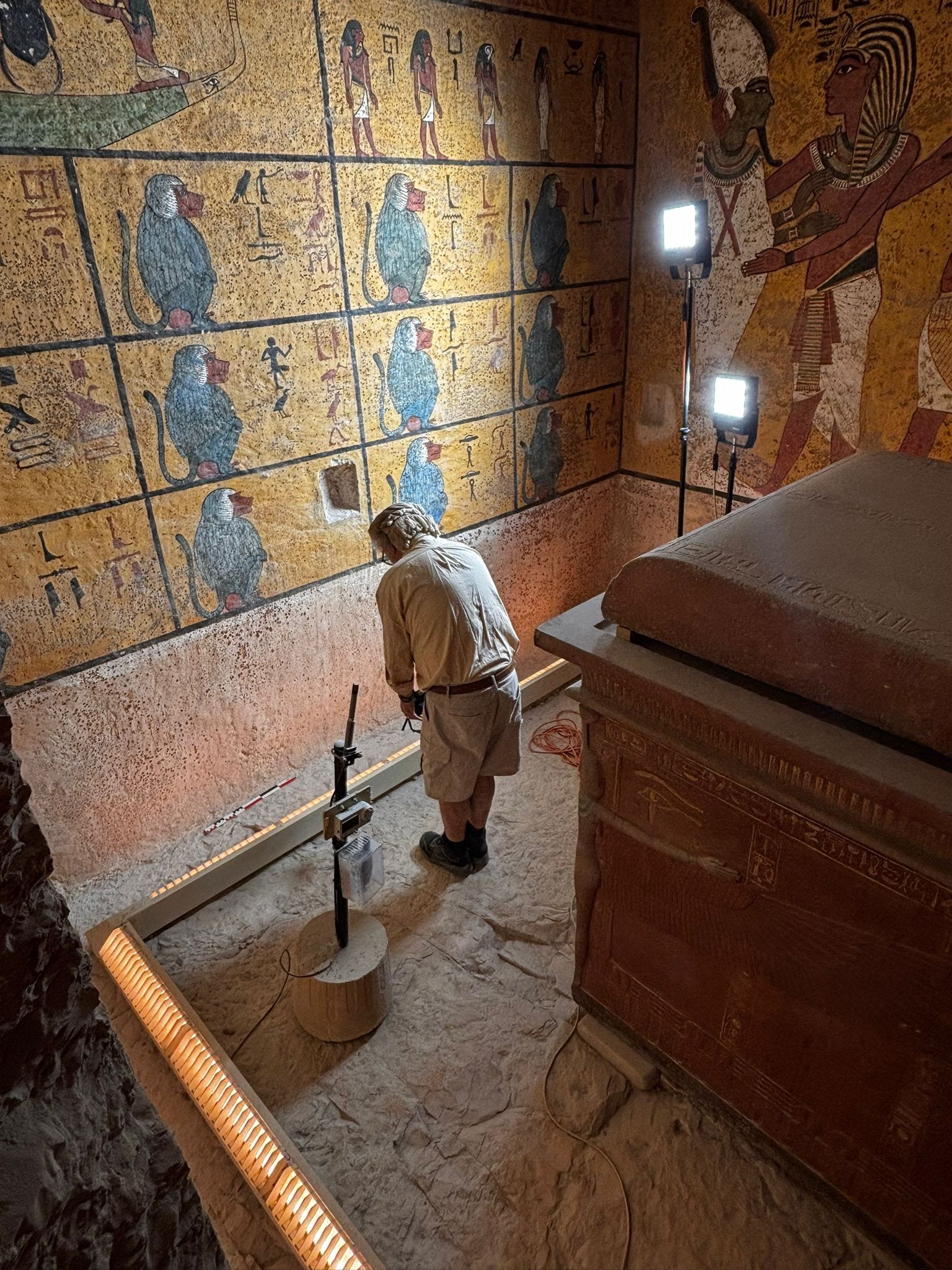
The tomb itself remains spectacular, and is currently being scanned by a team of French Egyptologists to create what was described as a “2D rendering,” although that sounded suspiciously like “Snapping a quick photo with their iPhones.” We suspect they meant 3D imaging, but either way, future generations will be able to experience Tutankhamun’s final resting place without having to go to Egypt and run a gauntlet of touts trying to sell you alabaster. Whether this is a good thing or not depends on your tolerance for the occasional inconveniences of travel. A bit like how experiencing the Louvre through a website might be an acceptable alternative for someone with an enthusiasm for art, but only if they also had an aversion to overly aggressive mimes mugging for loose change.
We are firmly on the side of “Go and see it for yourself,” but our guide for this excursion did her best to convince us otherwise. Your correspondent runs a boutique travel business catering to high-end clients. If any of our guides ever delivered an entire historical briefing from a comfortable, shaded café, then dispatched the paying customer to experience the actual site alone in the midday heat, there might well have been a murder in the office.
To be fair, our guide this day redeemed herself immediately afterwards by magically producing falafel pittas with chips inside. This kind of carb-on-carb action makes perfect sense when you’ve been awake since the small hours UK time and are now pondering the mysteries of genetically-compromised royalty whilst standing in the hot desert sun.**
The Valley of the Kings has become something of an archaeological theme park, complete with gift shops, photo opportunities, and the descendants of the thirteen-year-old water boy who actually discovered Tutankhamun’s tomb still running an alabaster workshop nearby. Hussein Abdel-Rassoul’s great-grandchildren have, quite sensibly, monetised their ancestor’s lucky moment into a multi-generational tourist operation.
At said workshop, we received a crash course in spotting fake alabaster when a shopkeeper casually decapitated a fake alabaster cat to demonstrate the difference in materials. Smashing a cat’s head off to make a sales point seems like it should be some kind of sacrilege in Egypt, though admittedly the ancient Egyptians did mummify approximately 70 million cats, so perhaps the culture has always had a complicated relationship with felines.
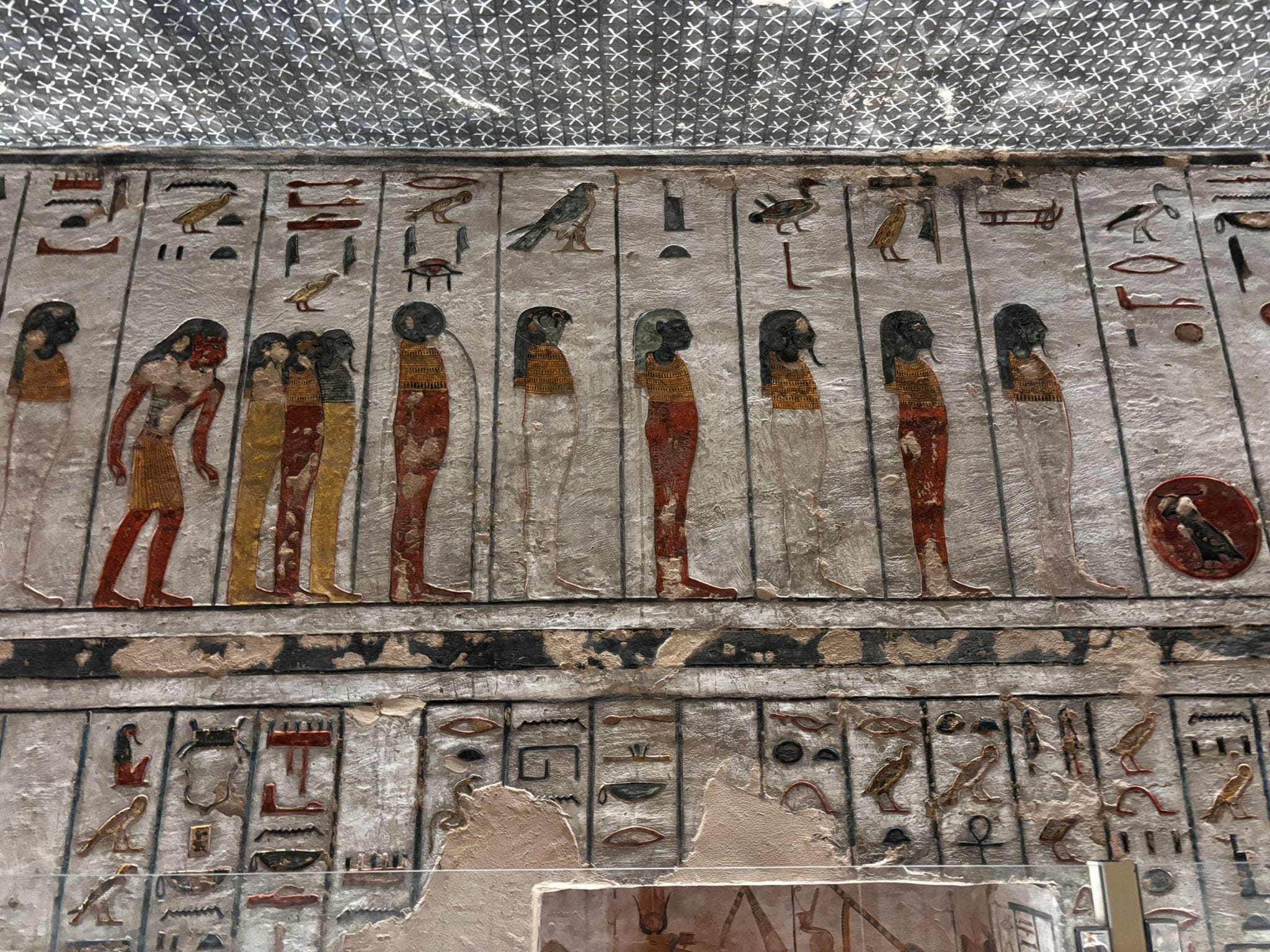
Carter spent nearly a decade excavating Tutankhamun’s tomb, cataloguing over 5,000 objects whilst fending off tourists, journalists, and Egyptian officials who were beginning to question why all these treasures were being shipped to London and Paris instead of staying in, say, Egypt. The subsequent decades saw a gradual repatriation of attitudes, if not always artefacts, about who exactly owns the past.
That’s all from the Valley of the Kings, where we remain grateful for falafel, the occasional shaded café, and guides who believe in self-redemption. We return to London shortly, presumably with stories about the flight home and several kilograms of alabaster objects we definitely didn’t need but somehow acquired anyway.
Next time: Something that doesn’t involve deserts, dead pharaohs, or decapitated cats. Probably.
*Although sadly, we never mastered the generation-defining Susanna Hoff side-eye.
**Unlike the editors of the Daily Express, who ponder the mysteries of genetically-compromised royalty in the comfortable cool of their offices whilst starting their fourth gin-and-tonic at 2:35 on a Thursday afternoon.