


Imagine you are hanging out in the remote village of Ujiji, in what is now Tanzania. It’s 1871, and you are perhaps the most famous European explorer and activist living on the African continent. Despite your reputation, it’s been months, and nobody knows where you are. Your dispatches and letters keep getting waylaid by coastal slave traders, rather miffed at your constant missives against their business.
Suddenly, down the path, it’s absolute bedlam. An enormous caravan with muskets firing, drums, and…is that… yes, it is a United States flag and bunting… enters the village, more appropriate for a Fourth of July parade in an American town than a Friday morning in a Swahili settlement on the shores of Lake Tanganyika. “This must be a luxurious traveller,” you think, “and not one at wit’s end like me.”
A man steps forward, grandly removes his helmet, and utters what would become the most famous greeting in exploration history: “Dr. Livingstone, I presume?”
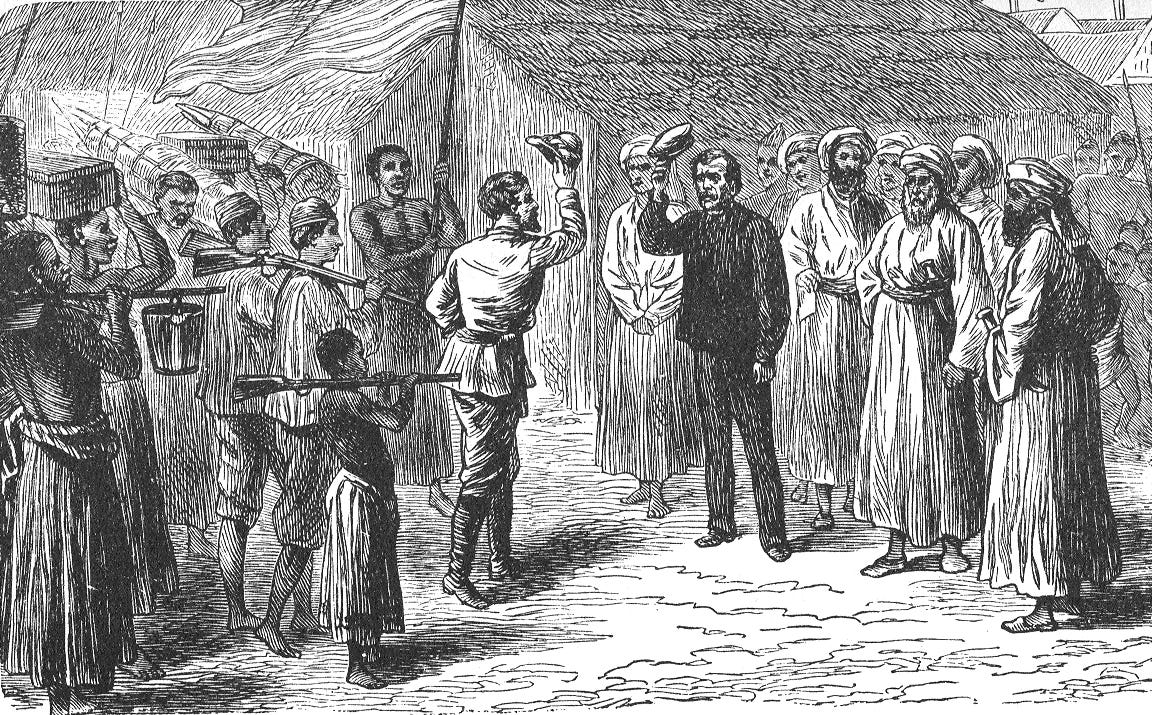
It was all a brilliantly absurd piece of performance art by the American journalist Henry Morton Stanley. Whether he actually said the famous line or not has been the subject of much debate. Stanley said he said it; Livingstone couldn’t be bothered to remember, and the story took on a life of its own. Some historical moments are so delicious that they become impervious to pedantry.
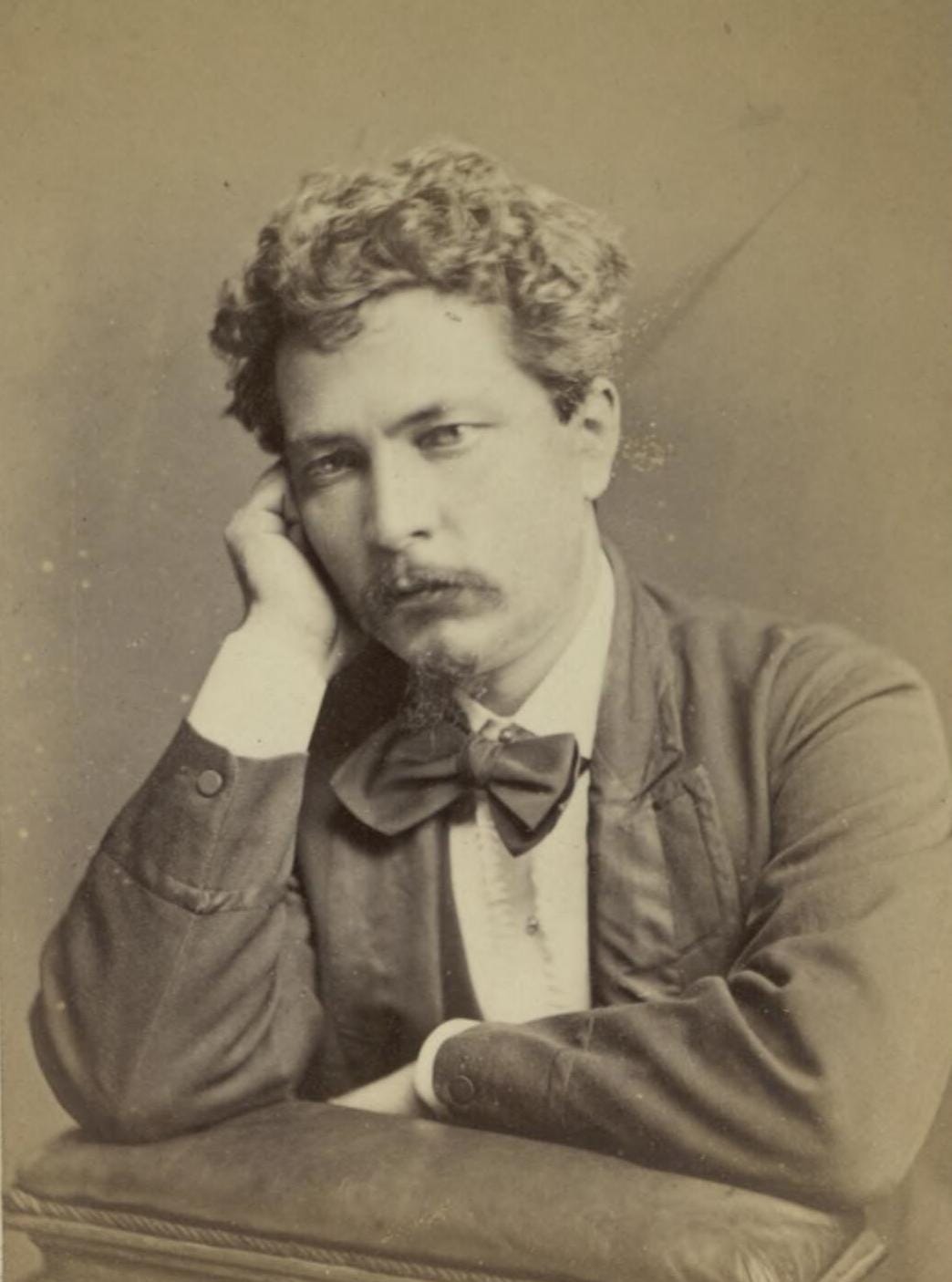
A better question is the extent to which Livingstone had actually been “lost.” After all, he knew exactly where he was, even if the rest of the world hadn’t the foggiest notion. But headlines like “The Great Search for Livingstone, Who Is Lost” sold more newspapers than “We’re Just Checking In on Livingstone to See What He’s Been Up To,” and Stanley knew a thing or two about selling newspapers. The man was a born huckster, never missing a trick from his earliest years, reinventing a young, impoverished Welsh orphan named John Rowland into the dashing American journalist/explorer/crusader Henry Stanley. Stanley understood that sensationalism sold papers then, as it does now; one doesn’t deploy a caravan of 200 men under an American flag unless one intends to make rather a lot of noise about it afterwards.
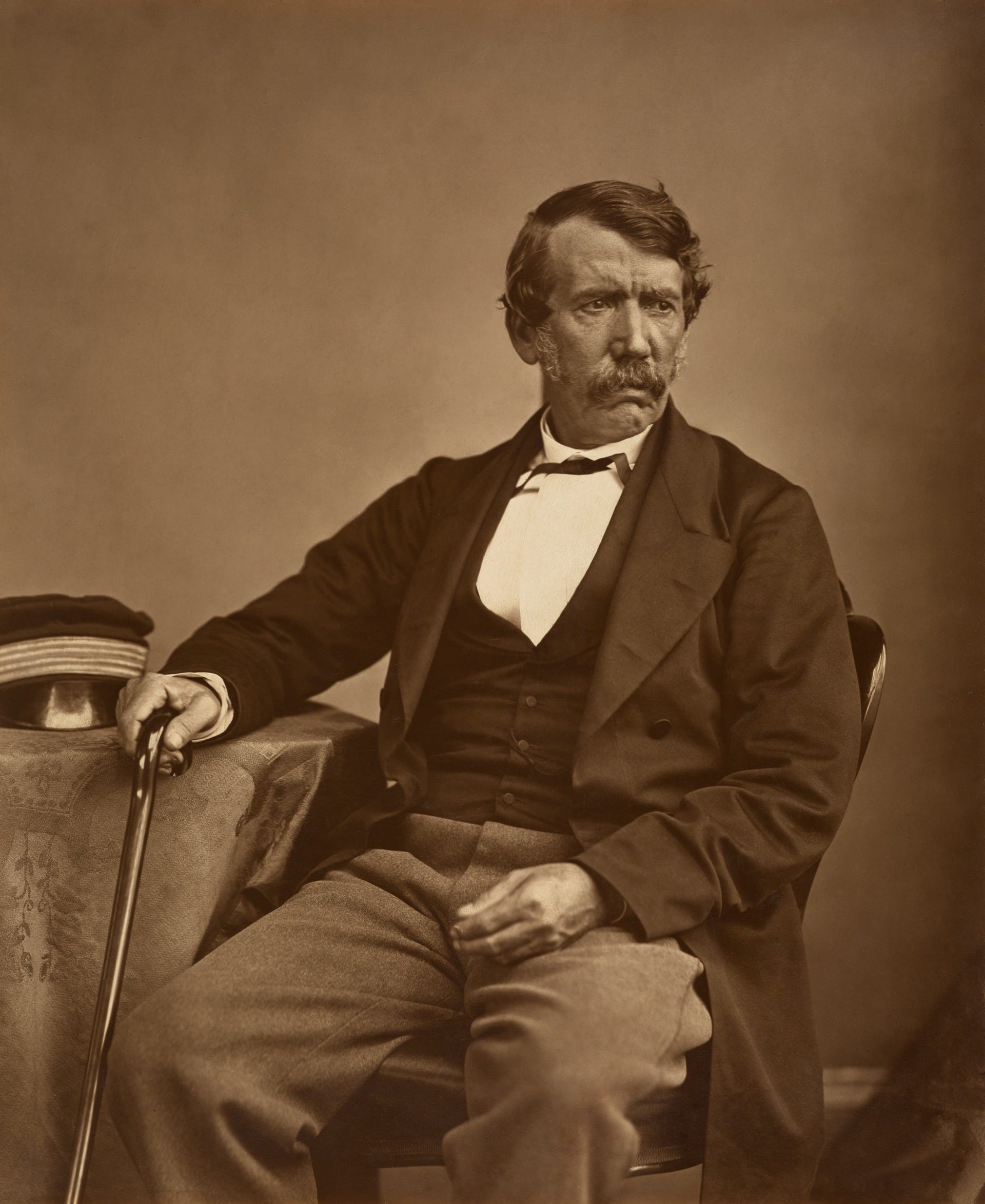
And whilst David Livingstone wasn’t lost, the 58-year-old missionary and physician wasn’t exactly living his best life when he met Stanley. His funds were depleted, his teeth were mostly gone, and he suffered from a staggering array of ailments, including dysentery and anaemia. Livingstone had also recently witnessed a horrifying massacre in which over 400 Africans were brutally slaughtered at Nyangwe, a market town in what is today the Democratic Republic of the Congo.
In a rare moment of his not being a bloody awful person, Stanley stayed in Ujiji for nearly five months, tending to Livingstone and helping the older man regain his health and spirit. Together they explored Lake Tanganyika, one of the world’s largest lakes, by dugout canoe. Yes, it was all a publicity stunt drummed up in a smoke-filled newspaper office back in New York, but the result seems to have been a genuine friendship. When they finally parted ways in March 1872, both wept. “You have done what few men could do,” Livingstone told him, “and I am grateful.” It would be Stanley’s last act of basic human decency for quite some time.
In the end, Livingstone chose to remain “lost.” He stayed in Africa until his death 18 months later, in what is today Zambia. His heart was buried in the continent he loved, whilst his body was shipped back to London for a hero’s burial at Westminster Abbey.
Stanley went in a different direction, and by “different direction,” we mean “became complicit in one of history’s most brutal colonial enterprises.” He returned to Africa in 1874 and spent years as a fixer for King Leopold II in the latter’s quest to turn the Congo Free State into his own personal fiefdom. Never mind that he was King of the Belgians; Leo wanted nothing less than to strip one of the richest parts of Africa of all its wealth, whatever the cost to the people who lived there. And Stanley was right in the middle of it, earning the nickname “Bula Matari” (”Breaker of Rocks”) for his commitment to building the infrastructure of empire.
Oh, and this date in history, November 10? The date of one of the most famous meetings of all time? Off by about two weeks. It was actually October 27, 1871. Stanley lost count in his journal and recorded the wrong date. Inconvenient for him, but convenient for us when it came time to write this week’s Compass Dispatch.