


This past weekend brought our first proper 80°F day here in Central Europe (that's 26°C for those not interested in Making Fahrenheit Great Again). With summer comes thoughts of holidays: broiling on beaches, finding shade among Greek ruins, outrunning volcanoes in Sicily, and experiencing full German-language immersion by spending a week in Mallorca.
So naturally, this week's newsletter is about what happens when you go somewhere frozen. Welcome to our Polar Exploration Special, in which we celebrate humanity's inexplicable drive to visit very cold places that actively try to kill them.
June 6 – The Birthday of History's Most Famous Runner-Up
June 6 marks the birth of Robert Falcon Scott (1868-1912), the Antarctic explorer who famously came in second to Roald Amundsen in their race to the South Pole—a defeat made memorable by Amundsen's cheeky note, dated December 18, 1911, left for Scott to find upon arrival on January 17, 1912. TL;DR: "You lost, son."
Few explorers have had their reputations more thoroughly dissected. Was he a heroic leader who pushed through despair and unthinkable cold to get his men home, only to be undone by an unusually brutal summer? Or was he a well-meaning bumbler, underprepared and overconfident, whose poor decisions doomed his team?
Amundsen approached the expedition as an engineering problem: use sled dogs, skis, and optimized gear. Scott brought ponies (which died), motor sledges (which broke), and a deeply held - eventually fatal - belief in character over logistics.
His final diary entries, written as he lay dying in his tent after reaching the pole, are a mix of stoic resolve, scientific passion, and slow-burning dread. A triumph of spirit, if not strategy. Also, possibly the last person to write so elegantly while freezing to death.
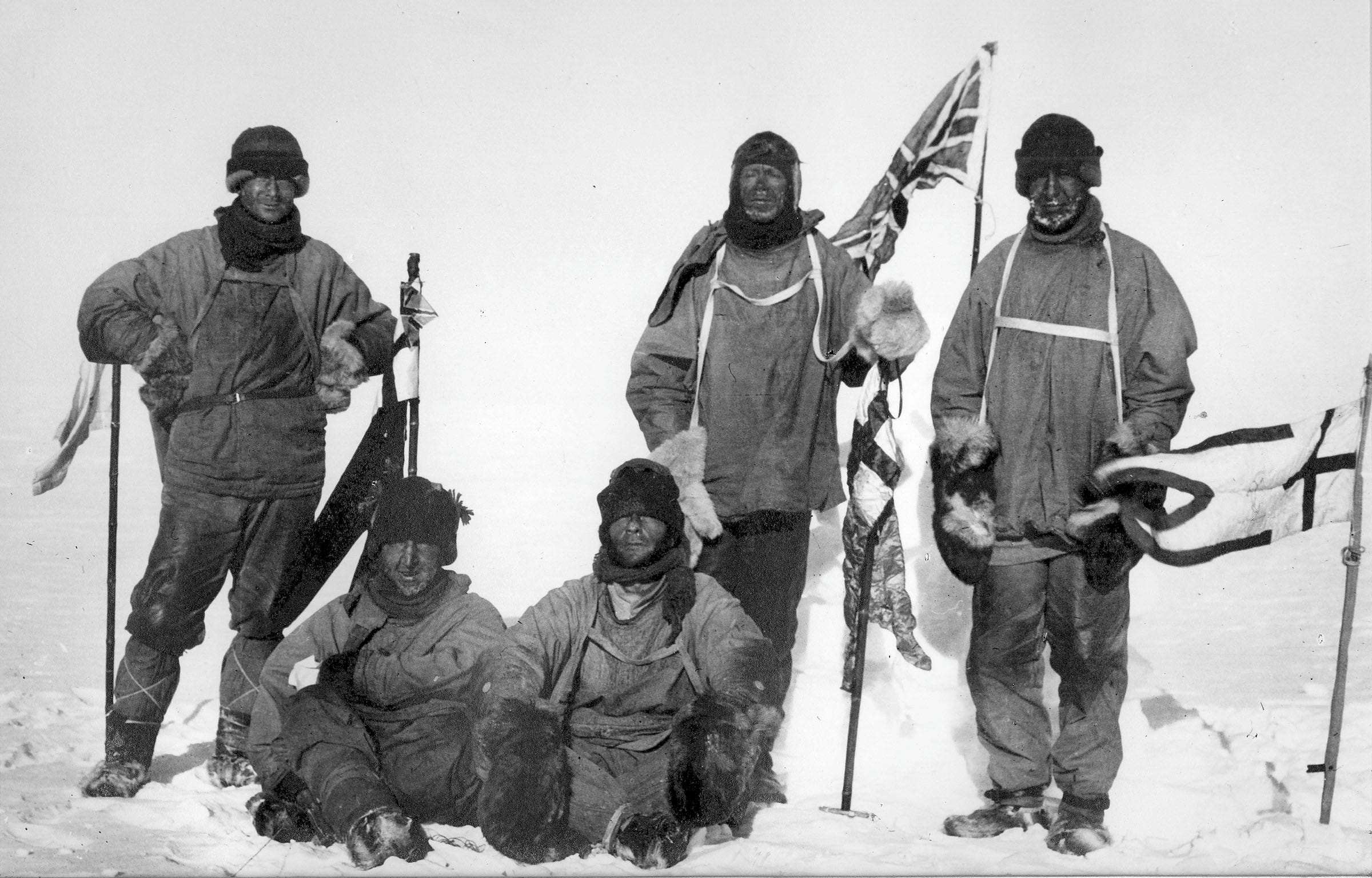
Robert Scott and expedition members at the South Pole.
June 4 – Hudson's Excellent Arctic Adventure
Now we head north - way north - where on June 4, 1610, Henry Hudson reached the southern tip of Greenland while searching for the Northwest Passage to Asia. Because why sail around continents when you can try to go through them? Hudson's name is in the pantheon of European explorers, but he had more of a knack for discovering things he wasn't actually looking for. Like your friend who insists on using Apple Maps to find the best ramen in Soho and ends up at a chicken shop in Zone 6, wondering where it all went wrong.
To be fair, Hudson wasn't far off - he reached what is now James Bay, one of the closest things to a viable Arctic route. But it turns out morale and people skills are just as crucial as maps and compasses when on an expedition.
By 1611, his crew had had enough of inspirational speeches and increasingly frozen dinners. There was a meeting in which both sides engaged in a spirited exchange of viewpoints (Read: Mutiny), and it was decided to set Hudson, a handful of loyal sailors, and, quite cruelly even for mutineers, Hudson’s teenage son adrift in a small boat in what is now, irony alert, Hudson Bay. (Sarah asks, "Why is Jeremiah so fascinated with bloody feuds on the high seas?")

The Last Voyage of Henry Hudson by John Collier (1881)
June 8 – Mallory and Irvine Vanish Into Everest Lore
Ernest Hemingway once wrote: "There are only three sports: bullfighting, motor racing, and mountaineering; all the rest are merely games." Which makes us profoundly grateful Papa never lived to see pickleball.
On June 8, 1924, George Mallory and Andrew "Sandy" Irvine were spotted near the summit of Mount Everest—two dark specks against a white void—and then never seen alive again.
Mallory's body was found 75 years later by American climber Conrad Anker, remarkably well preserved at 26,760 feet. The expedition's camera, a possible key to solving whether they reached the summit before Hillary and Tenzing in 1953, was never recovered. Irvine remains missing.
Mountaineers are, let's be honest, a particular kind of human: part athlete, part mystic, part frostbitten philosopher. These days, you can summit Everest in less than a week by huffing xenon gas, get your dopamine fix by taking video for the socials via a high-speed drone, and rely on a Sherpa risking their life to do all of the really dangerous stuff. But in 1924, Mallory and Irvine did it in wool, leather, and pure Victorian stubbornness…plus Sherpas and bottled oxygen. So…is the high dudgeon about xenon gas warranted? The very intense and highly readable Mark Twight has some thoughts on the subject.
Mallory famously replied, when asked why he wanted to climb the mountain, "Because it's there." That spirit - equal parts courage and romantic delusion - has propelled many would-be summiteers to their doom on Everest's slopes.
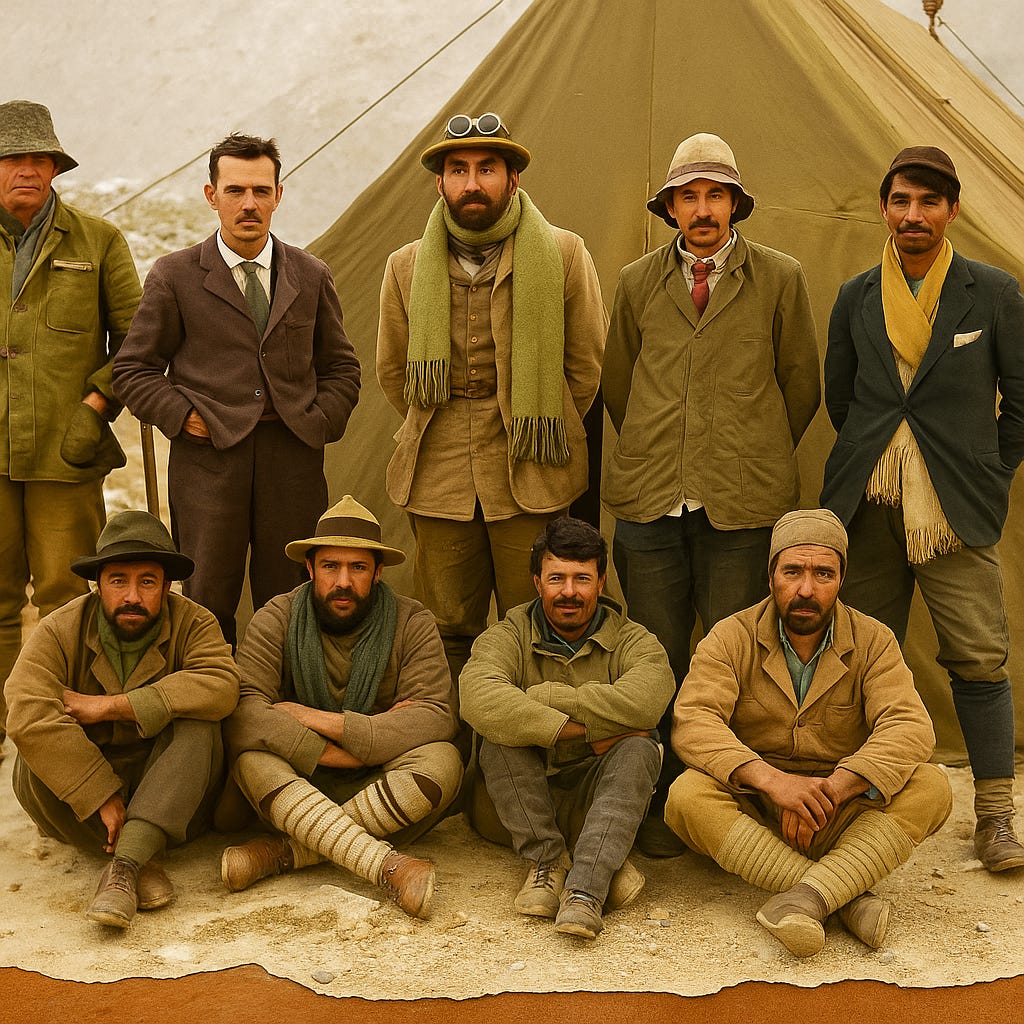
The 1924 Everest Expedition
Book Alert: Pandas, Presidents, and Peril
Before pandas became cute conservation mascots, most Westerners didn't believe they existed.
In 1929, Kermit and Theodore Roosevelt Jr. (sons of the 26th U.S. President) set off on an expedition to the Himalayas to find the elusive creature. Other expeditions had failed. The Roosevelt brothers succeeded. Just barely.

In Nathalia Holt's new book, Beast in the Clouds, we get the full story: blizzards, altitude sickness, bandits, and food shortages, basically your standard Roosevelt family vacation/character building exercise. But they returned with the first documented evidence of the giant panda, launching a new chapter in wildlife biology and Western fascination with the East. Some of the expedition lived, and, sadly, some didn't. It's a recurring theme this week for the newsletter.
That's all we've got from HQ. We're looking forward to a busy travel summer but will be sticking to warmer (or at least less actively hostile) climes on our upcoming journeys.
Until next time,
—The By Their Own Compass Team