


In which your correspondent considers the value of knowing when it’s time to leave the party, ideally before your hosts start sharpening anything dangerous.
Good morning from somewhere on a beach, next to what I am assured is the Gulf of Thailand, although “burning season” in Southeast Asia has started early, collided head-on with the much longer “2-stroke diesel engines for everyone over the age of 5” season, and produced a soupy haze that is seriously wrecking my view.
This week marks the anniversary of Captain James Cook spotting the Hawaiian Islands on January 18, 1778. We can say a lot about Cook – and we just might in a future podcast – but whatever your particular take on Cook’s Tours, he was arguably the greatest (or at least busiest) navigator of his era. This can be a problem when you start running out of funny English names for places, which, not that anyone bothered to ask, generally came “pre-named.” Cook took one look at Hawaii and decided to call it the “Sandwich Islands.” This was less an ode to lunchtime than a lesson in 18th-century priorities. Flattering aristocratic patrons who pay for your explorations: High priority. Creativity and Irony: Not so much.*
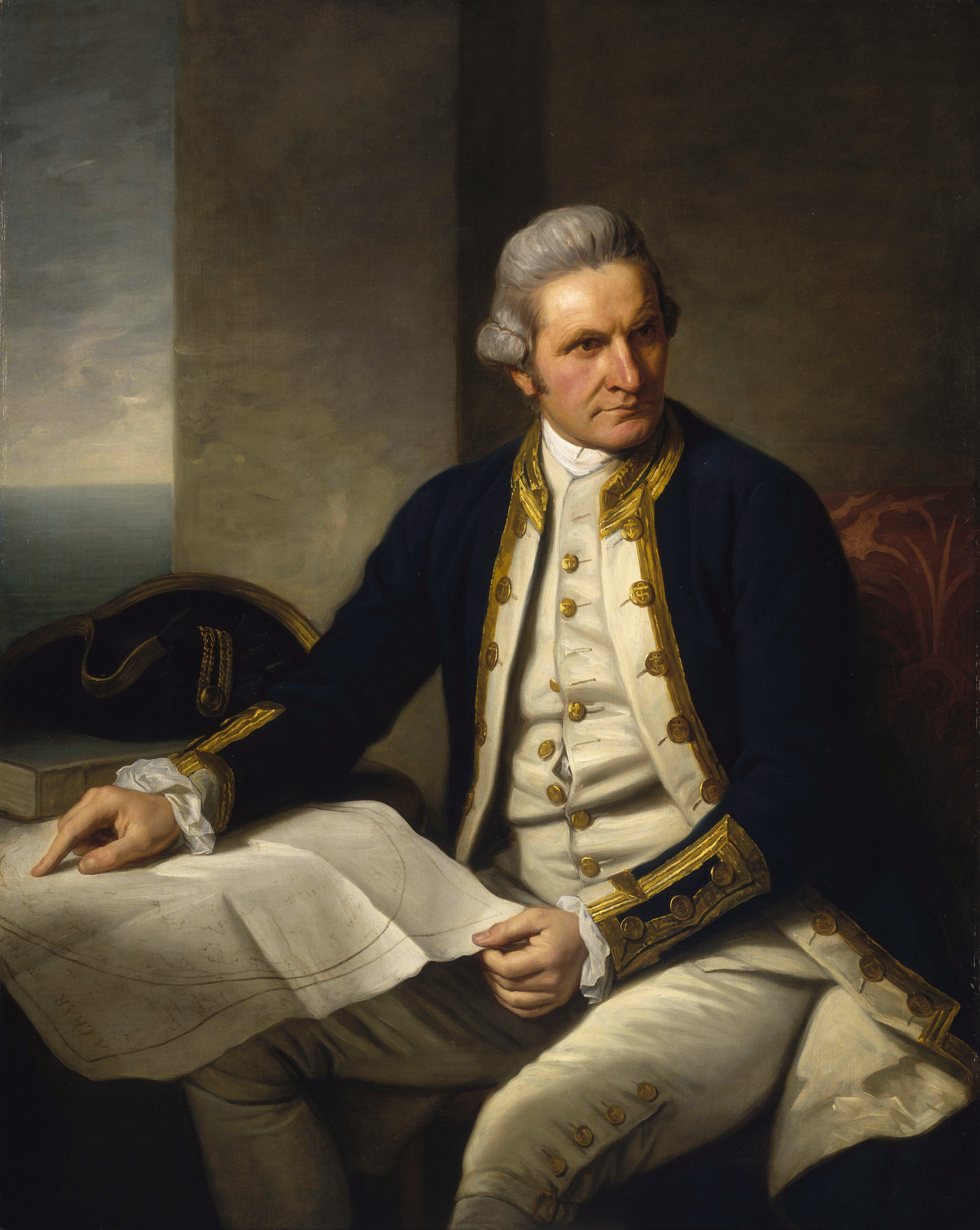
Australia. New Zealand. Even the Antarctic Circle. Cook had seen a lot on his voyages, but Hawaii would be his final destination. His story reminds us that the difference between being an “honoured guest” and “that git who just won’t leave” is a matter of timing and of one’s ability to read a room.
Spoiler alert: Cook had great timing until he didn’t and the man never really knew how to read a room.
Cook’s first visit to the island was too short to really get him into trouble. After spotting the islands in January 1778, he and his men went ashore, had a poke around, and then headed east to explore the shoreline of North America from what is today Oregon up to the Bering Strait. As summer turned to autumn and the Bering Strait started filling up with ice, Cook’s thoughts turned to warmer latitudes, and they sailed back toward the Hawaiian Islands, arriving in December 1778.
For nearly a month, he circled the big island of Hawaii as the locals watched his ships and wondered just what they were. Many folks on the islands had never seen a ship of that size and shape.
When he finally landed in Hawaii for a second time, his timing couldn’t have been more perfect. Compared with the rather perfunctory visit a year earlier, Cook’s second landing in January 1779 would prove far more eventful. Almost immediately upon arriving in Kealakekua Bay, Cook & Crew received the sort of hospitality upgrade most travellers dream about but rarely receive unless they show up with a duffel bag of credit card miles or, in this case, a large sailing ship that vaguely resembled something which might hold a Polynesian Deity.
Cook landed right at the start of the Makahiki Festival, a celebration of Lono, the god of fertility and peace. Cook’s ships, the Resolution and the Discovery, with their tall masts and white sails, looked suspiciously like the images of Lono – wooden poles wrapped in white cloth. Historians argue about this a bit, but it does appear that the Hawaiians, not unreasonably, concluded the god himself had popped round for a visit.
The Hawaiians, being generous of spirit and perhaps a little blown away at having Cook/Lono crash his own party, went out of their way to be good hosts. Perhaps a little too out of their way. After years at sea, Cook and his crew cleaned out the larders of their Hawaiian hosts. One imagines that whatever the theological implications of Cook’s visit, the local priests were not unhappy to see the crew return to their tall-masted sailing ships and prepare to depart.
But an accident at sea changed the good times vibe in a hurry.
Just a few days after their departure, the Resolution lost its foremast in a gale. Repairs were required, and Cook limped back to Kealakekua Bay to a very different reception. No canoes, no welcome committee. The season of peace had ended; the season of Kū, god of war, was now in session.
It’s rather like a guest saying goodbye, leaving the party, and then ringing the doorbell twenty minutes later and asking if there’s any booze left, and perhaps an odd bag of crisps, and can I also crash on your couch for a week?
The magic was gone. The party was over. Now Cook was just the outsider with a broken mast and no sense of timing. The Hawaiians started pelting the landing parties with rocks and made off with the Discovery’s cutter. What reverence had existed all but evaporated; all that remained was annoyance.
Cook’s standard operating procedure when natives “misbehaved” was elegantly simple: kidnap their chief and hold him for ransom until the stolen item was returned. He’d done it before in Tahiti. As that American broadcast icon Brian Fontana once said, 60% of the time…it works every time.
On the morning of February 14, 1779, Cook landed with marines, woke up the aging ruling chief Kalaniʻōpuʻu, and invited him aboard the ship. The chief actually agreed at first.
Then, as they walked to the beach, the chief’s favourite wife, Kānekapōlei, and other chiefs realised what was happening. They began wailing. They physically stopped the chief from getting in the boat.
A rumour spread through the crowd: a lower-ranking chief had just been shot by British sailors on the other side of the bay. The crowd went from worried to homicidal. Cook was clubbed and stabbed in the surf. He fell face down in the water.
The marines fumbled with their muskets. The ‘god’ was clubbed to death by a crowd, all because he tried to take a hostage over a missing rowboat.
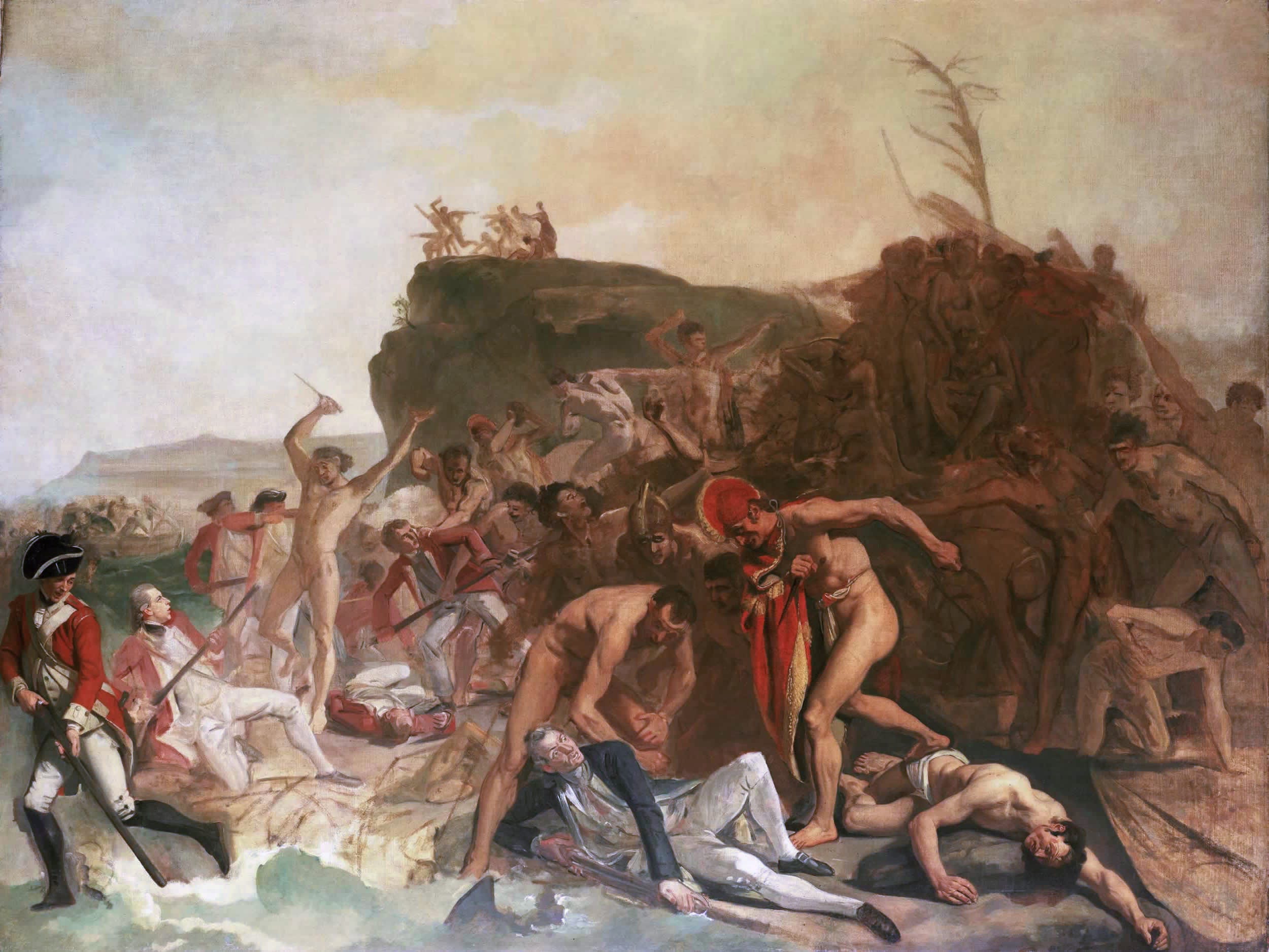
The British demanded Cook’s body back. The Hawaiians returned it in pieces –scorched limbs, a scalp. The British immediately assumed savagery, perhaps cannibalism.
The reality was rather different. The Hawaiians had treated Cook’s body exactly as they would a high chief. They practised excarnation, removing the flesh to clean the bones, which were believed to hold mana, spiritual power. Some of Cook’s bones were distributed among the chiefs as powerful religious relics.
It was a classic case of crossed wires: the Hawaiians thought they were honouring him; the British assumed they were next on the menu. And that’s how offensive and hurtful stereotypes are born.**
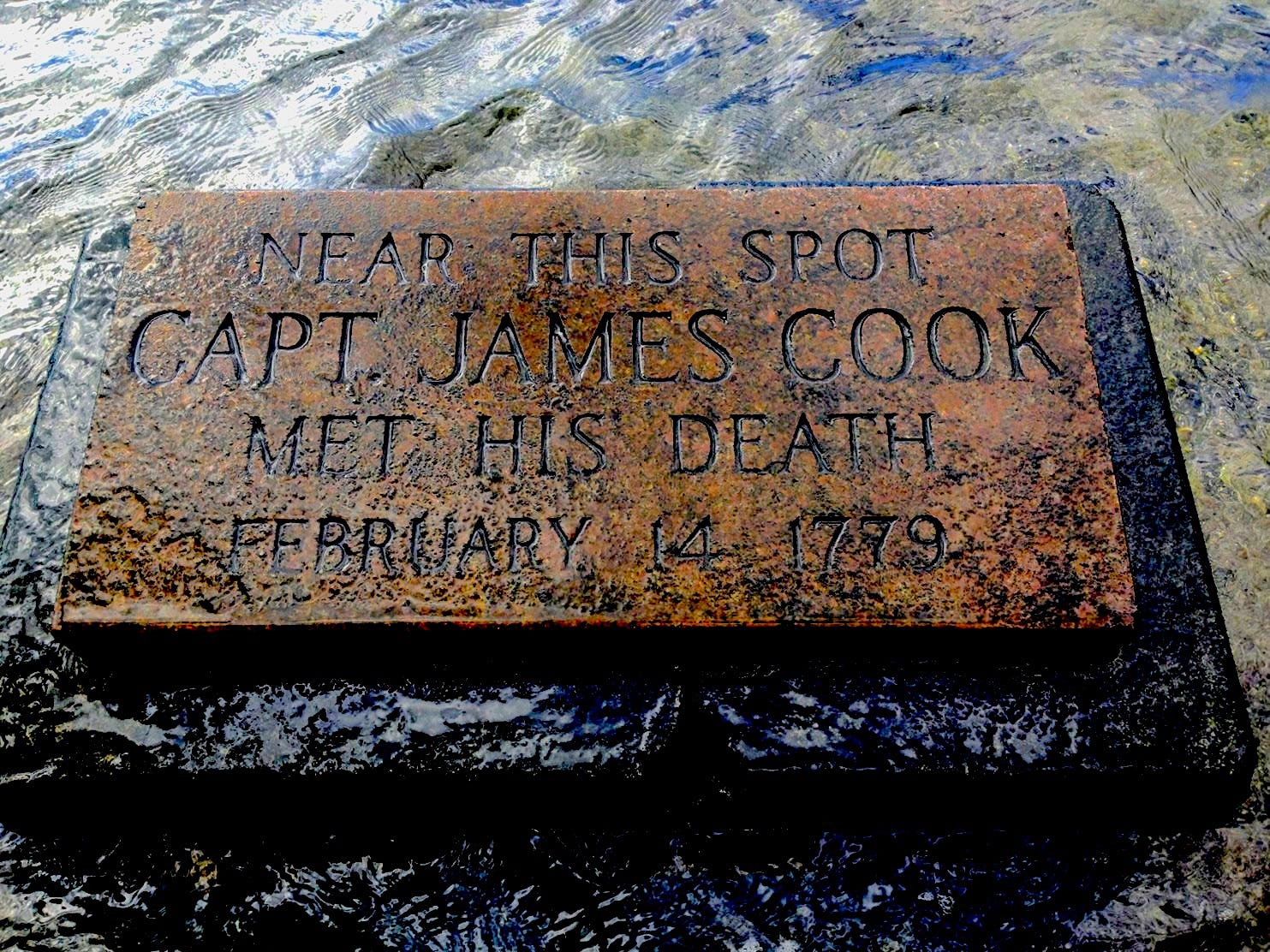
While Cook’s death is usually cast as a tragedy of exploration, it’s worth pausing to consider what his ships actually left behind. It wasn’t just iron nails and glass beads.
Iron nails were the main currency of British sailors – so prized by Polynesians for tools and fishhooks that the crew would pry them out of the ship itself to trade for sex. On earlier voyages, ships nearly came apart at the seams thanks to this enterprising approach to commerce.
Cook attempted to ban women from coming aboard in Hawaii to halt the spread of venereal disease. It was a spectacular failure. The pox spread anyway.
When Cook arrived in 1778, the Native Hawaiian population was somewhere between 300,000 and 800,000. By 1850, after waves of imported diseases, including syphilis and gonorrhoea courtesy of Cook’s own men, the number had dropped to about 84,000.
That’s a demographic collapse on a scale no amount of ‘discovery’ can possibly justify.
Cook opened the door. What followed were missionaries, sugar barons, and, eventually, the United States Marines who helped topple the Hawaiian Kingdom in 1893.
Until next time, remember that Hawaii is a wonderful place, Cook didn’t discover anything there that people hadn’t known about for centuries, and when the party is over and the lights go on, it’s time to go home.
* Kind of like Substack.
**Fun footnote. The Sailing Master on the Resolution, watching Cook’s demise from a safe distance, was none other than William Bligh. Yes, that William Bligh. A decade before Fletcher Christian sent him adrift, he was witnessing his boss get clubbed on a Hawaiian beach. The man had a real talent for ending up in disastrous management scenarios. Also in attendance: a young midshipman named George Vancouver, who would later chart the Pacific Northwest and lend his name to a Canadian city.