


In which your correspondent considers the life of Kate Simon, who spent decades telling tourists where to find a decent meal before finally publishing the stories she really wanted to write.
Good morning from wherever you happen to be consulting Google Maps, TripAdvisor, or that mate who “knows a great little Italian cucina off the beaten path” that turns out to be a Pizza Express.
Before algorithms replaced opinions and crowd-sourced reviews replaced expertise, travel guidance came from people who had actually been places and could write about them coherently. Kate Simon was one of the best, though you’ve probably never heard of her.
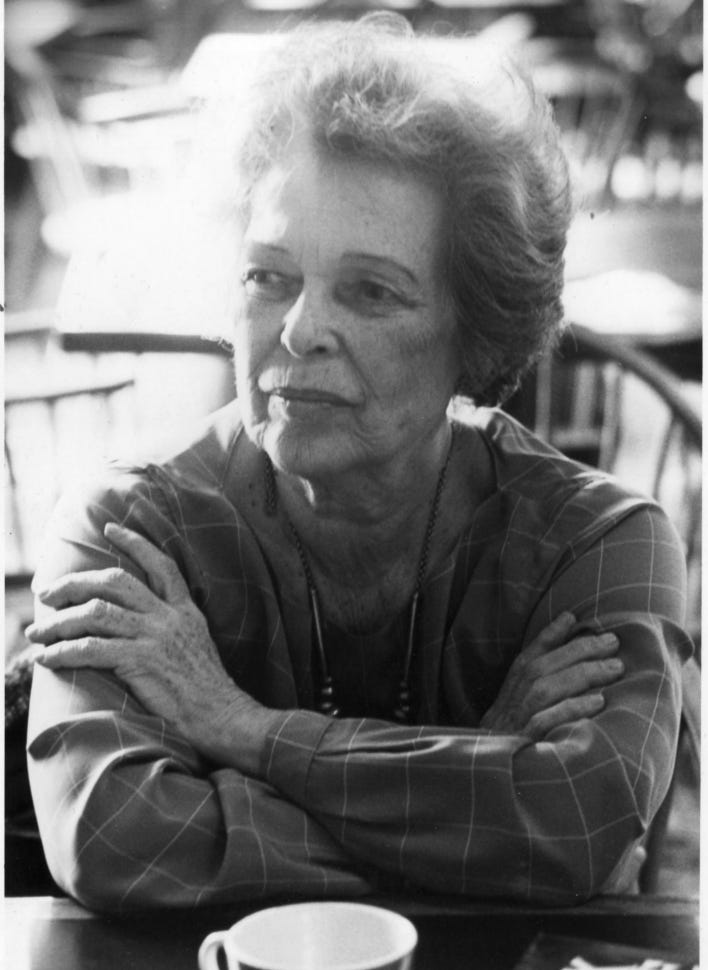
Born in Warsaw in 1912, Simon arrived in the Bronx at age four, her name already Americanised from Kaila Grobsmith to something more pronounceable for immigration officials and schoolteachers. She graduated from Hunter College in 1935, worked various editorial jobs, married twice, and in 1959 received an advance from Meridian Books to write a guidebook about New York City.
New York: Places and Pleasures became the first in a series that would define her career for the next two decades. Guides to Mexico, Paris, London, and Italy soon followed, each going through multiple editions. Her Mexico and New York guides ran to four editions each, which, in the pre-internet era, meant your book was genuinely insightful rather than simply decorative coffee-table filler.
Simon’s guidebooks refused to pretend that everywhere was marvellous. She wrote for travellers who needed to know where to eat, sleep, and what to avoid. Her prose was elegant but always practical, learned and accessible, the work of someone who understood that helping people find a decent hotel room was more valuable than three pages of breathless description about sunlight on ancient cobblestones or how (fill in city here) is a jumbled juxtaposition of tradition and modernity and a heady blend of the old and the new.
The twist is that whilst Simon wrote guidebooks to pay the bills, what she really wanted to produce was something else entirely.
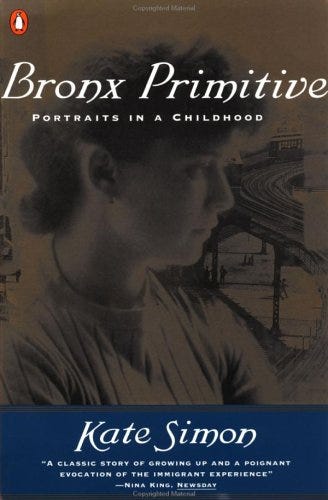
In 1982, at age 70, she published Bronx Primitive: Portraits in a Childhood. The memoir traced her immigrant experience from age six to fourteen, life on 178th Street and Lafontaine Avenue rendered in unsentimental, clear-eyed prose. The New York Times named it one of the year’s twelve best books. Time Magazine put it in their top five.
Bronx Primitive was followed by A Wider World: Portraits in an Adolescence (1986) and Etchings in an Hourglass (1990), completing an autobiographical trilogy. The books were praised for their unflinching honesty about growing up poor, female, and Jewish in early twentieth-century New York. Simon wrote about sexual abuse, her mother’s abortions, her tyrannical father, and her own sexual awakening with the same matter-of-fact clarity she’d once applied to restaurant recommendations in Rome.
She also managed to squeeze in A Renaissance Tapestry: The Gonzaga of Mantua (1988), because apparently three volumes of autobiography weren’t enough work for someone in her seventies. The book examined Italian Renaissance nobility, which must have provided a satisfying contrast to her Bronx childhood, though one suspects the Gonzagas had their own share of family dysfunction.
Simon died in New York in 1990, after publishing her final memoir. She’d spent her life travelling, writing, and demonstrating that you didn’t need to be posh, Oxbridge-educated, or T.E. Lawrence to write beautifully about the world.
What we’ve lost in the shift from guidebooks to Google reviews is what Simon provided: expertise filtered through experience, opinion shaped by actual knowledge, and prose that could make you want to visit a place even whilst warning you about its dodgy plumbing. Yes, it took longer than 30 seconds to read, but good information comes in chunks, not bytes. Modern travel content has been steadily trending toward algorithm-generated lists or influencers pretending their sponsored hotel stay represents authentic experience.*
It is worth considering, in these times of rising Nativism, that Simon’s immigrant perspective informed everything she wrote. Each journey was, in some sense, about displacement. Every new place was examined through the eyes of someone who’d made the ultimate journey from Warsaw to the Bronx, from Kaila to Kate, from immigrant child to one of America’s finest travel writers.
The distinction between “travel writer” and “guidebook author” is mostly snobbery anyway, based on a false assumption that practical advice is somehow less literary than lyrical description. Simon proved otherwise even before she turned her pen to memoirs. She made a living telling people where to go and what to do when they got there, and in the process created work that outlasted most of the “serious” travel literature of her era.
That’s all from your correspondent, who remains grateful for anyone who can provide genuinely useful information about where to eat whilst abroad.
*If any hotel chains wish to sponsor your correspondent by offering a hotel stay — preferably a hotel with a pool villa and a swim-up bar somewhere tropical — please get in touch. We have a limited budget and even less shame. Seriously. Text us. We’ll chat.