


Good morning, peripatetic pedants, map-fondling masochists, and anyone else currently trapped in the non-EU passport queue, wondering if Keir Starmer could be bothered to hurry up a bit because we’re about to miss our connection to Milan.
Welcome to this week's Compass Dispatch, where we celebrate the fine art of getting from Point A to Point B while maintaining an appropriately historical outlook on humanity's travel aspirations. Also, quick congratulations to Sarah's Tottenham Hotspurs for finally winning some silverware last week. However, the in-house Arsenal fan Jeremiah suggests that despite the win, Tottenham's status as a major club—like a Paris Airbnb with high-quality plumbing or a unicorn—remains something long imagined but never actually seen.
Brexit's Eternal Queue: A Love Letter to European Immigration
Picture the scene. It’s 2024. Co-host Jeremiah has just returned from a trip to the UK to his current home base in Geneva, Switzerland. Standing with him in the “Third Country Nationals/Non-EU” line is a mother with three children under the age of seven. She is radiating the kind of homicidal exhaustion that can come from flying alone in coach with three small kids or else being locked in a cage for a week with a meth-addled macaque. The eldest child, displaying the sort of innocent wisdom and insatiable curiosity that one often associates with Buddhist monks but, with repetition, will eventually make their parents question their life choices or at least their stance on birth control, pointed to the swift-moving EU line and asked in her best British moppet accent, "Mummy, why do those people get to go fast and we have to stay here?"
The mother's response, delivered with a tired hiss: "Ask your grandfather."

Well, nearly a decade after 17,410,741 UK residents + one grandfather voted for Brexit, relief may be coming for British travelers, though probably not soon enough for the summer holidays. According to The Guardian, British tourists will continue enduring passport-stamping queues in the EU until at least October 2025, and possibly well into 2026, despite Keir Starmer's triumphant announcement of eventual e-gate access for British travelers to EU countries. This has been an ongoing project, not unlike the interminable JFK Airport renovations, with implementation already delayed three times—once due to concerns about Olympic chaos in Paris and twice more due to the kind of technical problems that make you wonder if it’s all being handled by some official IT basement office whose last software update was done via the fax machine.
Until the day of liberation comes, British holidaymakers will continue standing in the "Third Country Nationals" queue, alongside people whose visa applications require genuine scrutiny (like Jeremiah), while their former EU compatriots zip through electronic gates and on their merry way.
Journeys of the Mind: The 16th-century Scholar Who Studied Greece Without Ever Leaving Germany
In the 16th century, when most Europeans viewed the Ottoman Empire with a mixture of terror and ignorance, one man became the leading authority on post-Byzantine Greece without ever setting foot outside Germany. History Today has a great – albeit paywalled – article on Martin Crusius (1526-1607), the professor at the University of Tübingen who managed this feat through the revolutionary technique of actually corresponding with Greeks living under Ottoman rule.
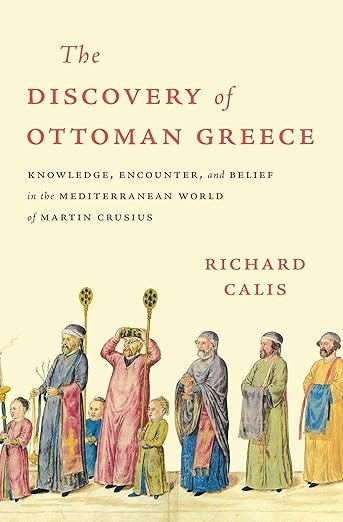
While his contemporaries were busy speculating about the horrors of oppression and lamenting the "second death" of Homer and Plato, Crusius methodically built a network of Greek scholars and clerics who provided him with firsthand accounts of life under the sultans. His nine-volume diary, spanning over thirty years, became an unparalleled record of Ottoman Greece—all compiled from the comfort of his Swabian study.
"What Hath God Wrought": The Day Distance Died
On May 24, 1844, Samuel Morse sent the first official telegraph message from Washington to Baltimore, consisting of the biblical phrase "What Hath God Wrought"—the same sentiment that also occurs to members of staff whenever they get a Slack notification from their supervisor at 10 pm on a Friday. It's fashionable to claim that the internet revolutionized global communication, but consider what the telegraph actually replaced: messages that took weeks to cross continents by horseback, sailing ship, or particularly determined runner. The telegraph didn't just speed up communication—it obliterated the very concept of distance as a barrier to information.
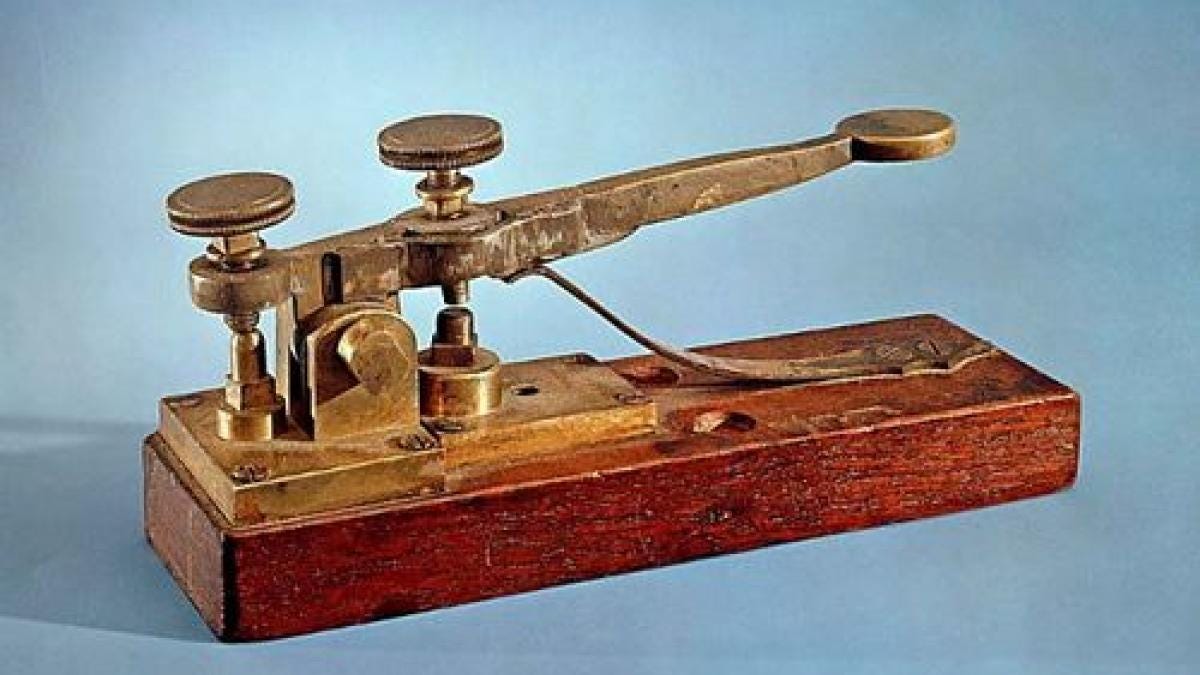
Before Morse's contraption, arranging travel meant sending letters months in advance and hoping your correspondent hadn't died, moved, or been eaten by wild dogs in the interim. Business deals collapsed because replies took so long that markets had moved on. Wars were fought over news that was already obsolete.
The telegraph also made travel planning possible in ways we now take for granted. You could confirm hotel reservations, check train schedules, and even send word to loved ones that you hadn't perished in whatever godforsaken wilderness you'd decided to explore. It was the first technology that truly shrank the world, making every subsequent innovation—telephone, fax, email—feel like incremental improvements rather than revolutionary leaps.
Podcast Show 2025

A picture of your intrepid correspondents as they voyaged the exotic halls of the Angel-Islington Business Development Center at The Podcast Show 2025.
That's all from our desks this week. We continue to marvel at humanity's determination to make travel as complicated as possible while simultaneously making it faster, safer, and more convenient than our ancestors could have possibly imagined.
May your passport queues be shorter than Brexit negotiations, your summer travel research more thorough than Claude’s, and your flights less frustrating than Arsenal’s season—beautiful at cruising altitude, but inevitably encountering technical difficulties and making an emergency landing in second place.
Until next time, we remain your historically-minded correspondents,
—The By Their Own Compass Team
If this newsletter brought you even momentary distraction from whatever travel disaster you're currently enduring, do pass it along to someone who might appreciate learning why their great-grandfather's complaints about "slow" communication were rather missing the point.