


APRIL 28, 1789: HISTORY'S MOST FAMOUS WORKPLACE DISAGREEMENT
April 28 marked the anniversary of one of history's most famous workplace disagreements/tropical getaways gone sideways. That's right, this week is the anniversary of the 1789 mutiny on the Bounty—made famous by movies starring Clark Gable, Marlon Brando, Mel Gibson, and Anthony Hopkins. Lieutenant William Bligh found out the salty way that, in management, hard skills matter, but it's the soft skills that keep you from getting marooned by your co-workers in the middle of the Pacific Ocean—a particularly poignant lesson when you’re 10,000 miles from the nearest HR rep.
The HMS Bounty had been sailing through the South Pacific on an expedition to find and transport breadfruit to feed enslaved people on plantations in the Caribbean, the supply of Carolina rice having been interrupted by the inconvenient insurrection of the American colonies. After months at sea, the crew and officers of HMS Bounty were finally enjoying a few sun-filled months with the people of Tahiti, living on island time while waiting for the breadfruit to sprout. No doubt they enjoyed the switch from cramped ship quarters surrounded by nothing but ugly to living in a tropical paradise filled with gorgeous scenery and very (ahem) friendly and attractive locals.
Understandably, there was some employee push-back when Lieutenant Bligh ordered the men to prepare to set sail and finally deliver the baby breadfruit plants to the Caribbean. Crew members had made friends, found relationships, and a few of them even had kids on the way. Bligh was unmoved by their arguments.
While not the maniacal tyrant of the 1962 movie, Lieutenant Bligh was a bit of an egocentric douche and had also made himself somewhat unpopular with his parsimonious rationing of food and other supplies. Suffice to say, many in the crew were not looking forward to being back at sea with the man.
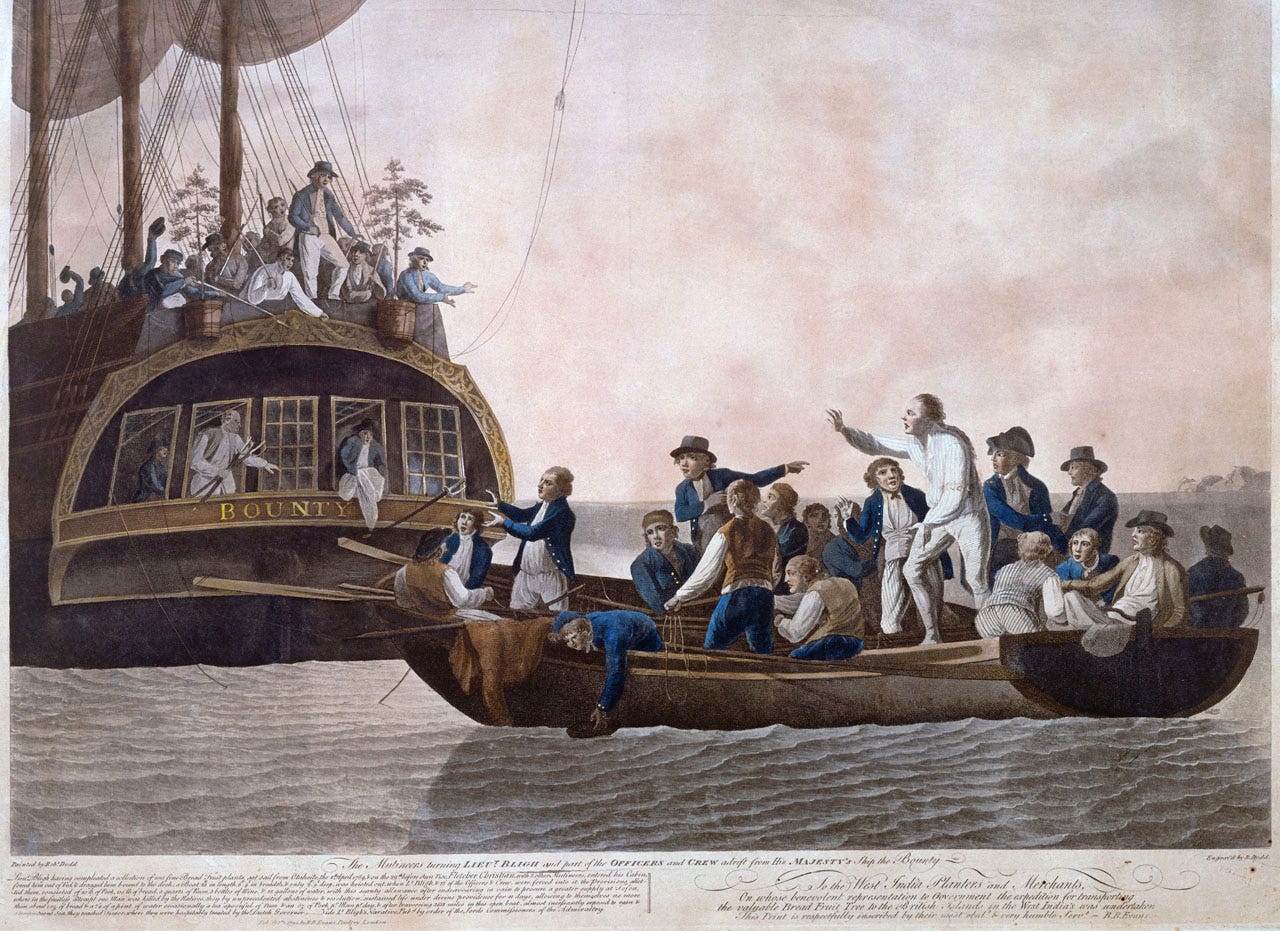
At dawn on April 28, 1789, Bligh and 18 others—crew members who had chosen to remain loyal to their Lieutenant or who simply didn’t want to risk being hanged by the Royal Navy for mutiny—were left bobbing in a 23-foot launch boat.
Bligh, in a feat of navigation that would make Google Maps weep, managed to sail nearly 4,000 miles to safety on limited supplies and in an open boat. (See, says Bligh, those hard skills do come in handy). Meanwhile the merry band of mutineers, led according to Bligh's testimony by his former protégé Fletcher Christian, headed back to Tahiti faster than you could say "unlimited pool day passes and swim-up bar."
Several of the mutineers chose to enjoy paradise in the islands, for a while at least, before ending up on the wrong end of a rope courtesy of the Royal Navy. Christian and the rest of the crew settled on Pitcairn Island, burned the Bounty, and hoped nobody would notice them on their previously uninhabited island.
Spoiler alert: people eventually noticed.
DIGGING UP THE PAST FOR FUN (AND SCIENCE!)
This summer, you could head to the beach—or you could dig up a centuries-old temple in Malta and expand your knowledge of the ancient past while developing an intimacy with dust you never thought possible. According to a recent article in National Geographic, archaeological travel is booming, and you don't need a degree in history or Egyptology—just a bit of spare time and a willingness to work in 110° heat.
Some of the options include excavating prehistoric megafauna (think: minivan-sized marsupials) in the Australian outback or perhaps tracing Roman landscapes on the edges of the Mediterranean world. The Archaeological Fieldwork Opportunities Bulletin offers continuously updated listings of global dig sites where you can unearth secrets that might just rewrite the history books.
So while many of us are content to fritter away the moments that make up our vacation days relaxing and listening to history on our headphones, for those of you with a taste for adventure or just looking to cosplay as Indiana Jones (without the deadly booby traps), you can spend your summer holidays making a little bit of history as well.
SOME LIGHT VACATION READING (If your idea of a holiday is partying in an old Chinese temple with your bestest frenemies)
BTOC Cohost Jeremiah Jenne has a new retrospective book review up at the China Books Review that will surely be of interest to those interested in historical travel or those interested in diving into the gilded goldfish bowl of Beijing's early 20th century expat community. Peking Picnic is a 1932 novel by Ann Bridge, aka Mary Ann Dolling Sanders—a woman who made up for her (reportedly) miserable marriage by writing dishy books based on the people she met while trailing her diplomat husband from posting to posting.
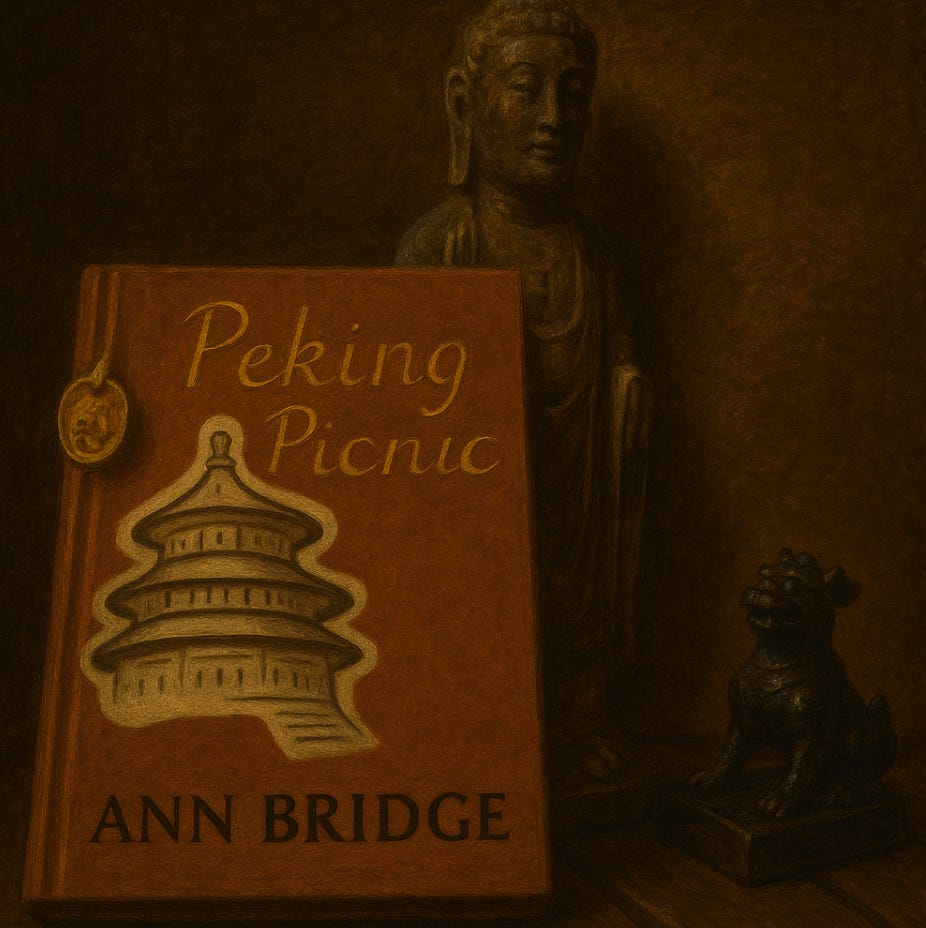
The novel follows a group of mostly British and American foreigners during a three-day "picnic" to Jietai Temple in the Western Hills of Beijing. At first glance, it's a novel of manners with an exotic twist, set on the outskirts of Beijing rather than in a drawing room in the heart of Mayfair. After all, nothing says "manners" like a party of expatriates invading a Buddhist shrine for a weekend of cocktails, romantic intrigue, and smoking. Lots and lots of smoking.
Peking Picnic abounds with the sort of interwar "upstairs, downstairs" vibes that made "Downton Abbey" a guilty pleasure on both sides of the Atlantic. But it is also worth reading for its evocative portrayal of interwar Beijing, its intimate immersion into the hothouse of the city's Legation Quarter, and the author's poignant observations about adapting to life in China, many of which ring true today.
JUNE 15 PROTESTS IN EUROPE: BRING YOUR WATERPROOF GEAR?
Overtourism has become a flashpoint between locals and visitors in many popular European destinations. If you're traveling to Europe this June, mark your calendar for the 15th and pack some waterproof gear. Activist groups across southern Europe are planning to stage protests against overtourism, and although the precise form of these demonstrations hasn't been decided, it's a pretty safe bet that water guns will be involved, as they were last summer.
Workshops held in Barcelona last week brought together more than 100 activists from Venice, Lisbon, Palermo, and a dozen other cities. The leaders of the Southern Europe Network Against Touristification called for a coordinated day of actions to raise awareness about what they call "the urgent need to limit the growth of tourism." Tactics discussed included picketing at airports, obstructing tourist entry to historic sites, blockading tour buses, and, yes, deploying water pistols to soak unwary travelers.
While we don't condone guerrilla squirt gun attacks (though points for creative semi-non-violence), we are reminded that our vacation destinations are always somebody else's home. It's a big world with plenty to explore—do we really need another million photographs of the same piazza at sunset?
FINALLY, CRUISE SHIPS: THE FLOATING FIGHT CLUBS
A viral video from the Carnival Jubilee this past week shows that the first rule of cruise ship fight club is apparently: film it all and put it online.
A massive brawl erupted as passengers disembarked in Galveston after a week-long Caribbean cruise, resulting in more than a dozen people receiving lifetime bans. Some heated exchanges on the onboard basketball court resulted in bad blood that carried over into the arrivals terminal. Punches were thrown. Luggage destroyed. Nothing says "Fun For All, All For Fun" like a full-on dockside smackdown.
Until next week, stay curious and travel well!