


Happy Friday, globetrotting antiquarians, armchair travelers, and anyone currently trapped in Newark. Welcome to this week's installment of By Their Own Compass, your reliable source of historical peregrinations and the perfect excuse to avoid planning your actual summer holiday. This week: milestones in the history of travel and exploration, including the 50th anniversary of the first recorded summiting of Mt. Everest by a woman and the surprising story of how the Romans turned chestnuts into an arboreal empire.
May 16, 1975 – A Junko Tabei Conquers Everest, Men Collectively Pretend Not to be Surprised
On this day in 1975, Japanese climber Junko Tabei became the first woman to reach Everest's summit, casually brushing off an avalanche she'd survived just days earlier. According to contemporary accounts, Tabei and her Sherpa guide Ang Tsering reached the peak after a harrowing journey that included strong winds, ice conditions, and mechanical problems. Having already founded a women's climbing club (despite criticism that women should be "raising children instead"), Tabei later completed the Seven Summits, becoming the first woman to scale the highest peak on every continent. Next time you're struggling up a broken escalator at the airport, remember Junko Tabei and feel appropriately inadequate.

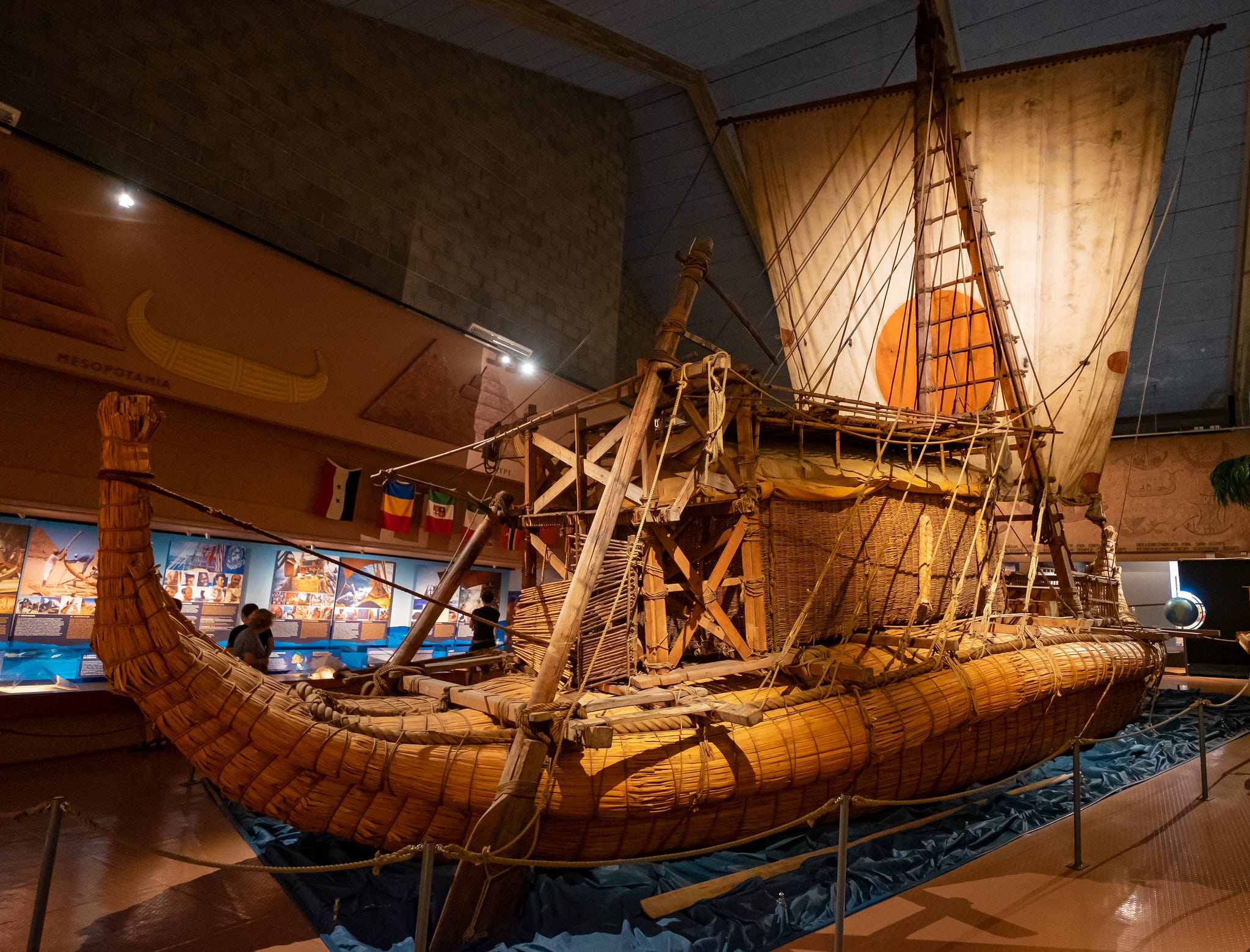
May 17, 1970 – Man Builds Boat Out of Reeds, Somehow Doesn't Immediately Sink
Just when you thought your DIY lockdown projects were impressive, on May 17, 1970, Thor Heyerdahl set sail from Morocco in a 36-foot boat made entirely of papyrus reeds. The Norwegian adventurer's Ra II expedition aimed to prove ancient Egyptians could have reached the Americas before Columbus—a theory archaeologists have filed under "interesting if true, but probably not." His international crew included men from Egypt, the Soviet Union, the U.S., and several other countries who presumably had nothing better to do than risk drowning to prove a controversial historical hypothesis. They even brought chickens, a duck, and a monkey along, because why not traumatize some animals while you're at it? Against considerable odds, they reached Barbados after sailing 3,200 miles in 57 days, proving that while there is no definitive proof that ancient Egyptians cruised the Caribbean, it is nice to no that yes, reed boats not only don’t sink but can actually cross oceans. The Ra II is now in the Kon-Tiki Museum in Oslo, Norway.
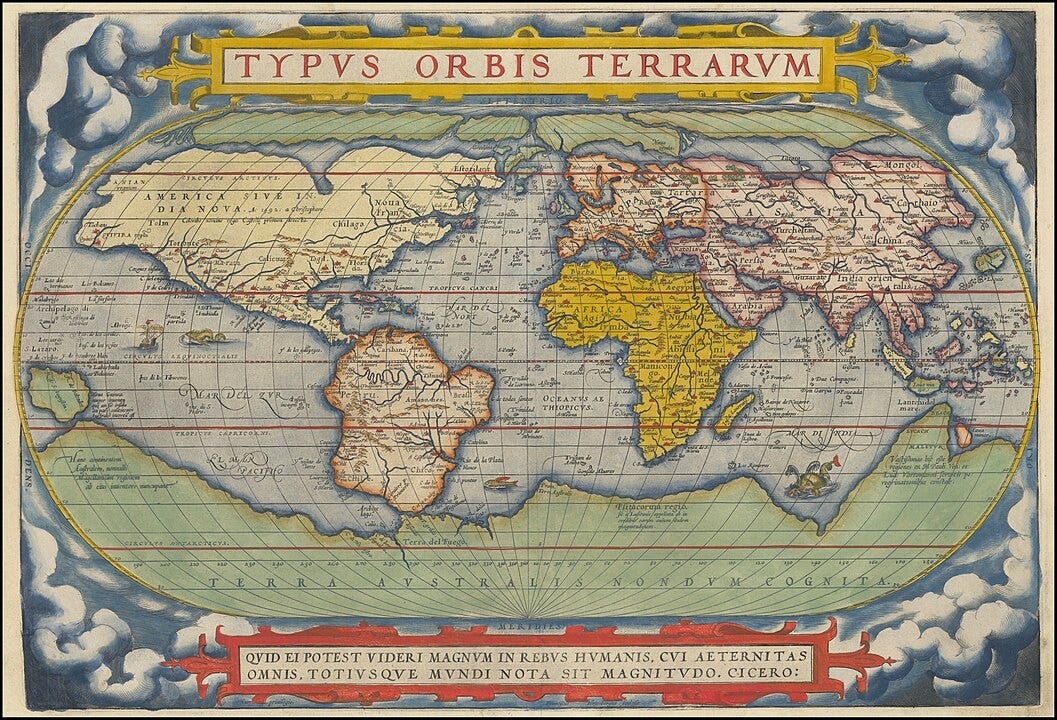
May 20, 1570 – First Proper Atlas Published, Armchair Travelers Rejoice
In 1570, Abraham Ortelius published "Theatrum Orbis Terrarum" in Antwerp, creating the world's first modern atlas. His 53-map volume gave Renaissance Europeans their first comprehensive view of the world, complete with decorative sea monsters in the margins where satellite data was unavailable. The atlas went through 25 editions, demonstrating that even in the 16th century, people preferred looking at maps to actually traveling. Modern visitors to Antwerp or Leiden can view original Ortelius maps in museums, where they serve as charming reminders of how little most of us knew about geography before Google Maps.
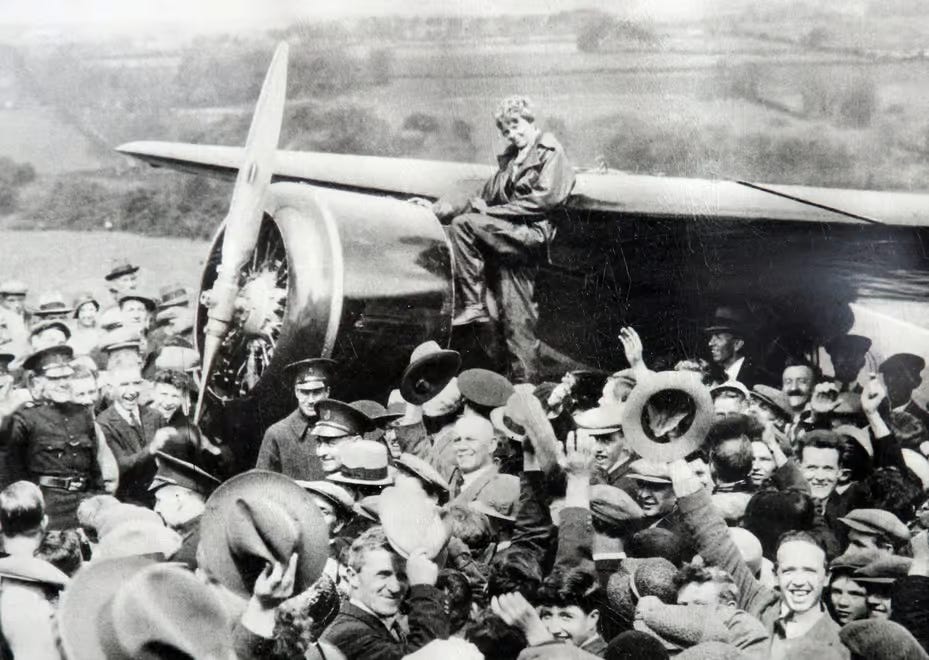
May 21, 1932 – Amelia Earhart Crosses Atlantic, Startles Irish Farmer
On this day, Amelia Earhart landed in a Northern Irish field after becoming the first woman to fly solo across the Atlantic. When a startled farm worker asked where she'd come from, she reportedly answered "America," displaying the casual understatement that would later inspire headlines like "Small Earthquake in Chile, Not Many Dead." Despite battling strong winds, icy conditions, and a small onboard fire during her 15-hour journey, Earhart completed the 2,000-mile flight from Newfoundland—roughly the same time it now takes to clear security at JFK, board an A380, watch three mediocre films, and land at Heathrow. Her achievement helped pave the way for women in aviation and adventure travel, though modern passengers complaining about legroom might want to remember her cramped Lockheed Vega cockpit before hassling the check-in counter for an upgrade.
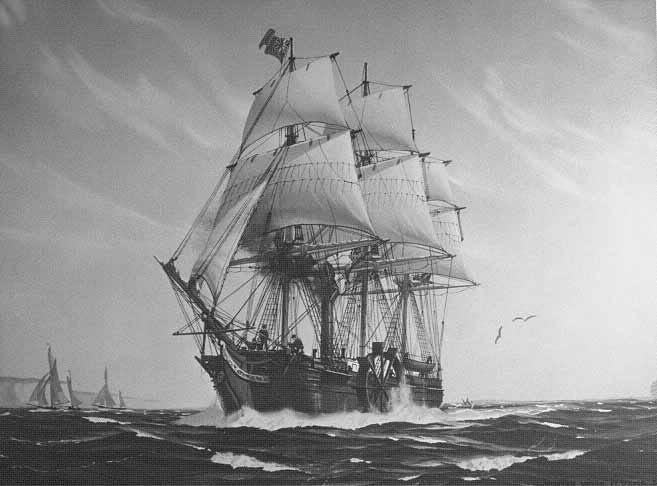
May 22, 1819 – First Steamship Crosses Atlantic, Barely Uses Steam
The SS Savannah departed from Georgia on this day, attempting to become the first steam-powered ship to cross the Atlantic. Keyword: "attempting." While technically successful—it did reach Liverpool—the ship used its steam engine for only part of each day, relying mostly on sails because the engine burned fuel so inefficiently there was barely space for cargo or passengers. It was less a commercial triumph than a floating tech demo, like driverless cars, except without the ship spontaneously going rogue and thinking it’s in the third act of Christine. The Savannah was promptly converted back to a regular sailing ship after its historic crossing, but it did herald the age of steamships that would soon make crossing the Atlantic marginally less harrowing. Modern cruise passengers expecting midnight buffets and Broadway-style shows might be disappointed to learn that accommodations on the Savannah consisted mainly of "not drowning."
The Chestnut's Grand Tour: How Trees Became Rome's Most Overlooked Colonial Export
Finally, a great article about chestnuts and empire. No, seriously. While you likely learned about Roman roads, aqueducts, and public baths in school (the latter making "going to the toilet" a distressingly social affair), you probably weren't taught about their arboreal imperialism. According to Swiss researchers, the Romans had a particular fondness for sweet chestnut trees, spreading them across Europe like botanical missionaries.
But the Romans weren't just nut enthusiasts. They prized the chestnut's fast-regrowing timber as essential building material for their empire's expansion. As Patrik Krebs of the Swiss Federal Institute for Forest, Snow and Landscape Research notes, the Romans turned Europe into "a connected, economical space" with "a single system of governance" and improved infrastructure. Along with roads and Latin grammar, they exported tree cultivation techniques like coppicing, which helped chestnuts flourish from the Italian peninsula to the farthest reaches of their territories.
The next time you're roasting chestnuts or admiring a particularly handsome specimen in a European forest, remember you're looking at living evidence of Roman imperial ambition. Even their trees conquered Europe and never left—a botanical occupation that outlasted the empire itself. And unlike Latin conjugations, at least the chestnuts are still useful.
That's all from the transit lounge this week. May your journeys be historically significant, your landings smoother than Amelia's, and your boat-building ambitions tempered by a healthy respect for modern naval architecture.
Until next time, we remain your temporally displaced correspondents,
—The By Their Own Compass Team
If this newsletter made you snort coffee through your nose, consider that a small price to pay for historical enlightenment. Forward it to a friend who thinks history is just "old stuff that happened," or to that one relative who won't stop talking about their semester abroad in 1997.