


In this edition of Compass Dispatches:
Mailbag: 147 of 189 killed at the Last Stand of the Swiss Guard
Musical tribute to Leo Africanus
Full Transcript to last week’s episode
It’s an off week for us here at By Their Own Compass HQ, but we’re still thinking about our most recent episode about Leo Africanus. Which for us means research, cleaning the kettle, and parody songs. We started by asking: What would Leo Africanus say about his fellow traveler (and fellow member of the “I got published by Ramusio” Club), Marco Polo?
So we sat down, wrote lyrics, and got a little help with the music. This is just a teaser. Full song and lyrics are below. Be sure you check it out before you go.
As a special treat, and because we rather like the song, we’re making this edition available to everyone.
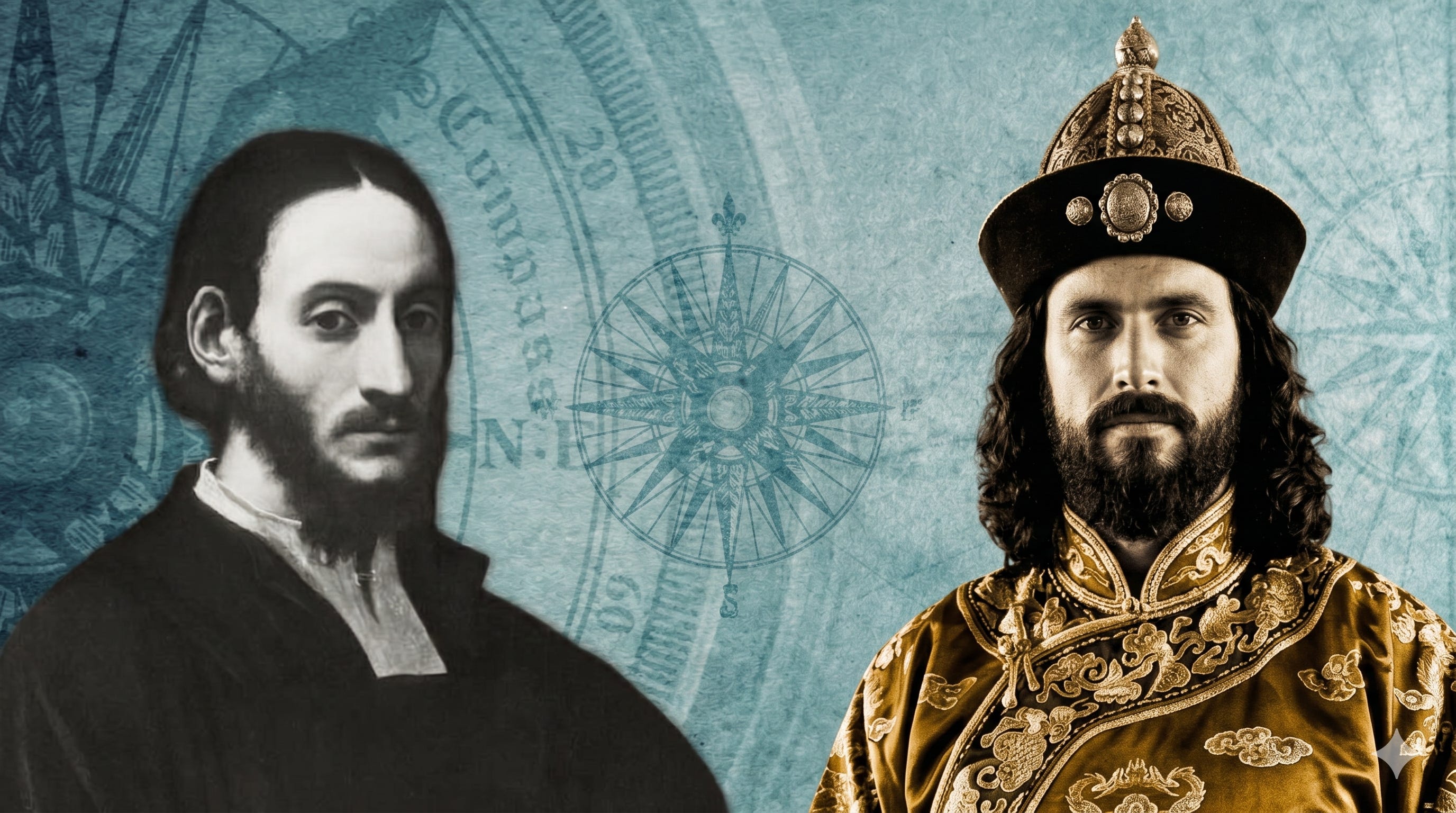
Mailbag: Last Stand of the Swiss Guard
Before we get to that, we’ve got something from the mailbag about the Last Stand of the Swiss Guard. A listener wrote in asking why we said 189 Swiss Guards died defending the Pope during the Sack of Rome, when other sources give the number as 147. Fair question, and the answer is: both numbers are right, depending on what you’re counting.
On the morning of May 6th, 1527, there were 189 Swiss Guards in Rome. When the mercenaries broke through, the Guard split. Forty-two men, under Lieutenant Herkules Göldli of Zurich, hustled Pope Clement VII through the Passetto di Borgo to the Castel Sant’Angelo. The other 147 stayed behind on St. Peter’s Square to hold the line against an army of 20,000. They were killed to the last man.
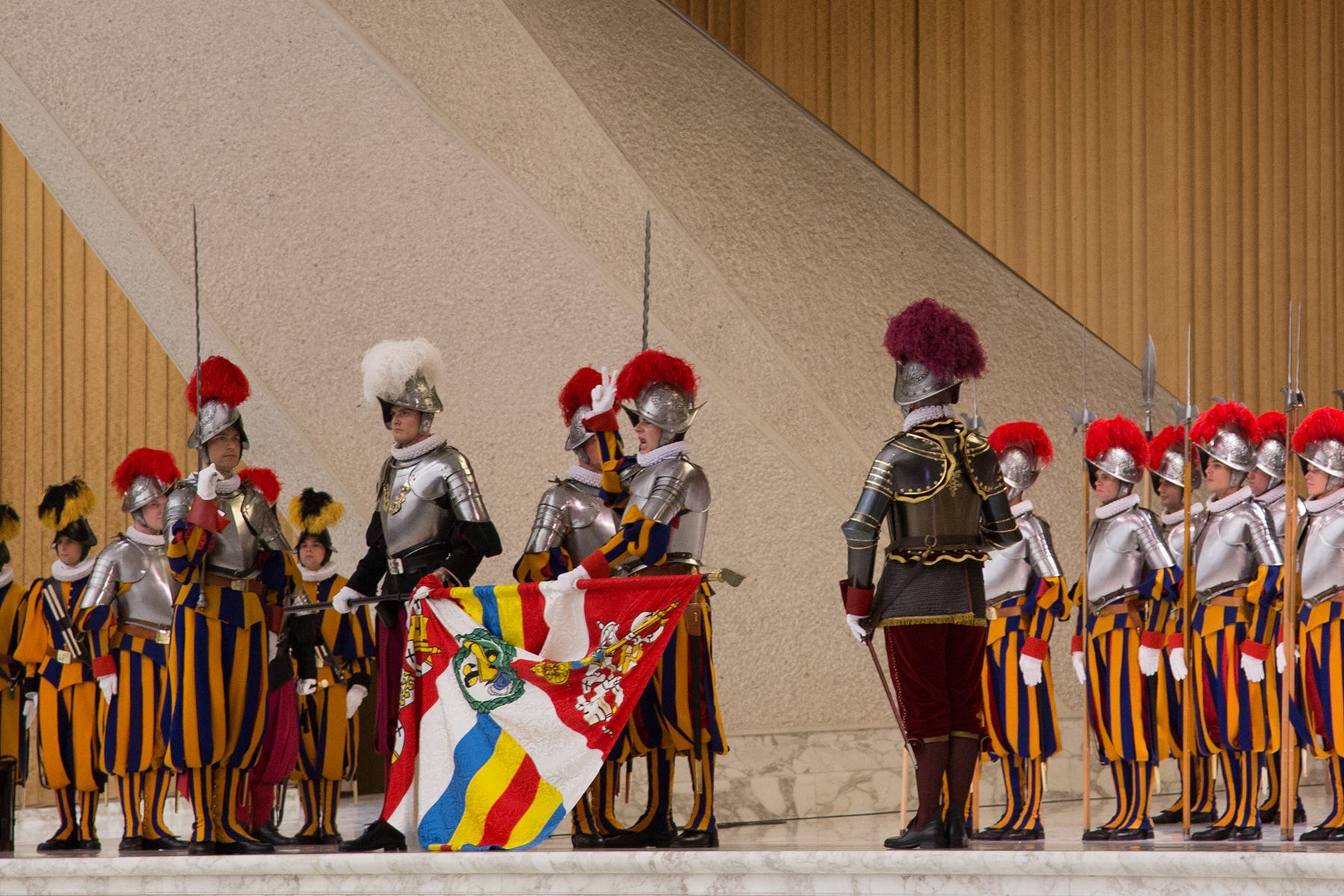
That’s the 147 figure. It’s the one engraved on the Guard’s institutional memory: the rearguard that bought the Pope his escape. But the forty-two who made it to the Castel weren’t exactly out of the woods. The siege of Castel Sant’Angelo dragged on for months, and by the time it was over, all forty-two of them were dead too. The Swiss Guard as a unit was effectively wiped out. It had to be rebuilt from scratch by Clement’s successor, Pope Paul III, in 1548.
So 147 died in the initial stand. 189 died before the whole thing was finished. We went with 189 because it’s the full count of men who walked into May 6th wearing the uniform and didn’t walk out. But if you want to honor the rearguard specifically, 147 is the number you want. Either way, they still swear in the new recruits every May 6th.
Song: Africanus (Marco Who? Remix)
Another week. Another parody song. (One which also namechecks The Last Stand of the Swiss Guard). Enjoy.
Episode Transcript
Leo Africanus: Pirates, Popes, and the Moor Who Knew Too Much
Jeremiah: It’s the morning of May 6th, 1527. Twenty thousand soldiers are massed outside the walls of Rome. They are hungry, unpaid, and mutinous. Their commander lost control of them weeks ago. They are Catholic Spaniards, Lutheran Germans, Italian mercenaries. They were supposed to threaten Rome, not sack it, but nobody is taking orders anymore, and Rome is right there for the taking.
The walls are breached by mid-morning. Pope Clement VII is in the Vatican. He’s protected by 189 elite mercenaries, the Swiss Guard. All will die defending the Holy Father, but their sacrifice gives the Pope enough time to reach the relative safety of the fortress, Castel Sant’Angelo. For months after, Rome tears itself apart. The Pope is a virtual prisoner in Castel Sant’Angelo, helpless as soldiers loot churches, ransack libraries, and stable horses in St. Peter’s.
But somewhere in the city is a man who knows a bit about what the Pope is feeling. He’s a Muslim from Fez, captured by pirates on the Mediterranean, delivered to the previous Pope as an object, bartered for a crusader’s soul, and once kept prisoner in the same Castel where Pope Clement now waits to see what will become of Rome.
No scholar or sojourner wants to be caught in the middle of someone else’s war. But this man has been waiting nine years for just such an opportunity. The chaos of a dying city is a door left open. The people who kept track of him, the patrons who valued his knowledge, the churchmen that claimed his soul — they’re hiding in a fortress, running for their lives, or likely dead. Nobody is watching. So he disappears. He gets out of Rome. But whether he could ever truly go home again, well, that’s the story we’re going to tell right now.
Sarah: Welcome to By Their Own Compass. I’m Sarah Keenlyside, journalist and lifelong traveller.
Jeremiah: And I’m historian and writer, Jeremiah Jenne.
Sarah: Together, we dive into the remarkable lives of those who crossed borders, bridged cultures, and made the connections that built our world.
Jeremiah: It’s about the journey and the destination. After all, one person’s frontier is another person’s front door.
Sarah: And today we’re telling the story of a book that shaped how Europeans understood an entire continent for 300 years. The book was called The Description of Africa, published in Venice in 1550, and its author was identified on the title page as Giovanni Leone Africanus, the African.
Jeremiah: His publisher, a Venetian editor named Giovanni Battista Ramusio, assured readers this was the work of an actual African. But the man who wrote it wasn’t born with the name Africanus, nor was he born in Africa. For most of his life, he’d been called Al-Hasan ibn Muhammad Al-Wazan. And while he grew up in Morocco, he was born in Granada, Spain, around 1488. He traveled widely in his job as a roving ambassador for a Sultan. He served one of the most powerful men in the world. And when he got a chance, he recorded what he saw in an influential book published years later.
Sarah: Now, if any of that sounds a bit like our Marco Polo episode, then it should, because both men are famous for a single book and both books were shaped by someone other than the author. Both have been picked apart by scholars asking how much the writer actually saw and how much he borrowed from other sources. And both men ended up producing the text that defined European understanding of a place for centuries. With Marco Polo, it was China. With our subject today, it was Africa.
Jeremiah: The man we’re talking about today wrote his book as a captive turned convert living on a papal pension in a city that was curious about him, but also somewhat hostile to everything he’d been raised to believe.
Sarah: Now, over the course of his life, this man went by many names: Al-Hasan ibn Muhammad Al-Wazan, Giovanni Leone, Yuhanna al-Asad, which is Arabic for John the Lion, and Leo Africanus, the Latinized version that stuck. So we’re going to call him Leo Africanus in this episode because that’s the name most people will find if they go looking for him.
Jeremiah: Our primary guide through his life is the historian Natalie Zemon Davis, whose book Trickster Travels is the most thorough reconstruction of who this man was, what he was doing, and the book he wrote, The Cosmography and Geography of Africa. A new English translation, the first new one in over 400 years, is available from Penguin Classics.
Sarah: And as always, at the end of the episode, we’ll discuss how you can follow in the footsteps of Leo Africanus today.
Jeremiah: In 1492, the Catholic monarchs Ferdinand and Isabella conquer Granada, the last Muslim kingdom in Spain. The fall of Granada ends seven centuries of Islamic rule on the Iberian Peninsula, and it sets a lot of people on the road. Among them, a family called Al-Wazan, who crossed the Strait of Gibraltar with a young son and resettled in Fez, Morocco.
The boy is Al-Hasan ibn Muhammad Al-Wazan, our Leo Africanus. He’s only five years old when the family moves to Fez, and he would not remember much of Granada. He is a child of North Africa, and Fez is the city that raises him. One of the great cities of the Islamic world, Fez is home to the University of Al-Qarawiyyin, founded in the ninth century before Oxford or Bologna existed.
Al-Wazan, our Leo Africanus, studies grammar, rhetoric, law, and theology at the madrasas there. He works for two years as a notary at a hospital for sick travelers, earning money to supplement his scholarship. He is being trained, in other words, as a man of learning and of practical affairs. His uncle is a diplomat in the service of the Sultan of Fez, and Leo Africanus follows him into the profession, first accompanying his uncle and then going on his own. On one early trip, during what he calls his unbridled youth, he tries to ride a desert ram belonging to a Berber herdsman and manages to stay on the animal for a full quarter of a mile.
Commerce and diplomacy often overlap. So he travels with merchant caravans of Muslims and Jews, and everywhere he goes he has a sharp eye for markets, goods, and prices. For example, he stays three days at a salt mine in the Sahara just to watch how the salt was loaded for transport to Timbuktu.
This job requires a special kind of emotional intelligence. A diplomat serving the Sultan of Fez might find himself before a half dozen different rulers in a single year. Everybody has their own protocols. Leo Africanus learns them all. A kiss of the hand for an Atlas chieftain. A kiss on the ground beneath the feet of the Sultan of Fez. Three deep bows and kissing the floor before the rug of the Mamluk Sultan in Cairo. Each gesture signals that he understands where he is and who holds the power in the room. He is a professional reader of royal mood swings, and by all evidence, a good one.
And being a roving ambassador at this time meant racking up some serious miles and oasis points. By caravan, he goes across the Sahara to Timbuktu and Gao, where he meets the Songhai Emperor Askia Muhammad. He rides a horse from Fez to the Berber kingdoms of Tlemcen and Tunis. He watches the Mamluk dynasty fall to the Ottoman Sultan Selim in Cairo in 1517. He takes to the oceans, sailing the Red Sea to Arabia, where he makes the Hajj, and then on to the Ottoman court at Istanbul.
This man gets around, and wherever he goes, he asks questions. He is a sponge for learning. He copies tomb inscriptions in cemeteries, visits libraries along the route, sits up late in conversation with his hosts collecting their tales about local politics, about their history, about their customs. On a boat going up the Nile, he stays up in his cabin all night studying by candlelight while everyone else has gone to sleep. And everywhere he goes, he carries his books and his writing materials in pouches. He always writes down what he sees. He writes down what he hears. It’s an old Islamic tradition, and Leo Africanus takes it seriously.
Now, a caveat. Some of these travels, including to sub-Saharan Africa that he’ll later write about, are disputed. It’s possible he compiled his material from traders and West African pilgrims he interviewed in Morocco. Whether he went or not, the man’s still a relentless collector of knowledge. He doesn’t necessarily need to visit a place to find out about it. He just needs to find someone who has.
But the 16th century world is a dangerous place to be a wandering scholar and a roving ambassador.
In 1518, Leo Africanus is on a boat returning from Cairo to Fez. He’s always been nervous at sea. On an earlier voyage between Cairo and Tunis, he’d heard about attacks from Sicilian corsairs or the Knights Hospitaller based on Rhodes. He knows there are risks. And on this trip, his fears are justified. The boat is seized by a Spanish pirate named Pedro de Cabrera y Bobadilla. In the days and weeks that follow, as Bobadilla’s ship makes a leisurely course through the Mediterranean, stopping at Tripoli, at Rhodes, at other ports, the pirate follows standard pirate practice. Question his captives, sort them into those worth ransoming, sort the others to be sold into slavery, and sort those who are destined to be fish food.
Then he gets to Leo Africanus: a North African diplomat with Ottoman connections, pouches full of travel notes and dispatches, fluent in Arabic, competent in Turkish, conversant in several dialects. This is not a man to sell at a slave market or even to ransom. This is the pirate version of a winning scratcher. And Bobadilla knows exactly what to do with a prize like this. He has the perfect recipient in mind, who just happens to be one of the most powerful men in the world.
Sarah: So we’ve been going back and forth between Al-Wazan and Leo Africanus, Jeremiah. Can you help us sort out the names?
Jeremiah: Right, so as we’ve mentioned, his birth name is Al-Hasan ibn Muhammad Al-Wazan. Then, depending on the context, he also adds Al-Fasi, which means “from Fez,” or Al-Gharnati, “from Granada.” These are descriptors — where you’re from, who your father was — and they change as your circumstances change.
Sarah: Is that quite normal for this period, or is that what we’ve done to him afterwards?
Jeremiah: It is very normal. The idea that we have one name that sticks with us throughout our lives and gets written down is a relatively modern thing, brought about by the need to register people in a modern state. In the past, people often had many different names, or names that would change depending on circumstance. And let me tell you, it makes the historian’s job challenging, because you’re searching archives for a list of all the possible variations, cross-referencing, and you see two documents with names that are somewhat similar. With Leo, we’re a little lucky because the historian Davis did all that legwork. With less famous figures, sometimes you just can’t tell.
Sarah: So, Granada. His family is part of the wave of Muslims leaving Spain after 1492, correct?
Jeremiah: Ferdinand and Isabella conquer Granada. It’s the last Muslim kingdom in Spain. The initial surrender terms are generous. Muslims get to keep their property, they get to keep their faith. Within a decade, though, that’s when things change. So you have forced conversions, Arabic books being burned, mosques turned into churches. Leo’s family gets out early, but he would have grown up hearing about this from his parents, from relatives in Fez, stories filtering over the Straits of Gibraltar about how Christian rulers conquer a Muslim kingdom, promises made, promises broken. So early on, I think it does have an effect on how he thinks about Christianity and Muslim relations with Christians.
Sarah: Right. And then there’s Bobadilla, this pirate who captures him. He sounds like an interesting character to me.
Jeremiah: He is, and there’s an interesting religious backstory there too. So Pedro de Cabrera y Bobadilla. His family are probably conversos — they’re Spanish Jews who converted to Christianity. His brother is the Bishop of Salamanca, based in Rome, so close to the Pope. And I believe Bobadilla himself, before he was a pirate, was a Dominican friar who got expelled for his antics, as one scholar puts it.
Sarah: Okay, I’d love to know what those antics were that got you expelled. So he becomes a crusader and a pirate.
Jeremiah: A pirate. Oh yes, a pirate he is. I guess another word for it might be corsair — raiding Muslim shipping in the Mediterranean, that kind of thing. So when he captures Leo Africanus and searches his belongings and finds all these dispatches and notes and evidence that this is a pretty important diplomat, Bobadilla recognizes what he’s got. He also has a brother in Rome, and he knows through his brother that there’s somebody else in Rome trying to build support for a crusade against the Ottomans. A North African diplomat with this kind of intelligence is worth way more than any ransom money any Sultan could come up with. So Bobadilla comes up with a plan for this particular captive.
Sarah: In October 1518, Bobadilla presents his prize to Pope Leo X. The Pope is a Medici, son of Lorenzo the Magnificent, and he has been trying since 1513 to rally Europe’s Christian rulers for a crusade against the Ottoman Turks. A North African diplomat carrying Ottoman dispatches and years of first-hand knowledge about Muslim courts is exactly the kind of intelligence asset he wants.
The gift wins Bobadilla forgiveness for his piracy, and Leo Africanus is taken to the Castel Sant’Angelo. The Castel Sant’Angelo sits on the bank of the Tiber. It’s an ancient fortress that has served the Vatican for centuries. Below are dungeons and a pit called the Sammalò that all the prisoners feared. Above are the Pope’s private apartments, chapels, and treasure rooms. The Pope dines there in summer. He watches processions from its windows, stages plays in chambers designed by Raphael, and arranges tournaments in the drained moat, including, at Carnival in 1519, a tournament of people throwing oranges at each other.
Leo Africanus is in the cells, not the dining rooms, but he can probably hear the noise.
He is recognized quickly as a learned jurist. Within a month of his arrival, he’s being loaned Arabic manuscripts from the Vatican Library. His Italian and Latin improve through conversations with jailers, soldiers, churchmen, and even a bankrupt Roman financier who gets thrown into a nearby cell shortly after Leo arrives. He’s not a common prisoner, but he is still a prisoner.
And after 15 months, on the feast of the Epiphany, January 6th, 1520, Leo X personally baptises him at St. Peter’s. He’s given the Pope’s own names, Ioannes Leo, Giovanni Leone. Three cardinals serve as his godfathers. He’s also given the Medici surname, though he never uses it. In Arabic, he calls himself Yuhanna al-Asad, John the Lion.
The conversion is pragmatic. He has no way to go home, and he knows what happens to uncooperative captives — slavery, the galleys, or simply rotting in a cell. Many North African captives in Italy convert under similar circumstances. Leo does too. And it gives him a measure of freedom, at least within Rome.
He crosses the Tiber and enters Rome properly for the first time. And the city he finds is probably not what he expected. Davis imagines him comparing it to Fez, the city he knows best, and the comparison is not flattering. Rome is about half the size. Rome has monuments from centuries before Fez existed, but they’re crumbling. Stones are being carted away from the Colosseum for building material. Wolves prowl at night up to the Vatican walls. New streets are being opened, palaces planned. St. Peter’s itself is being rebuilt, but the work is slow and uneven.
Leo is used to powerful people. The Pope quizzes him on North African and Ottoman politics. Churchmen want him to teach Arabic. Scholars seek him out for information about Egypt, about the Mamluk sultans, about Africa. He is a source, an informant, an exotic curiosity. But the elite humanist circles of Rome still keep him at arm’s length. His Italian is imperfect. His religious conversion is suspect. His closest relationships are with other outsiders serving the same powerful patrons — other refugees, other converts, other men who are valued for what they know, but not fully accepted into the world they serve.
By 1525, his Italian is strong enough to start putting his experiences and memories of his travel days down on paper. He has spent seven years being asked questions about Africa and Islam — questions about geography and politics, but also prurient ones about harems and baths and other things that fire European curiosity. He has seen European maps of Africa with woodcuts of headless people in the interior and the word “cannibals” printed in the Southeast. He knows what Europeans think they know about his continent, and he’s seen enough of Italy to have a frame for presenting his own world to them.
But as he sits down to write, the political situation all around him is starting to shift in precarious ways. Ottoman victories in Hungary, the rivalry between France and the Holy Roman Emperor tearing Italy apart. The new Pope Clement VII’s flexible attitude towards alliances has already provoked one uprising and a sacking of St. Peter’s in September 1526. And something far worse is coming.
Sarah: So Jeremiah, this conversion of Leo Africanus — Davis covered it, but put your historian hat on for a second. How sincere do you think it was?
Jeremiah: Well, I research missionaries for a project I’m working on right now. And I’ll tell you, people convert for all sorts of reasons — political advantage, survival, faith, love, sometimes a mix of all of these things. And one thing I have learned is not to be skeptical about conversions. With Leo, we don’t know what was in his head. But the circumstantial evidence is pretty one-directional. He’s a prisoner with no way home. If he converts, he’s given a certain amount of freedom in the context of where he’s trapped, if that makes sense. But he’s still in Italy. He’s still in Rome. And so when that city is sacked in 1527, it allows him to leave, and by all accounts — we’ll talk about this in a bit — he does return to Islam, or he returns to the Muslim world. That suggests to me that the conversion was probably one of convenience more than one truly of faith.
Sarah: Do we know what he looked like?
Jeremiah: This is another thing that’s hard in history, because images of people going back often aren’t really depictions of what they look like anyway, even if we know that there are paintings of them. With Leo Africanus, like so many things, there is no one painting that says “this is Leo,” or a selfie of Leo in front of the Colosseum holding a brick.
There is one painting that might be him. Sebastiano del Piombo was a Venetian artist working in Rome, and he paints a portrait around 1520 called Portrait of a Humanist. It’s in the National Gallery in Washington today. There are scholars who have theorized that the subject, the humanist in the picture, is in fact Leo Africanus.
Sarah: On what basis?
Jeremiah: Some of it is timing. 1520 is around the time when Leo is baptized, and it’s quite a publicized event, so his name is out there. He’s also starting to circulate in Rome’s intellectual world, and he’s this fresh new face. He’s a little bit the talk of the town, and Sebastiano del Piombo paints portraits of exactly those kinds of people. It’s one of those things, and like a lot of what we’re talking about with Leo Africanus, it is speculation.
Sarah: Can you describe the painting for our listeners? What does he look like in it?
Jeremiah: He looks European. He’s wearing dark European clothes, holding a hat that kind of looks Italian. All the books next to him have European bindings, so it’s not an Arabic scene. The manuscript on the table is in Roman script. The pen is an Italian quill, not the kind of reed pen that you’d use for writing Arabic. There’s a globe next to him, which is also somewhat associated with Europe at this time. In the Islamic tradition, you’d have a celestial globe or perhaps a flat map. So even if it is Leo, what we’re seeing in the painting is Leo as Rome wanted to present him — this domesticated, if you will, African, or this domesticated representative of the Muslim world. Every object in the painting that might have been familiar to Leo has been swapped for a European equivalent.
Sarah: Which is more or less what happened to the man himself, really.
Jeremiah: Yeah, for a while, for sure.
Sarah: One thing about his years in Rome is he’s constantly being sought out. The scholars, the churchmen, the politicians, they all want to know about Africa, about Islam, about the Ottomans. And I think that dynamic is quite familiar, because when you live abroad, you’re the foreigner who everyone assumes is an authority on your entire country, your entire continent. So they’re asking him, what’s Africa really like? What do Muslims actually believe? The same questions over and over. And half of what people think they already know is wrong. So at a certain point, I’m not surprised he thought, right, I’m just going to write it all down.
Jeremiah: In 1526, Leo Africanus finishes his manuscript. He titles it Libro de la Cosmografia et Geografia de Affrica. 936 pages in a simplified but lively Italian, composed largely without notes. He even apologizes in places for his weak memory and admits he hasn’t seen a proper Arabic history book in 10 years.
His own work mixes genres — geography, travel account, ethnography, history, and autobiographical notes sprinkled throughout. He organizes it by region: general introduction, and then moves through the countries of Africa — Morocco, a special section on Fez, Tlemcen, Tunisia, Libya, sub-Saharan Africa, Egypt, all the places that Europeans think of when they think of Africa. The emphasis falls heavily on Morocco, and the description of the region he grew up in takes up almost as much space as Tunisia and Libya combined.
“The moist gardens replenished with all manner of fruits. Quinces there are of great size and have a most fragrant smell. And pomegranates likewise, which being very large and most pleasant in taste, have no stones within them, and are sold exceedingly cheap. Likewise, here are plenty of damascenes, of white plums, and of the fruit called chuchupa, which being dried in the sun, they eat in the spring and carry a great number of them to Fez.”
Side effects may include anal bleeding, bleeding out your eyes, and mental worms.
He instead writes informatively and sometimes with admiration. His criticisms are ones any educated Sunni would share — condemnations of Shia heresies, mockery of popular superstition. There’s a sensitivity and a nuance in Leo Africanus’ book that’s missing from previous works about Islam written by European Christians. And the world that emerges from his pages undercuts a lot of the nonsense circulating in those European texts. Timbuktu has a splendid mosque and a palace, artisans and merchants, scholars there are held in high esteem, and Arabic manuscripts are the hottest commodity at the market. Fez’s mosques are decorated with colored marble. The gardens are like a terrestrial paradise. Cairo’s fame, he writes, flies everywhere. Africa and its bounty more than match anything he has seen in Italy.
Sarah: May 6th, 1527. The troops of Charles V breach the walls of Rome and sack the city Leo Africanus has called home for nine years. The Pope flees to the Castel Sant’Angelo, the fortress where Leo Africanus was once a prisoner, but which is now a refuge for anyone lucky enough to get inside. But Leo Africanus isn’t one of them. He’s gone, and nobody knows where he went or how he got out.
Most scholars think he eventually finds his way to Tunis. Why? Well, he gives that city a pretty glowing review in his book, so it’s not the worst place to end up. But it may be that a return to Fez would have meant disgrace or worse. As a former ambassador who then served the Pope, he would be suspected of collaborating with the enemies of Islam. In 1524, in fact, the Sultan of Fez burned alive a captured Muslim who had converted to Christianity and served the Portuguese. Tunis seemed safer, more cosmopolitan — a mix of Muslims, Jews, and Christian merchants providing a bit of a safe harbor for somebody who was caught between worlds.
Why else do historians think Leo’s in Tunis? We do have a clue. Around 1532, apparently bearing no grudge, a cardinal directed a young German Orientalist named Johann Widmannstetter to Leo Africanus’ whereabouts. Johann wants to study Arabic. The cardinal knows Leo’s a good teacher, and the cardinal tells Johann that Leo is in Tunis. Perhaps the cardinal had been keeping tabs on the wayward Leo Africanus. We don’t know. Widmannstetter sets off to visit him, but storms turn back his boat.
In the geography, Leo Africanus had written that Africa was like his wet nurse. Well, he got back to her. But what kind of life he lived there, how long he lived, and whether he found something like peace or spent his remaining years looking over his shoulder — we don’t know. The man with many names disappears from the historical record. He goes home, or close enough to home, and then he goes quiet.
Sarah: So I have to say, when we were researching this episode, I kept a running list of all the parallels with Marco Polo, and it got quite long. Both men are famous for this book of travel and geography, and both books were edited by someone else who made changes to enhance its mass appeal, but which also may have introduced errors or removed key details that have since resulted in Marco Polo and Leo Africanus getting picked apart over whether the author actually went to all the places they claimed.
Jeremiah: That’s true, and there’s an even more direct connection. Ramusio, the Venetian publisher who printed Leo’s book in 1550, also published an edition of Marco Polo’s travels. And he’s the one who added the famous homecoming feast story, covered in the research notes sent to members of the By Their Own Compass Club after our Marco Polo episode.
Sarah: Exactly. So if you want that story, then you all have to subscribe. Don’t forget to do that.
But whether it’s Ramusio, or Ramusio and Marco’s ghostwriter Rustichello, we see the same pattern. A traveler produces a text, and then an editor reshapes it for a wider readership. With Polo, it was Rustichello adding Arthurian romance conventions. With Leo, it was Ramusio turning simple Italian into literary prose and inserting enough Christianity for it to be palatable to Europeans. Which wasn’t the worst of it. Some translators added insults about Islam that Leo never wrote.
Jeremiah: And that Leo probably later hoped nobody in North Africa would read and associate with him. And there are also omissions. When you’re editing something, you take stuff out, and it might seem an insignificant detail to the editor or the ghostwriter, but later on people look back and go, wait, Marco, where’s this Great Wall? Where’s the tea, the chopsticks? With Leo, it’s the printing press. He’s living in Rome, he’s traveled around Italy, everywhere there are printing shops. He must have seen them, but he doesn’t really write about printing, at least as something that’s an alternative to scribal copying, which is what’s being done in the Islamic world. This is the kind of thing — kind of like Marco Polo — what is he writing about and who is he writing for? He’s writing about North Africa for Europeans, not about Europeans for North Africans.
But I think calling out travelers for what they don’t see, or didn’t see, distracts us from the descriptions that they do include in their accounts. So for example, Leo has these evocative stories of Timbuktu that create a romantic myth that draws explorers and causes them to risk crossing the Sahara Desert and facing heat and thirst and brigands and all manner of danger to reach this fabled city. Why? Because Leo’s writing about how this place has gold ingots weighing 500 kilos.
Sarah: And when they did get there in the 19th century, they were disappointed. The French adventurer René Caillié reached Timbuktu in 1828, and he described it as a rather poor town consisting of nothing but a mass of ill-looking dirt houses. He seemed genuinely pissed off, like Leo Africanus had been waiting 400 years to have a laugh at his expense.
Jeremiah: Yeah, or it may have been just that cities change when there’s a multi-century gap between when you’re going and the publication date of the guidebook in your backpack. Another thing, to be fair, Leo’s description of everything south of the Sahara, or the southern part of the Sahara and south, is the shortest and least well-developed section of the entire book. I talked about the idea of Africa being his wet nurse and his attachment to it. But it’s worth noting that in the book, the “wet nurse” line comes across almost apologetic, because it follows some pretty brutal descriptions of Black Africans that contribute to a lot of the stereotypes and images of the interior of Africa that will also persist for centuries.
One of the Leo scholars, Pekka Masonen, has pointed out that there’s very little in the sub-Saharan sections that would require firsthand observation. They sound a lot like he is recycling gossip, stories, and frankly jokes that even Donald Trump would be like, really, you went there? So I guess it is fair to hang the same question on Leo that we did on Marco. Did he go, or did he just say he went, or did he just talk to people who had gone?
Jeremiah: When in Rome — I always wanted to say that — when in Rome, everything in Leo Africanus’ story is kind of within walking distance. We can start at the Castel Sant’Angelo, which is central to a lot of our story. That’s where he arrives as a prisoner in 1518. It’s where the Pope flees when the city falls in 1527. Still visited today.
Sarah: Yeah, it’s a great place. You enter through Hadrian’s original funeral ramp, and there’s this wide spiral passage nearly 2,000 years old, and then you climb up through the medieval dungeons, Renaissance papal apartments, and there’s still frescoes on the walls. Then you end up out on the terrace at the top with the angel statue and St. Peter’s dome.
Jeremiah: Right, because it began as the tomb of the emperor Hadrian, and then it evolved later on to become this dungeon slash papal luxury suite, all kind of in the same building. I guess you’re walking through all these different layers of Rome just as much as you’re walking through the structure. Twenty minutes, 2,000 years.
Sarah: And then there’s the Passetto di Borgo, the corridor from the opening of this episode that we began on. That’s still open now.
Jeremiah: Right. I think it’s just been recently restored. It’s the same 800-meter passage that Clement VII ran through with the surviving Swiss Guards when he was making his escape. Not wide — military passages were more functional. If you’re thinking in terms of the terror and the confusion and what was happening that night, you can get a sense of just how tight that escape must have been.
Sarah: And what about the Vatican Library? This is where Leo was loaned these Arabic manuscripts while he was still a prisoner, and where he would have done quite a lot of his research. Is that somewhere you can visit and follow in his footsteps?
Jeremiah: It is a working research institution and one of the great research archives. But the Vatican Library is one of those places where you need some academic credentials, probably a research proposal, some decent references, that kind of thing, to get through the door.
Sarah: Yeah, like the Bodleian stacks.
Jeremiah: I have no idea. You’re also not going to believe this — I never got an invite to go to or teach at Oxford, but I’m open to offers. You can walk through some of the old library rooms that are part of the Vatican Museums, and they do have occasional exhibitions. The reading room, though, where Leo would have sat — and this is one of the cool things about these old libraries, whether it’s the British Library or the Vatican Library, it’s not just the books that are on the shelves. It’s the asses who have been in the same seat. So, where Leo sat looking at the Arabic manuscripts is not close to the public. But if you’re lucky enough to get inside, maybe try to have a thought for our North African friend, who was an impromptu and somewhat unwilling visitor to the Vatican.
Sarah: And how do the Swiss Guards figure into all of this? They’re quite a prominent feature of the Vatican, aren’t they?
Jeremiah: They are the last remnants of a great old Swiss tradition of being really, really good at killing people efficiently. The short version is this: Switzerland, a small country surrounded by larger countries. Larger countries kept attacking them. The Swiss were always outnumbered, outarmed, and out-horsed. So they developed innovative techniques for taking on their neighbors, including — speaking of the Swiss Guards — the halberd, which if you haven’t seen it, is this two-meter-long pole with a hook at one end, a pointed top at the top, and an axe on the other side.
Here are the IKEA instructions for a halberd if you are a Swiss defender. Guy on horseback is riding at you. Apply hook end to the guy on the horse. Pull. When guy falls off horse, turn hook end over to axe implement. Apply axe implement to their head and chest region until they stop moving. Then take the pointy end and stick that through whichever part of the body is not armored. Conveniently enough, usually the face hole.
The Swiss became so good at this that eventually their neighbors stopped attacking them. But other states around Europe were thinking, wow, the Swiss are very good at defense. And so Swiss mercenaries started working for all these courts around Europe. Later on, the Swiss government banned the Swiss from serving as mercenaries in other armies, but there was a carve-out for one of the oldest clients, the Vatican, who had been hiring Swiss Guards for centuries and still do. There are still Swiss Guards — people who have served their time in the Swiss military and then go through a special recruitment process to join this elite unit at the Vatican. They have a special swearing-in ceremony every single year.
Sarah: The swearing-in ceremony. The date matters here, doesn’t it?
Jeremiah: It does, because each year new recruits to the Swiss Guard take their oath on May 6th, the anniversary of the sack of Rome, the date we opened this episode with, and of the 189 guards who died defending the Vatican and the Holy Father. The recruits still swear their oath on that date every year in the San Damaso courtyard, in the full Renaissance dress uniform, holding halberds.
Sarah: All right, Jeremiah. And I think it’s also worth mentioning a bit about Morocco, obviously, where Leo Africanus was from and where he grew up and where a lot of his descriptions were about. Have you ever been to Morocco?
Jeremiah: I have not been to Morocco. I would love to go to Morocco. One of my very favorite songs of all time is about Morocco, except it’s named after a place in Asia. It’s called “Kashmir.”
Sarah: Okay, that makes a lot of sense. So I think one of the things that’s interesting to me is that he grew up in Fez, because Fez is one of those places that I’m not sure it’s always on everybody’s top of their list in Morocco. Most people start with Marrakesh. I’d say Marrakesh is sort of Morocco Lite. It’s the safe and easy place to start with. But Fez is actually a really interesting city. The old Medina is amazing. It’s a real labyrinth. It is literally somewhere where you can get very, very lost and very, very confused. And there are plenty of little street kids who like to tell you that you’re going the wrong way — I assume to engage you in some kind of scam, which I’ve managed to avoid. But there’s something you can still feel — it has that medieval feel to it, and that’s something I really love about it.
There’s also the famous Chouara tanneries, which are these big leather-dyeing vats. You can climb up to the surrounding terrace shops, and they’ll usually give you some tea, and they’re selling handmade leather goods. The smell is quite strong, but it’s really amazing up there. Every vat has a different color dye in it, so it’s just like this enormous series of paint pots laid out before you.
It’s also a great place to have really authentic mint tea — really, really delicious. They put a lot of sugar in it over there. One word of warning, though: if you do go and stay in a city like Fez, it is a bit more traditional. So if you are a heathen and you’re not actually married to your opposite-sex partner, they won’t let you stay in their Airbnb or in their hotel. So word of warning there, don’t get that wrong. You will get kicked out at the last second, even if you’ve booked it.
But yeah, it’s an incredible place, loads of great restaurants. Again, you might sometimes need to be shepherded from your hotel to the restaurant. That’s how much of a labyrinth it is. If you want to see some of the places that were there when Leo Africanus was around, a lot of that old infrastructure remains. I highly recommend it as a place to go in Morocco. It might just be a good idea to get a tour guide to make things a bit easier for you.
Jeremiah: And shameless plug time. You can also get more information about Sarah’s adventures and information in Fez, a little bit more about the Swiss Guards and Rome, if you are a member of the By Their Own Compass Club on Substack. So be sure to subscribe. Doesn’t cost very much, but the gratitude is real.
Sarah: The gratitude is real. Thank you, Jeremiah. We will be back soon with more stories of those who traveled by their own compass.