

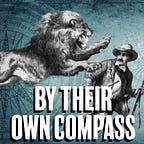

David Livingstone spent thirty years wandering across Africa. In our main episode we spent forty minutes talking about him. We may have missed a few spots.
Dan Kobayashi, a writer and longtime Africa analyst, helps us fill in the blank spaces on the map. Dan spent 13 years as an expert on Southern and Central Africa for the U.S State Department, and most recently analyzed global power competition on the African continent. He has worked at the U.S. Embassies in Lesotho, Zambia, Malawi, and Botswana and has organized U.S observation of five African elections.
We get into the geography we skipped, especially Malawi and Tanzania, and the complicated modern legacy of Victorian missionaries. We also discuss the importance of humility when traveling, and why a walking safari can be both the best and most nerve-wracking way to see wildlife there.
He is currently a writer, consultant, and stay-at-home father based in Geneva, and writes at expatriarch.substack.com. If you would like to hire him for Africa analysis, strategic communications, or writing and editing projects, or to publish his memoir "Africa: A Love Story," ask us for his email.
Show Notes & Reading List
Destinations Discussed
Zimbabwe: Harare, Mosi-oa-Tunya (Victoria Falls), Mana Pools.
Zambia: Lower Zambezi National Park, South Luangwa National Park, Zambezi Breezers.
Botswana: Kalahari Desert, Okavango Delta, Deception Valley Lodge, Chobe National Park, Maun.
Tanzania: Zanzibar (Stonetown), Serengeti, Ngorongoro Crater.
Malawi: Zomba (Chancellor College), Majete National Park.
South Africa: Kruger National Park, Sabi Sands.
Books & References
Men with Tales (Safari guide anthology)
Livingstone by Tim Jeal
Stanley: The Impossible Life of Africa’s Greatest Explorer by Tim Jeal
Don’t Let’s Go to the Dogs Tonight by Alexandra Fuller
Links
Expatriarch: Dan Kobayashi’s Substack – Subscribe Here
Further Reading: “I Suppose I Have to Talk About Lesotho Now” by Dan Kobayashi
Episode Transcript
Jeremiah: Hello and welcome to a special bonus edition of By Their Own Compass. I’m Jeremiah Jenne, and I’m really pleased today to be joined by Dan Kobayashi, a thirteen-year Africa analyst for the State Department’s Office of Africa Analysis. He spent quite a bit of time living and working in the places we talked about in our David Livingstone episode. Dan, thank you for joining us today.
Dan Kobayashi: Happy to be here.
Jeremiah: Now, in our episode, one of the things that was difficult was that David Livingstone went to so many different places in southern Central Africa, and because we had to narrow it down, we chose Zambia, Zimbabwe, and Botswana. But of course, there were so many more places we could have covered. What are some of the places that we missed, and what are your impressions of the area where David Livingstone once explored, traveled, and lived?
The Missing Pieces: Malawi and Tanzania
Dan Kobayashi: Sure. When I first heard you were doing this episode and you invited me on, I thought the choice of Zimbabwe, Zambia, and Botswana—”Zim-Zam-Bots” for short—was slightly curious. Zimbabwe and Zambia everyone obviously thinks of with Livingstone because that’s where Mosi-oa-Tunya (Victoria Falls) is, right on the border. There are statues of him on each side of the border.
I knew that he had crossed the Kalahari and whatnot, but it was in some ways almost a footnote to me. The third country I think of really very heavily with him is Malawi. Part of that is because Malawi is my first African home. It’s probably my favorite place on the continent.
And then, of course, I also think of Tanzania, because Zanzibar was the epicenter of the slave trade, which he worked so tirelessly to abolish. Tanzania is where he had his famous encounter with Stanley—though I’ll note, Burundi claims it was there. I’ve got a picture of myself, which I sent to you actually, in front of the monument in Burundi commemorating their meeting, which absolutely did not happen there. That makes it an even better picture. Tanzania and Malawi are sort of the ones I think of more than Botswana.
That said, Botswana is a critical place. And I could go on and on about Malawi and its joys as one of the underappreciated locations in Africa and home to the single most lovely, nicest people I’ve ever met. But “Zim-Zam” and Botswana are places for perhaps more accessible travel than Malawi, with the qualification that Zimbabwe is not always accessible.
First Impressions and Hyperinflation in Zimbabwe
Dan Kobayashi: The first time I was in Africa south of the Sahara was Christmas 2007. I flew into Harare, Zimbabwe, to meet my then-girlfriend, who was a doctor and who I met while she was doing a Master of Public Health at Harvard. She’d worked in Zim previously and had gone off to take a job in Malawi.
I met her in Zimbabwe in Christmas 2007, and I was a pretty experienced traveler. I’d been to some weird places so Africa might not have been as completely different. But Zim in that particular moment certainly was. One of the tips she gave me at the time was, “Don’t bring one hundred dollar bills.” But this was the period of hyperinflation in Zimbabwe. You would trade, like, twenty US dollars, and you would get—going to betray my New England roots here—a hockey bag full of bricks of 200,000 Zimbabwe dollar notes, all of which were effectively worthless.
You couldn’t get more than that. You had to do business in local currency, but you couldn’t exchange currency on the local market. The official rate was something like 40,000 to 1, and the real rate was 1.8 million to 1, and it was going up every day. It was the highest inflation on record aside from one particular period in Hungary. So, it was a case where if you went to a bar, the second beer would literally cost twice as much as the first beer.
Jeremiah: Wow.
Dan Kobayashi: So you’d buy them two at a time. It was just for an introduction to Africa... it was sort of stunning. Without local help, we’d have been completely out of luck. But my girlfriend had a Zimbabwean colleague who sort of helped us through the system with fixers and how to change money on the black market, because even if you wanted to do it on the legal market, you couldn’t do it, and you’d be changing money for nothing. It was very important to do it in very careful ways.
So this is my introduction to Africa. I’m there as a tourist. I’m not doing any work. I’m not doing sort of “do-gooder” stuff or even neutral stuff. I’m just there to visit my friend and see the sights. But to this day, it’s probably the strangest and most difficult situation I’ve ever traveled in. There was this question of, “Well, if you run out of US dollars to change on the black market, what do you do?” It’s a three-day line to wait at the ATM, and they’ll only let you take out maybe twenty dollars US worth of money at the official exchange rate, which is you’re effectively getting robbed. Same thing with Western Union. We actually had a period where we had to cross over into Botswana at Vic Falls to get Botswana Pula out of an ATM, which we could then change into US dollars, and then take back into Zimbabwe and change for local currency.
Jeremiah: That sounds like quite an introduction to a place. And I would guess over the years, as you move from being a tourist to working or in an official capacity, I wonder, as you saw other people come into Malawi, Zimbabwe, and other parts of Africa for their first time... did you start to catalog a list of the most common rookie mistakes that people coming to Africa tended to make?
The “Farmerista” Approach and Humility
Dan Kobayashi: I was blessed to go in with a reasonable amount of humility because the doctor I was traveling with came out of the Paul Farmer school—what are often called “Farmeristas”—which is one of extreme humility, self-flagellating humility almost, in the context of Africa, or Haiti in the case of Farmer originally.
So there was a real emphasis on respect and local knowledge. Don’t think that you’re so great or so smart coming from outside. Don’t think you understand people. Don’t think that they’re ignorant of the Western world. They have TV. They have radio. Though Malawi only got TV in 1996.
I should add: don’t assume that a person of no particular competence in the US is somehow of more competence in Africa. I’d visit Chancellor College in Zomba, Malawi—the old colonial capital, which is like the fourth biggest city in Malawi—but it has the national college. The professors there are real professors. They’re not interested in having some random American come in and teach there. There are no jobs for that, any more than I could walk into Harvard and say, “Hey, I’m a very smart guy.”
But it’s easy to be arrogant. One of the themes that’s unifying from Livingstone’s time through to today is Africa remains a place where Westerners, especially white Westerners frankly, of no particular distinction can go and be treated like they are something more than they are.
But I think you have to be frank about the fact: I am not Livingstone. I am not going there in that time. As monstrous as some of these adventurers were, they were doing wild, incredibly risky things in places that really were unknown or relatively unknown to people like them. Stanley, as you correctly note, was a huckster and a charlatan. But you can’t say he lacked for physical bravery. Going into the African interior, having almost everyone on your mission die, and then somehow escape and do it again—just as Livingstone did, until it of course caught up with him eventually—is no joke. And that is decidedly not what we are dealing with as visitors to Africa, even in quite remote and rural places now.
Perceptions of Livingstone
Dan Kobayashi: To answer your question about perceptions of Livingstone, I do think Livingstone is viewed differently in general. In South Africa, there was the “Rhodes Must Fall” movement to take down statues of Cecil Rhodes some years ago. I think there is very rightly a fair amount of antagonism towards him. There are other explorers who are viewed quite negatively, Stanley often among them. I think Livingstone is generally viewed differently.
He is, I think, perceived by a lot of Africans in southern Africa and other parts of East Africa as having brought Christianity to Africa. His extremely poor record as a missionary notwithstanding—you know, he converted one more person than I did. And I’m not a Christian.
Jeremiah: Yeah. We had a joke about that in the episode that we ended up cutting: that the number of people he officially converted probably wouldn’t be enough to field an entire baseball team, or even an infield.
Dan Kobayashi: I mean, he couldn’t have fielded an entire tennis match from the historical records, as I see it. But he still does have that reputation. Christianity is a very central part of life in most of southern Africa. There are still Islamic outposts there, including in parts of Malawi, but Christianity is central to life. And people generally regard its importation as a positive thing. There is syncretism, of course—combination with local religions that predate Christianity—but that’s generally positively received.
At Makerere University in Uganda, long regarded as the top university in East Africa, they have a giant statue outside one of the dorms of “Black Livingstone,” which is a depiction of Livingstone as a black African man, which I find fascinating. So I think he’s held in pretty high regard still. He is not viewed as rapacious in the way that a lot of other explorers, or conquerors or colonialists as the case may be, are.
Jeremiah: When we look at the map of where he went, it covers an area that today are so many different countries. For example, one of the places that we didn’t talk as much about in the episode as a modern-day place, Tanzania... Not only was that where he met Stanley, but of course when we talk about Tanzania, we also have to talk about Zanzibar, which at that time was the center of the slave trade.
Dan Kobayashi: Yeah. That’s correct. And there’s a church in Zanzibar, in Stonetown—which is pretty much one hundred percent Muslim—adjacent to the site of the last open-air slave market in East Africa. And Livingstone is perceived, not without reason, as having been a crucial figure in the end of the East African slave trade.
And I should note, his relationship with the actual slave traders was complicated. While he categorically opposed them, there were many times where he relied on them for his own personal security. There’s one Swahili slave trader of great historical note named Tippu Tip, who was sort of the “king of the slave traders” in East Africa, who Livingstone relied on for transport and directions a variety of times. So these were the guys who knew how to get around the area. And Livingstone was not immune from having to rely on information they’d acquired through their ugly, ugly business.
Jeremiah: In the context of his time, and compared to some of his contemporaries, I have to say I feel like Livingstone does get a certain... he’s in a special category. And it comes back to something you were saying earlier. There’s a humility about him. Not in every aspect of his life. As we talked about in the episode, he was probably a bit of a “project” as a husband and father. But when dealing with people that he would encounter on his travels on the African continent... I’m not saying it was always perfect, but he does seem to approach these interactions with a degree of humility that doesn’t necessarily come across in the writings of other Victorian-era explorers of the continent. And I wonder if that might be part of the reason, not only for his success as an explorer, but also why he’s remembered so well today.
Dan Kobayashi: I think that’s right. It’s hard to look at Livingstone and his work and his legacy and think, “This is a guy who was going there for the purpose of greed and rapaciousness and to dominate the local people.” Was he there to export foreign values? Yes, absolutely. But at the very least, it was with largely good intentions. Now the road to hell is paved with good intentions, but I’ll still take good intentions over bad intentions any day.
And, you know, you’ve mentioned Burton... like, Burton was a monster. Even to his fellow Europeans. I want to note on Stanley: I know you relied heavily on Tim Jeal’s book about Livingstone for the background in this episode. His book on Stanley is one of my favorite books about African exploration. And one of the arguments he makes is that Stanley, by our current standards, made himself look worse than he actually was in the name of “fabulism”—that his readers were interested in stories of taming savages. So he greatly exaggerated his personal cruelty. And by the standard of explorers, he was fairly reasonable. Not Livingstone, but not like some of these other guys. Tim Jeal’s insights into exploration in general are just superb.
The Missionary Impulse
Jeremiah: Yeah, I really enjoyed that. I research missionaries as part of my own work. I’m doing a book on missionaries. And it is interesting to me when I look at, again, all missionaries are not all the same. They all have their different motivations. Obviously, Livingstone was not interested in conversion, but is there a “missionary impulse” that comes out of this era? For all the best reasons—the desire to help, the desire to go places, the desire to get involved... But at the same time, are there people who are working in this part of Africa today who are doing good but still have that kind of missionary impulse that still seems very similar to what many of Livingstone’s contemporaries were trying to do?
Dan Kobayashi: So, I think most people going out there at least now approach it with a certain amount of humility, that there’s at least a fair amount of: “Am I actually accomplishing anything here? Is this worthwhile? How do I advance this while respecting local traditions?” There are people who are very committed to localization and moving off of the “we’re coming here to fix everything” approach versus giving local organizations tools.
This question of, “Can an international organization exist forever? Should it exist forever?” ... My wife came up through an organization in Tanzania and effectively their model was going into an area where there was really limited knowledge about HIV in rural areas. And then over time—this was a very successful organization—it ceased to exist. It ran out of business in large part because the work was actually done. There had been more local capacity built up; the Ministry of Health took over some of these functions. There was vocabulary about how to talk about HIV. People were getting treatment. The external part withered away so the local institution could flourish. And I think that’s ideally where we want to be.
There are a lot of places where that doesn’t happen. This sort of “in perpetuity, the purpose of providing aid becomes to provide aid” is a real problem. That said, I think the notion that the HIV crisis, given its magnitude, could have been addressed as effectively without massive external infusions of money and resources is extremely difficult to imagine. A place like Malawi, for example... they don’t have resources. At the end of the day, they have coffee, sugar, tea, tobacco and—depending on the market price—uranium. There’s no way to grow the economic base. The US government filled in a huge part of the health budget, but that money is literally not coming from anywhere else.
We should not overrate our importance in any of these issues. You know, being outside, you’re going to make mistakes. And I think the analogy between the old missionaries and development workers of today is absolutely a fair analogy. It’s not perfect. I know plenty of people in Africa will say, “Well, yeah, but we didn’t have schools before the missionaries came here. We didn’t have literate populations,” and so on. I think there is more ambiguity towards missionaries amongst the Western left than there is in much of the African population. I think there’s still a lot of appreciation for missionaries, despite a lot of the really awful things that were done as part of the missionary process.
To this day, you still have plenty of missionaries working in the most remote parts of countries, living much more humbly than diplomats or NGO workers do, and providing services that would be unprovided other ways. There are a lot of other missionaries that are accomplishing nothing too—you know, the “mission trip” culture where if you just sent a check for two thousand dollars instead of spending five thousand dollars on the trip, you would have done a lot more good.
Travel Recommendations: Beyond the Ordinary Safari
Jeremiah: We’ve talked a lot about the challenges in this part of Africa, and obviously that’s important. But I’ve traveled a little bit around Tanzania, I’ve traveled a little bit around East Africa. Tanzania especially has some of the most beautiful things I’ve ever seen in the world. And I was wondering—not to put you too much on the spot, because I know you’ve traveled to a lot of places—but for modern-day travelers, what are some of the places that you might recommend that maybe people don’t always think about? Obviously saying “I want to go to Africa” is almost meaningless because it’s such a big statement. But if somebody wanted to really experience a part of Africa that they might not otherwise think about, what would you recommend?
Dan Kobayashi: Yeah, what generally people do when they want to go on the African safari is they either do some combination of Tanzania or Kenya: the Masai Mara on the Kenyan side and Serengeti on the Tanzanian side. And that can be combined with Ngorongoro Crater, which is sort of, from an American perspective, the Africa you really imagine—the vast plains. Even when there are no animals there, it’s still stunningly beautiful. Ngorongoro Crater... take every single animal away, and it’s still an absolute wonder of the world. That’s the classic, “you’re doing one safari in your life” trip. That said, it’s more of a mass-market product. There are sort of cruise-ship-adjacent ways to do it.
Then there’s the South Africa route. In South Africa you’re more likely to see all five of the Big Five, largely because they have a relatively robust rhinoceros population that they don’t in East Africa. But a lot of the South African safari locations are what they call “bushveld.” It’s like, if there were no animals there, this would not be that interesting. You’re just driving around acacia trees forever.
I think my favorite safari experiences have really been ones where you do get more off the beaten track. Not to un-touristed places, but to places that are less touristed, more obscure, where if you see a lion, it’s not “Here’s a lion surrounded by thirty safari trucks.” And those places do still exist.
I know you guys reflected on it in your piece: Botswana is really, really good for that. Botswana has really placed an emphasis on high-end, low-volume tourism. Some of that is enabled fundamentally by the remoteness of parts of Botswana. One of the best safaris of my life was a trip to Botswana where the animal life was relatively limited. We went when I was living in Lesotho. My parents flew in and we went to Botswana, to the Kalahari to a lodge called Deception Valley, and to the Okavango.
It was a low season trip—rainy season—so you’re getting less wildlife because things are growing. The Kalahari was green; our guide said it was the greenest they’d seen it in a decade. And in the Okavango, the floods hadn’t hit yet. So when you’re going through on the dugout canoes, you’re not seeing that much wildlife. Mostly you’re getting hit in the face by hippo grass.
But we had it to ourselves, which is a magical experience. Being in the middle of the Kalahari with effectively no one around but the lodge staff is one of the most special and meaningful experiences of my life. We got them to turn off the lights so we could stare up at the Magellanic Clouds—the galaxies that Magellan saw when he went south of the equator.
This particular lodge is owned by an Afrikaner family, but the son who was our guide speaks the local San language, Naro. No one who’s not one of the members of this ethnic group speaks it. But there was a chance to go out with some of the Naro people and learn about their traditional way of life. I had massive fears that this was going to feel like a “human safari,” which is the worst thing in the world. But it was the opposite. Just talking with these Naro people as they explained how in the old days they would hide water in ostrich eggs, how to light a fire in the Kalahari, how they would make the poison for their arrows... The Kalahari has effectively no rocks; giraffe bone was the hardest material around. Thinking about common humanity—that even in the middle of the Kalahari, under the ancient ways, there was still art and music and stories—was really deeply humbling.
And then you go to the Okavango, where you can do a walking safari. I’ve done walking safaris in a few places, but one of the interesting things at my particular lodge was that the guides did not have rifles. Their theory was if you have a rifle, you’re more likely to do dumb stuff and take dumb risks. On the other hand, being told, “If we see a lion, they might charge, but don’t worry, it will be a mock charge as long as you don’t turn and run. They’ll stop when they get within a meter and a half of us...”
Jeremiah: That’s pretty close.
Dan Kobayashi: It’s under two yards. It’s incredibly close. I have never been so glad to not see that many animals at close range. I’m there with my parents, who are in their early seventies at the time, and it’s like... this is legitimately scary. And then we got this book at the lodge called Men with Tales, which was sort of stories of bush guides involving people being dragged away by lions and run over by Cape Buffalo. I would not recommend going on a walking safari without a guide with a rifle.
Canoeing the Zambezi
Dan Kobayashi: In terms of other things you can do, in the Lower Zambezi National Park in Zambia—which is effectively the Zambian side of the Zambezi, where it’s Mana Pools on the Zimbabwean side—you can canoe on the Zambezi. I did a three-day canoe trip there which was absolutely grueling (headwind), but incredible. It’s an unmediated experience with the animals, but with a pretty good degree of safety because when you’re in the middle of the river, hippos generally don’t go where the water is deep because they don’t swim.
And there’s a certain level where you can do this more economically. I did a very economical safari to South Luangwa in eastern Zambia. That was really Kool-Aid and spaghetti and sleeping in tents, but it was a terrific safari with elephants walking through camp.
There’s been a lot of rehabilitation of parks that were quasi-dead recently. One of the most wonderful safaris I had was in a park in southern Malawi called Majete National Park, which was taken over by African Parks and repopulated with wildlife. When I was there around 2013, there were very few people but it was absolutely teeming with life.
Jeremiah: Well, for those people who do want to follow in the footsteps of Livingstone, there are many places you can go. You can do it the old-fashioned way with a walking safari—hopefully that ends with a different lion encounter than Livingstone had. And of course, the Zambezi River. Canoeing up that river sounds absolutely amazing. That sounds like a once-in-a-lifetime journey.
Dan Kobayashi: I recommend canoeing down. Going up would be brutal.
Jeremiah: Okay, there we go. Canoeing down the river.
Dan Kobayashi: Zambezi Breezers is a place you can start. At least when I was there, the parents of Alexandra Fuller, who has written several books about her life in Rhodesia, hung out around there and were fascinating to talk to.
Outro: Africa: A Love Story
Jeremiah: Well, Dan, thank you so much for taking the time to come on the podcast. Thank you for sharing your experiences and your information about this part of Africa. It’s been a real treat to see you and to catch up. And as you mentioned... did you want to talk about the book that you are currently working on right now?
Dan Kobayashi: Sure. I’ve got a book that’s finished but looking for a publisher called Africa: A Love Story. It’s a tale of “boy meets continent.” I’m not so presumptuous as to think I can tell the story of Africa, but it’s my story of falling in love with the continent. How I went there in pursuit of a traditional love story with another human being, and that didn’t last, but the love of the continent did. And how I sort of made the transition from inexperienced traveler to an Africa professional—working at the State Department, being an election monitor in Zambia, and overcoming some real challenges.
So, if you’re a publisher, give me a call. Otherwise it will be out someday, somehow. I currently write at https://expatriarch.substack.com/. I wrote a little bit of “Everything you need to know about Lesotho but were afraid to ask” that we can probably put up a link to here.
And I encourage all of you: if you go to Africa, get out there. Don’t just do the safari. Figure out ways to get into cultural spaces in the cities. It’s beautiful, it’s fascinating, and it’s a part of our world.
Jeremiah: Well, thank you so much, Dan, and thank you all for listening. We’ll be back next week with another episode of By Their Own Compass.


