


Paid subscribers in the By Their Own Compass club receive a special bonus email with information about our latest episode. It’s our way of saying thank you for supporting By Their Own Compass.
This special edition is available to all subscribers. If you’re not a member of the By Their Own Compass club and would like to receive research notes, reading lists, travel links, and a complete transcript of every episode, consider supporting the podcast with a paid subscription.
Research Notes: Behind the Episode
What happens when we have too much information (or not enough)
There’s a challenge to doing an episode on David Livingstone, and it’s the same one we faced in our earlier episode on Ibn Battuta. These are travelers who spent decades on the trail. Each was involved in so many adventures and encounters. Both left behind voluminous travelogues. For the researcher, it becomes an embarrassment of riches. Which stories to talk about? What destinations to cover?
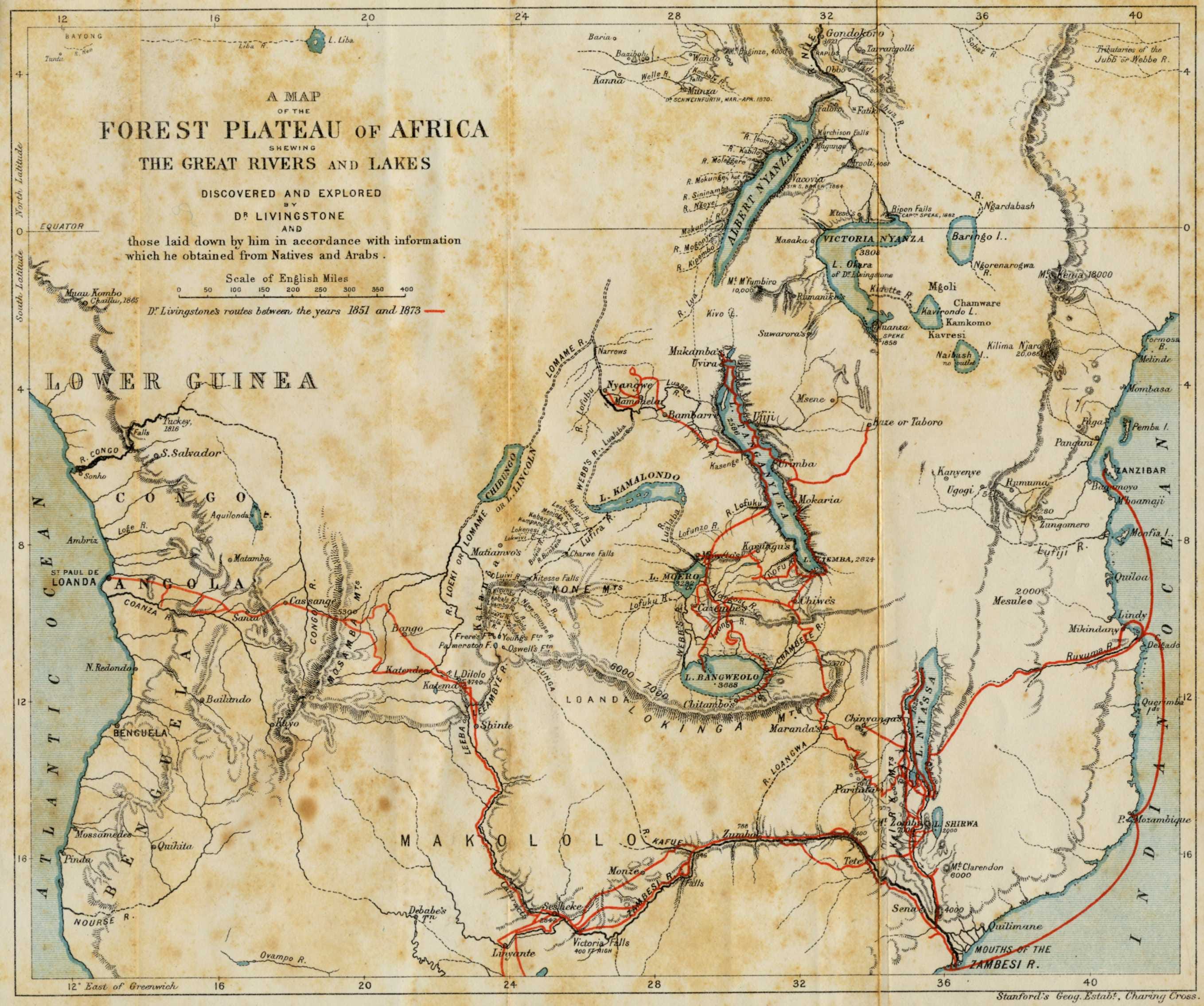
For someone like Livingstone, there’s always the option of releasing a multi-episode podcast mini-series. Many podcasters do. But when we started By Their Own Compass, we had the idea of limiting each topic and traveler to a single episode. We wanted to avoid a list of episodes filling your feed with titles like “David Livingstone in Africa, Part 7: When Stanley sneezed at lunch.”
As a result, curation of material became a big part of our job.
It doesn’t mean we won’t someday return to David Livingstone (or Ibn Battuta, or Emily Hahn), or to any of these lifelong peripatetic wanderers. We can always have an episode following their adventures to new places, but we just aren’t going to do it serially.
[Side note: Our episode on Emily Hahn focused primarily on her time in China, but before she landed in Shanghai, Emily spent over two years in Africa, including an epic journey walking hundreds of miles across the continent in 1932. We are DEFINITELY doing an Emily in Africa episode in the future.]
Interestingly, the challenge with David Livingstone of having too much material to cover in a single episode was the opposite of the problem we faced with Sacagawea. In her episode, we were really only talking about two years of her life. That’s a long trip, but nothing like Livingstone spending over half of his life in Africa or Ibn Battuta’s decades-long jaunt around the Muslim world. And unlike Dr. Livingstone or Ibn Battuta, there are far fewer surviving firsthand accounts of Sacagawea, and nothing from her personally.
Sometimes we, the researchers, know too much. Often, we know too little.
With Sacagawea, we had to deal with the lack of confirmable information about her life. This meant we risked projecting onto her, as many other writers have done, an image that reflected our own ideas, beliefs, and experiences rather than hers. We took pains to avoid the trap of “Sacagawea as Cipher.”
For Livingstone, we have his books, access to his journals, and many other writings about him. We can learn intimate knowledge of his family life and relationships. Ultimately, we know a lot about the man. We can read Livingstone (or about him) at his best, and at his worst.
It would be nice if all of us were judged by our best moments rather than our worst, but that choice is rarely in the hands of figures sufficiently famous (or infamous) to warrant historical scrutiny, or at least a graduate school thesis. It can be too easy, seductive really, to cherry-pick. See…we TOLD you he was a great guy/a total dick. You can read all about it in his journals.
How then to fairly portray him without, as some would do, holding him up as a Victorian saint or tearing him down as yet another self-righteous, excitable colonial-era white boy in Africa? Obviously, the truth is in between. How do we present a story that is representative of Livingstone’s life and character, accurately reflects the time and context in which he lived, fairly characterizes the people he meets, and also presents a suitably evocative picture of the places he traveled?
It’s tough and one of the hardest parts of doing a podcast.
For example, was Livingstone obsessive and probably a difficult husband? Sure. Did he love his wife? It’s hard to say no. He was devastated by her final illness and mourned her passing. It’s in his journals. It’s in his memoirs.
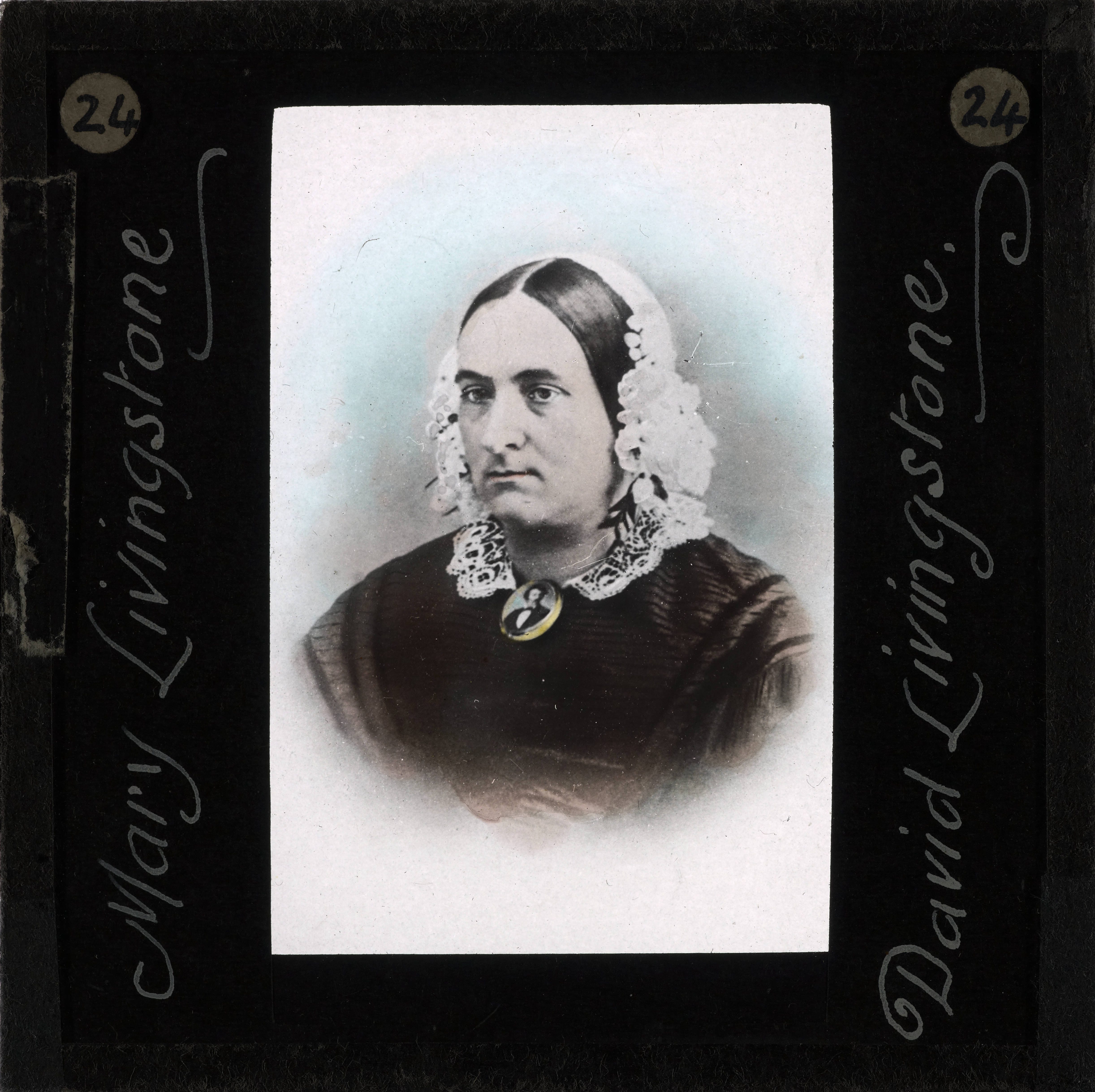
You could argue that part of what made him a challenging father and husband was his obsession with finding a navigable water route from the coast to the interior of Africa. “David Livingstone, slowly killing myself to end slavery” is a hell of a LinkedIn profile.
He was not, of course, a perfect person. But we also hope that, in the course of the episode, listeners gain a sense of his intentions, however noble and occasionally misguided. He was a product of his time, not excusing some of his attitudes, but context matters. Livingstone was different from many of his contemporaries.
Livingstone showed greater cultural sensitivity than his fellow Victorian explorers, such as Richard Burton. As with Livingstone, Burton was an incredible linguist, but unlike Livingstone, Burton was also an enormous prick to everyone around him and spectacularly racist.
While many of his attitudes, observations, and some of the language he used to describe Africa seem problematic in the 21st century, it’s also true that Livingstone possessed an understanding and empathy for local communities that were not shared by most other Europeans in Africa and would be almost completely lacking in the decades after his death, as the European powers raced to divide up the continent.
Livingstone in “Africa.”
Finally, we wanted to avoid Livingstone being an “Africa” episode, which is also why we focused on his time in the southern part of the country – particularly for the travel section at the end of our episode. Africa is enormous, and for too long the term “Africa” has been shorthand for subsuming a continent’s worth of cultures, landscapes, languages, and people into a single unit. We love that Toto song as much as the next person born before 1985. It’s a yacht rock classic, but geographic precision is not one of its strengths.
We hope we did a fair job telling Livingstone’s story in this episode, but we’re always open to feedback. Send us a note or email. Paid subscribers can even ask their questions “On Air” if they so choose. Just let us know.
Jeremiah’s Compass Reading List
For those who prefer screens
Forbidden Territory: Stanley’s Search for Livingstone
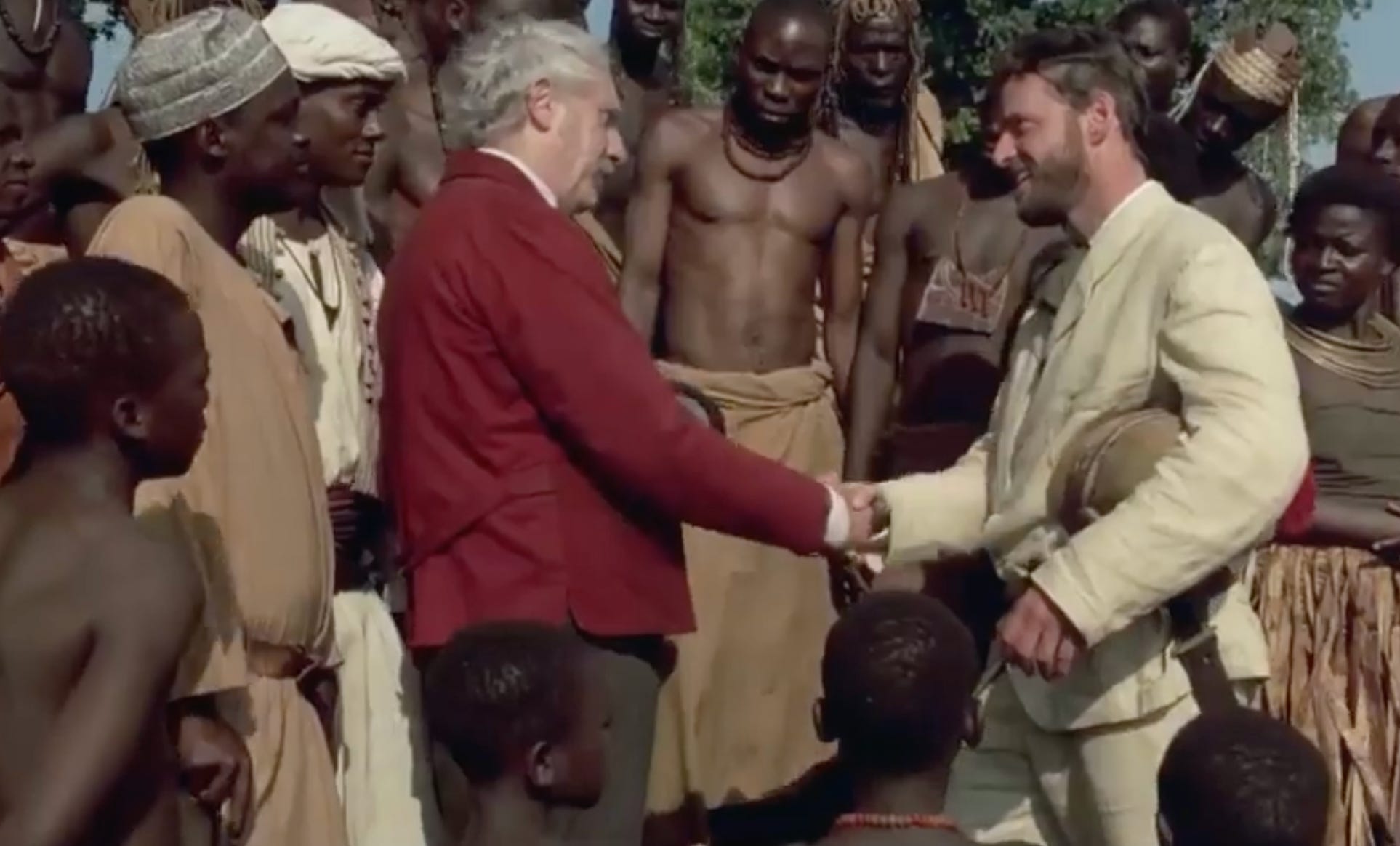
Forbidden Territory is a heavily romanticized 1997 television movie produced by National Geographic. David Livingstone is played by Nigel ‘Yes, Minister’ Hawthorne. Full disclosure: I didn’t watch the movie until after I recorded the episode. If I had only known that Henry Morton Stanley had Aiden Quinn’s dreamy Legends of the Fall eyes, I probably wouldn’t have called Stanley a “dick” so many times in the podcast. #Hindsight
Watch a dramatization of the famous meeting as imagined by Forbidden Territory.
Primary Sources
Livingstone’s 1871 Field Diary
This is the diary Livingstone wrote over copies of The Standard newspaper using ink made from berry seeds when he ran out of supplies. For 140 years, it was virtually illegible until spectral imaging technology revealed the text in 2011. Unlike the edited versions he prepared for publication, this shows his raw, immediate reactions, including his response to the Nyangwe massacre and the months leading to his meeting with Stanley. Essential for understanding the gap between what Livingstone experienced and what he chose to publish.
Livingstone, David. Missionary Travels and Researches in South Africa (1857)
Livingstone’s first major book, recounting his journeys from 1840 to 1856, made him famous in Britain and established his reputation as both an explorer and a humanitarian. For travelers: shows how Livingstone presented Africa to Victorian audiences and includes detailed observations of landscapes, peoples, and cultures that shaped Western perceptions for generations.
Livingstone, David. The Last Journals of David Livingstone, in Central Africa (1874), edited by Horace Waller
Published posthumously, Livingstone’s journals from his final expedition (1866-1873) were heavily edited by Waller. But it can also be interesting to compare the journals with the 1871 Field Diary to see how Livingstone and others revised his experiences for public consumption. Historians value them for documenting Livingstone’s observations on the slave trade; travelers will find vivid descriptions of the landscapes and peoples of central Africa.
Stanley, Henry Morton. How I Found Livingstone (1872)
Stanley’s account of his expedition to find Livingstone, including the famous meeting at Ujiji. Take it with several grains of salt (Stanley was a master of self-promotion) but it is essential for understanding how the “Livingstone myth” was constructed. For travelers: offers a different perspective on the regions Livingstone documented.
Modern Biographies and Scholarly Works
Jeal, Tim. Livingstone (Revised and Expanded Edition). Yale University Press, 2013.
The definitive modern biography. Originally published in 1973, this 2013 edition incorporates findings from spectral imaging of the Lost Journals. Jeal dismantles the Victorian saint myth while presenting Livingstone as a complex figure capable of both self-sacrifice and cruelty. Unlike earlier hagiographies, this draws on field notebooks to reveal graver problems among African followers than previously understood. For historians: unparalleled scholarly rigor. For travelers: excellent maps and a sense of the actual journeys.
Lewis, Joanna. Empire of Sentiment: The Death of Livingstone and the Myth of Victorian Imperialism. Cambridge University Press, 2018.
The first “emotional history” of the British Empire, examining how Livingstone’s death shaped British imperial sentiment. Unlike biographies focused on Livingstone’s life, this work explores his afterlife—how the myth was constructed and deployed to justify colonial rule in Africa. For historians: essential for understanding the emotional underpinnings of Victorian imperialism. For travelers: explains why you’ll still find Livingstone memorials across southern and central Africa today.
Gappah, Petina. Out of Darkness, Shining Light. Faber & Faber / Scribner, 2019.
Winner of the 2020 Chautauqua Prize and one of NPR’s Best Books of 2019. This novel tells the story of Livingstone’s final journey from the perspective of his African companions, particularly Halima (his cook) and Jacob Wainwright, who carried his body 1,500 miles to the coast. Based on ten years of research, it “decolonises” the Livingstone story by centering the voices usually relegated to footnotes. For historians, it offers perspectives typically excluded from official narratives. For travelers: the journey itself becomes the story, revealing the landscapes and peoples encountered along the route to Zanzibar.
-JJ
Following in the Footsteps of David Livingstone: Sarah’s Modern Travel Guide
In defence of the splurge
I was particularly excited for this episode because I am firmly in defence of splurging – occasionally, deliberately – on extraordinary guides and places to stay in the world’s most epic destinations. And if there’s anywhere you want to dig deep for, it’s a safari in southern Africa.
Going to Paris or Rio is one thing – going to Botswana or Egypt or Tibet, quite another. These are life-changing, soul-connecting destinations; ones where you realise you’re in the presence of something vast that transcends your current view of the world. They spark a sense of wonder you simply don’t get from other places.
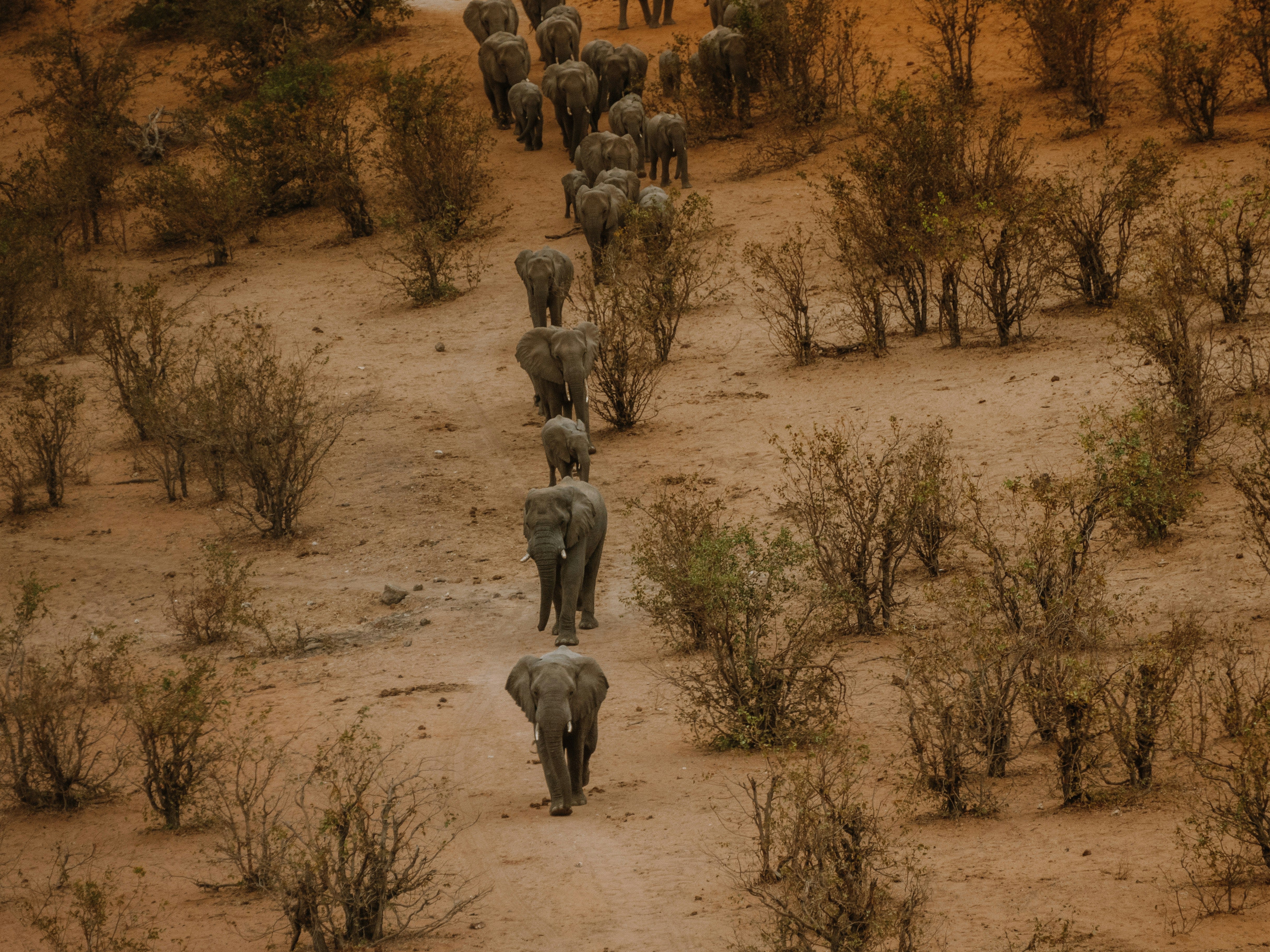
Livingstone spent years in what is today’s Botswana, Zambia, and Zimbabwe. To keep it simple, this region of southern Africa is your go-to destination for wildlife, nature, and safaris. Are they expensive? Yes. But here’s why. Many lodges and tented camps are on concessions (designated national parks for wildlife, generally held under private lease) that require significant upkeep – from anti-poaching patrol units to landscape conservation experts to land management. The Matetsi Victoria Falls Camp, for example, oversees 20km of the Zambezi River. The family that runs it redid 550km of road network just to make sure the wildlife had access to water. And that’s before you consider the fact that all of your food, drink, and safari outings are included.
Today, the region of Africa we cover in the episode is part of the Kavango-Zambezi Transfrontier Conservation Area (which encompasses 5 countries) and was created in 2011 to protect and smooth migratory routes for wildlife – especially Africa’s savanna elephant population. So, if you’re still in any doubt about the reason visiting these countries as a tourist is expensive, just remember that conservation is key to preservation, it creates jobs, and it means the world’s most incredible wildlife doesn’t become just another thing we destroy.
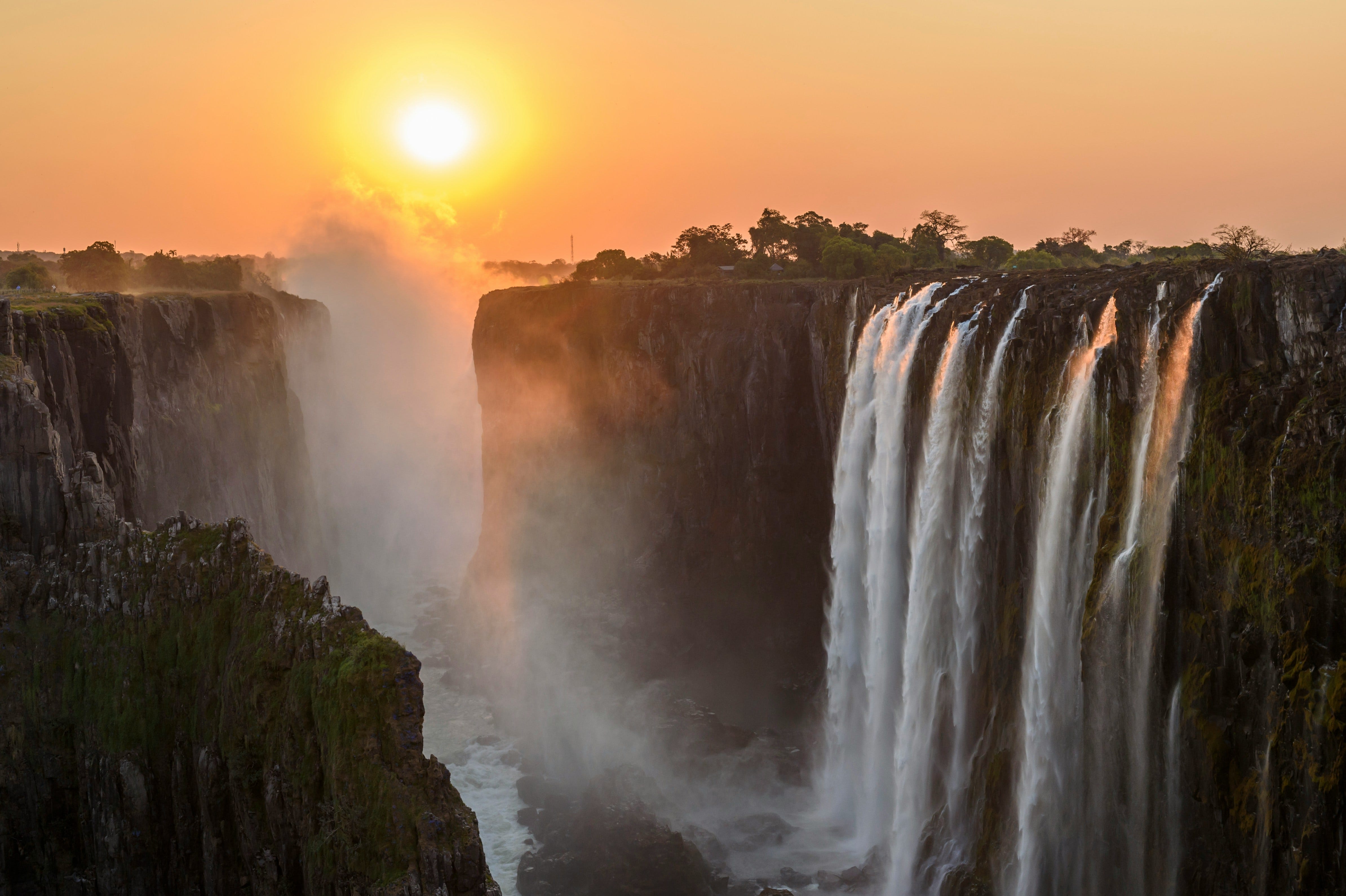
Which brings me to another point. If you’re addicted to your devices, a safari holiday in one of these three countries will sort you out good and proper. Not only is it nigh on impossible to get phone reception (or good wifi) in many of these wildlife lodges, but the sheer majesty of what you’ll see in these countries (whether it’s the deafening noise of the mighty Mosi-oa-Tunya or a pride of lions facing off for a showdown) will force you to be completely and utterly present for days at a time. Enjoy it. These small wins are hard to find.
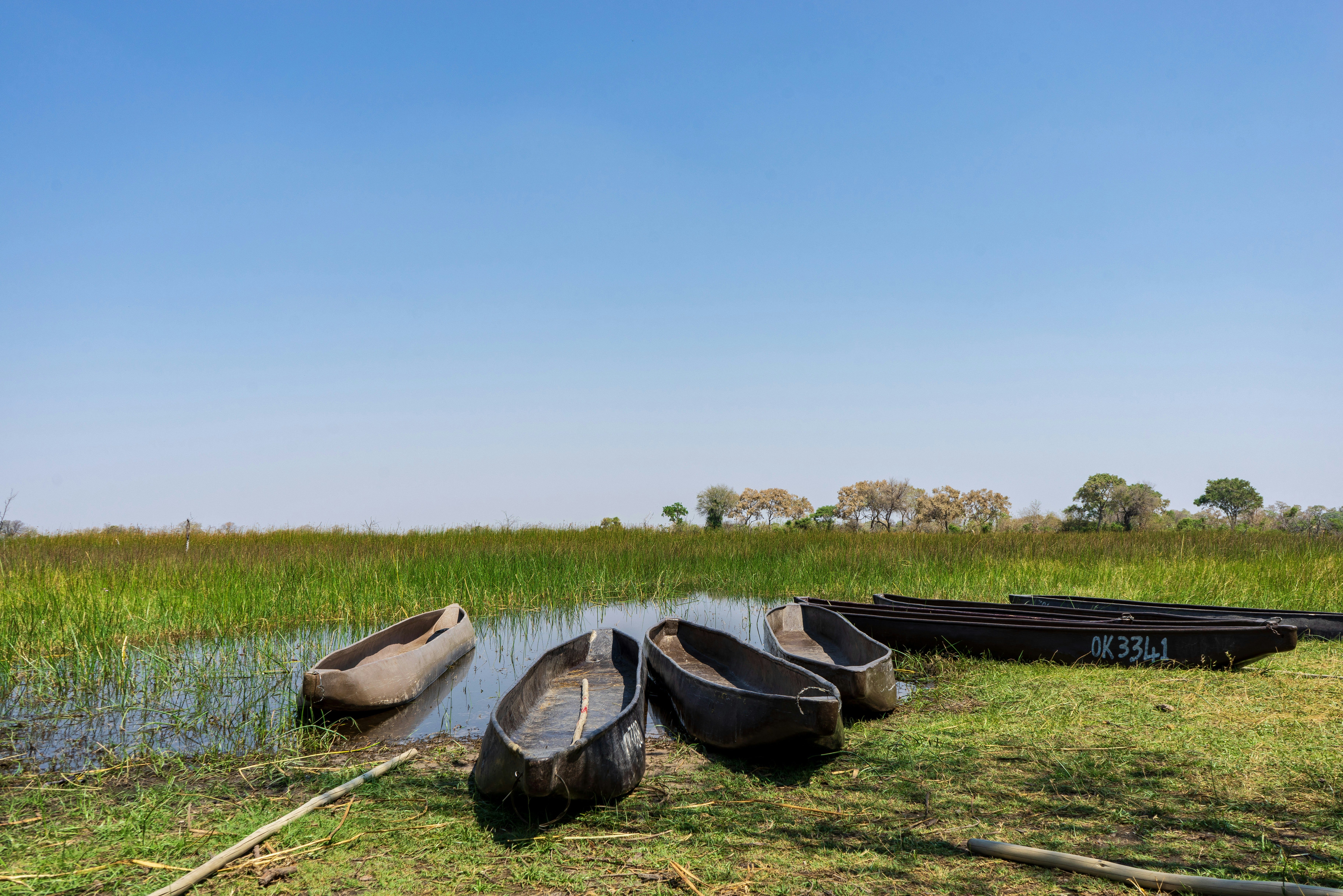
So, without further ado, here’s a bookmark-it-right-now list of a few of my favourites in each country and why you should pay them a visit. But first, a handful of tips for first-timers:
Don’t pack your most colourful outfits. Safari pros wear head to toe sand coloured khaki for a reason. You blend in so as not to alert animals to your presence (including pesky tsetse flies), and when it covers your whole body, protects you from mosquito bites after rainfall.
It can get very cold in these countries when you head out on game drives first thing in the morning – bring a scarf, jumper and gloves, even if you feel silly, you’ll be glad you did.
Be prepared to freak out a little bit when you spend your first night in one of these camps. The noise of the surrounding bush can be overwhelming and occasionally make you think there’s a ferocious animal on your doorstep. Sound seriously carries in these areas and animals are almost certainly further away than you think. Also this is what you came for, so try to relax and enjoy it (but yes, hippos and frogs and lions can make quite the racket).
Don’t turn up with a checklist of animals you want to see – let each day show you its wonders instead. Sometimes learning how to read the bush from your guides or spotting a pack of wild painted dogs or a flock of Burchell’s starlings can be just as incredible.
BOTSWANA
Kanana Camp
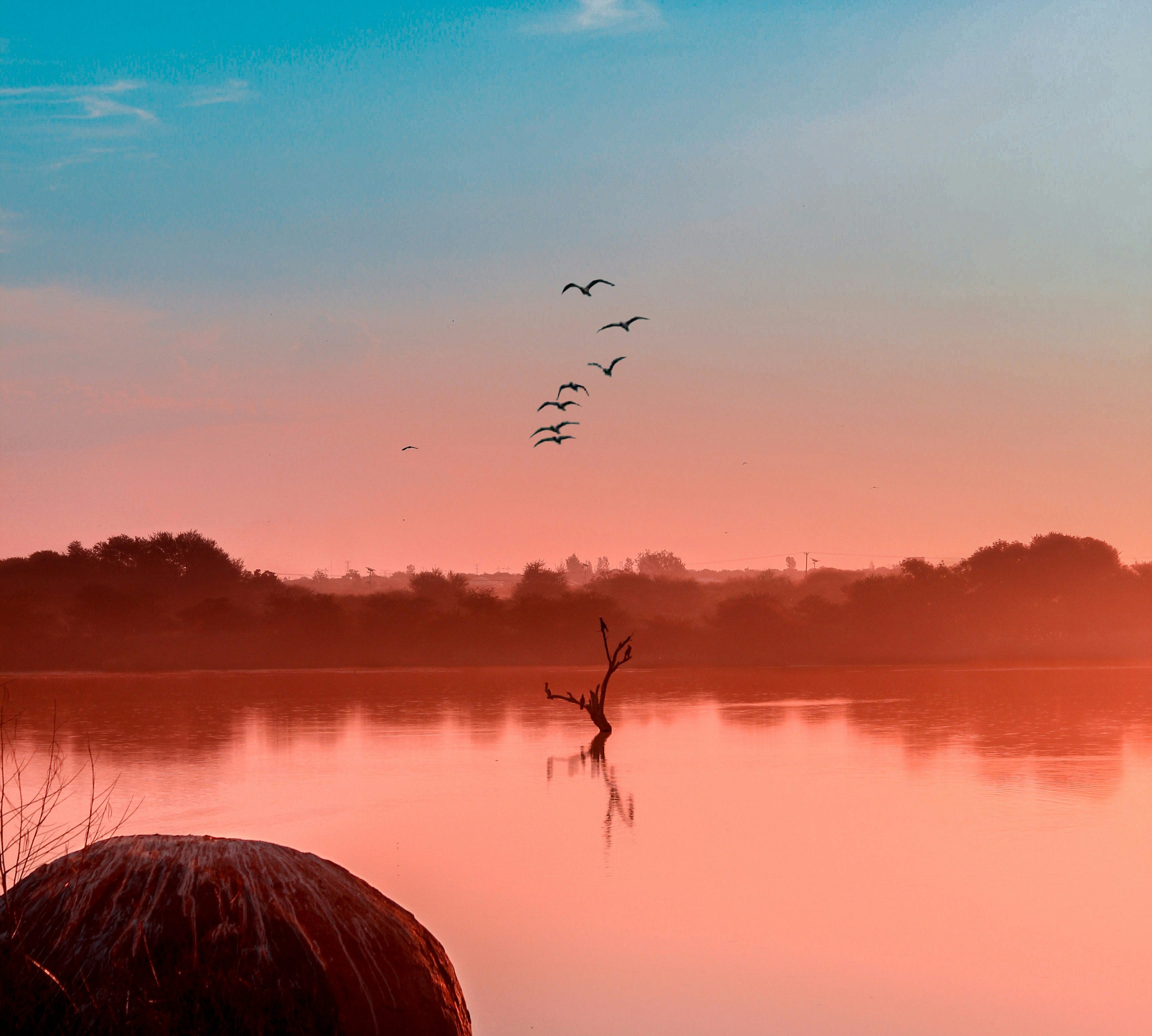
This gorgeous hidden gem of a camp in the Okavango Delta’s Pom Pom concession has just nine rooms and is so off the grid you can only access it by small plane. The real magic? The chance to sleep out on a treehouse platform, allowing you to awake with the sun and watch from above as the animals emerge to warm themselves in the morning light. All the rooms overlook the delta/flood plain and you can expect to encounter everything from baboons and elephants to lions, warthogs and hyena cubs (there’s a den onsite).
Shinde Camp Botswana
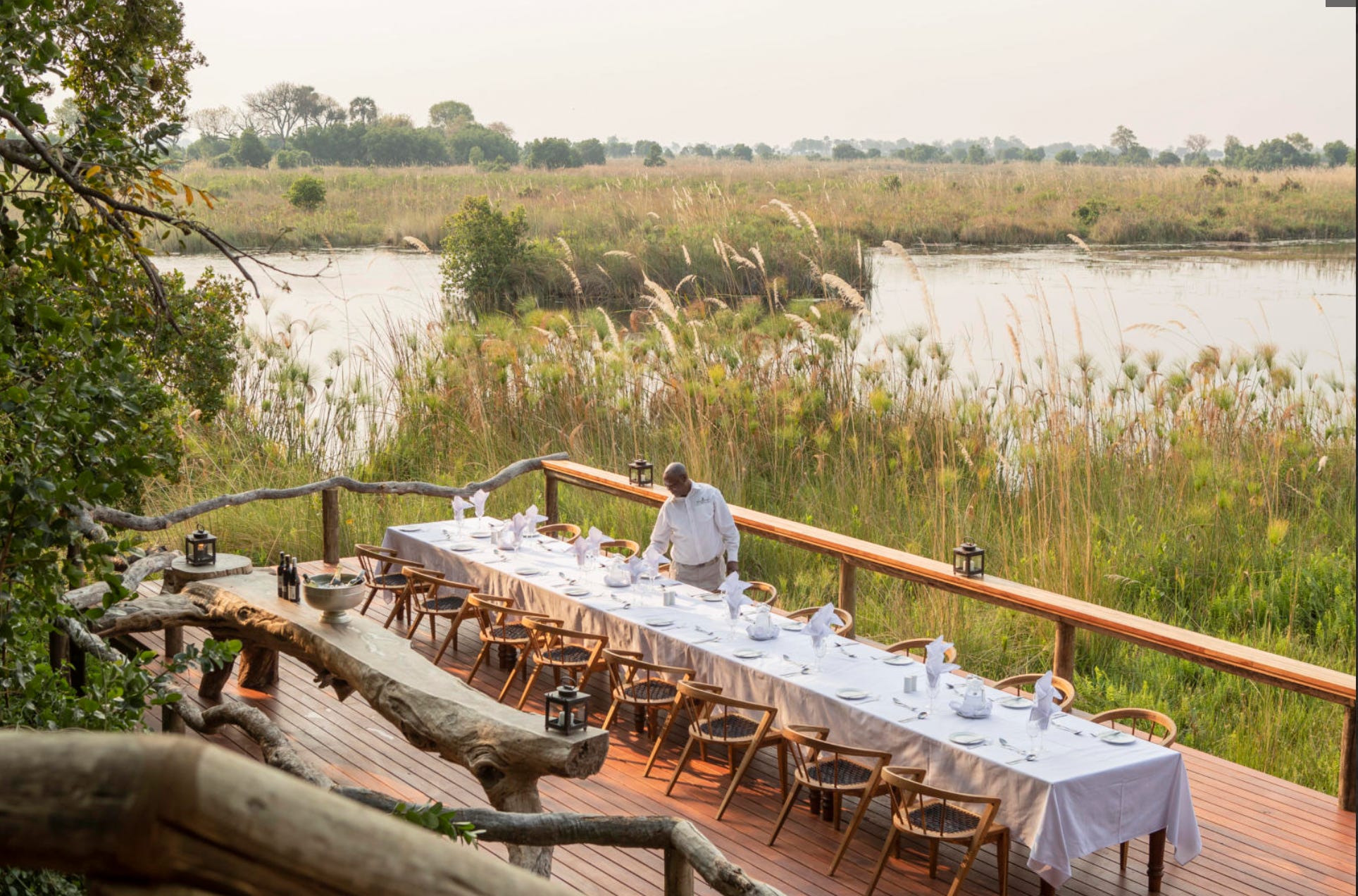
Slightly further northeast is the Shinde Camp. Run by the same outfit (Ker and Downey) and re-done in 2020, it sits on a lagoon surrounded by ebony and mangosteen trees and is perfect if you’re hoping for that Out of Africa vibe. The team here are extremely lovely. Head out with Shinde’s experienced guides to see antelope, wildebeest, lions, leopards and cheetahs. It’s also fab for bird watching.
“No one can imagine the beauty of the scene who has not seen it.”
David Livingstone, The Last Journals of David Livingstone, in Central Africa, Vol. I
ZAMBIA
Sungani Lodge

Located in a remote section of the South Luangwa National Park, Sungani Lodge is as good as it gets. The rooms here are decorated with African furniture made by locals, and the lodge’s resident photographer, Michael Davy, has developed a network of photographic hides that offer unparalleled opportunities for wildlife photography. Just a 20-minute flight from Mfuwe, this is real luxury – and you’ll pay for it too. Think US$1000+ per person per night with a minimum three-night stay. But if you can swing it, it’s worth every penny.
Flatdogs Camp
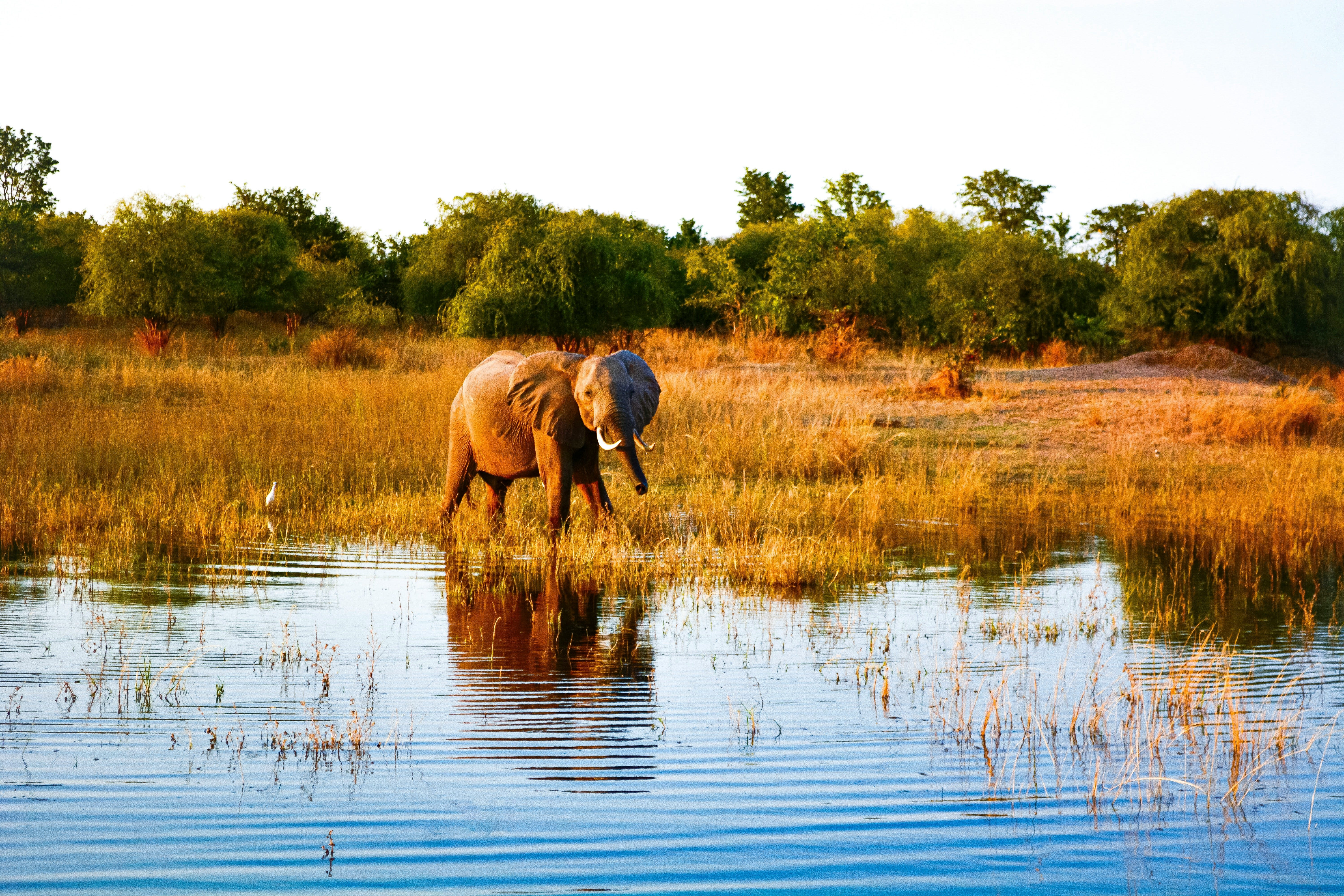
For a lower cost (but still incredible) experience, try Flatdogs Camp, also in South Luangwa National Park. Game drives leave first thing in the morning (6am) and in the late afternoon, and you’ll see leopards, elephants, hippos, lions, bushbucks, vervet monkeys and wild dogs, among other animals. Even better, the camp supports Project Luangwa by donating US$15 per international bed per night, which ploughs money back into the local community.
ZIMBABWE
With Robert Mugabe now firmly in the rear-view mirror, Zimbabwe’s tourism industry has been quietly getting back to business – shedding decades of political turbulence and focusing instead on the remarkable landscapes on its doorstep. It’s a fantastic place to visit some of the region’s top UNESCO World Heritage sites, including Mosi-oa-Tunya (#saymosioatunya), Hwange (Africa's oldest national park), and the Mana Pools.
Victoria Falls River Lodge
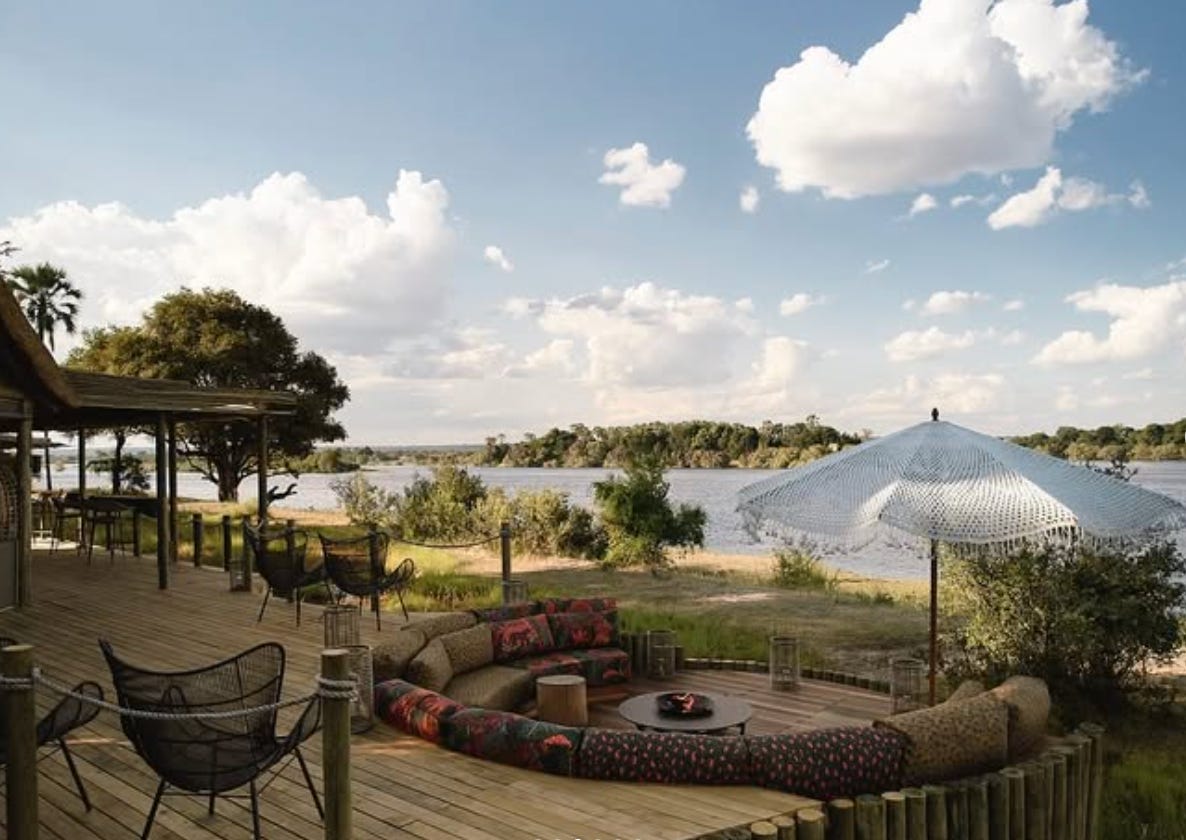
You can hear the mighty waterfall from every room in this lodge, but if you’re feeling brave, book the outdoor Starbed Treehouse. An open private perch with views over the Zambezi, it’s a magical place to wake up each day before heading out to spot the Big Five. Don’t forget your binoculars.
“The noise made by the fall of so immense a body of water is audible at a distance of five or six miles; and the columns of vapour rising from it may be seen from afar.”
- Dr David Livingstone, Missionary Travels, Chapter XVII.
Victoria Falls Hotel
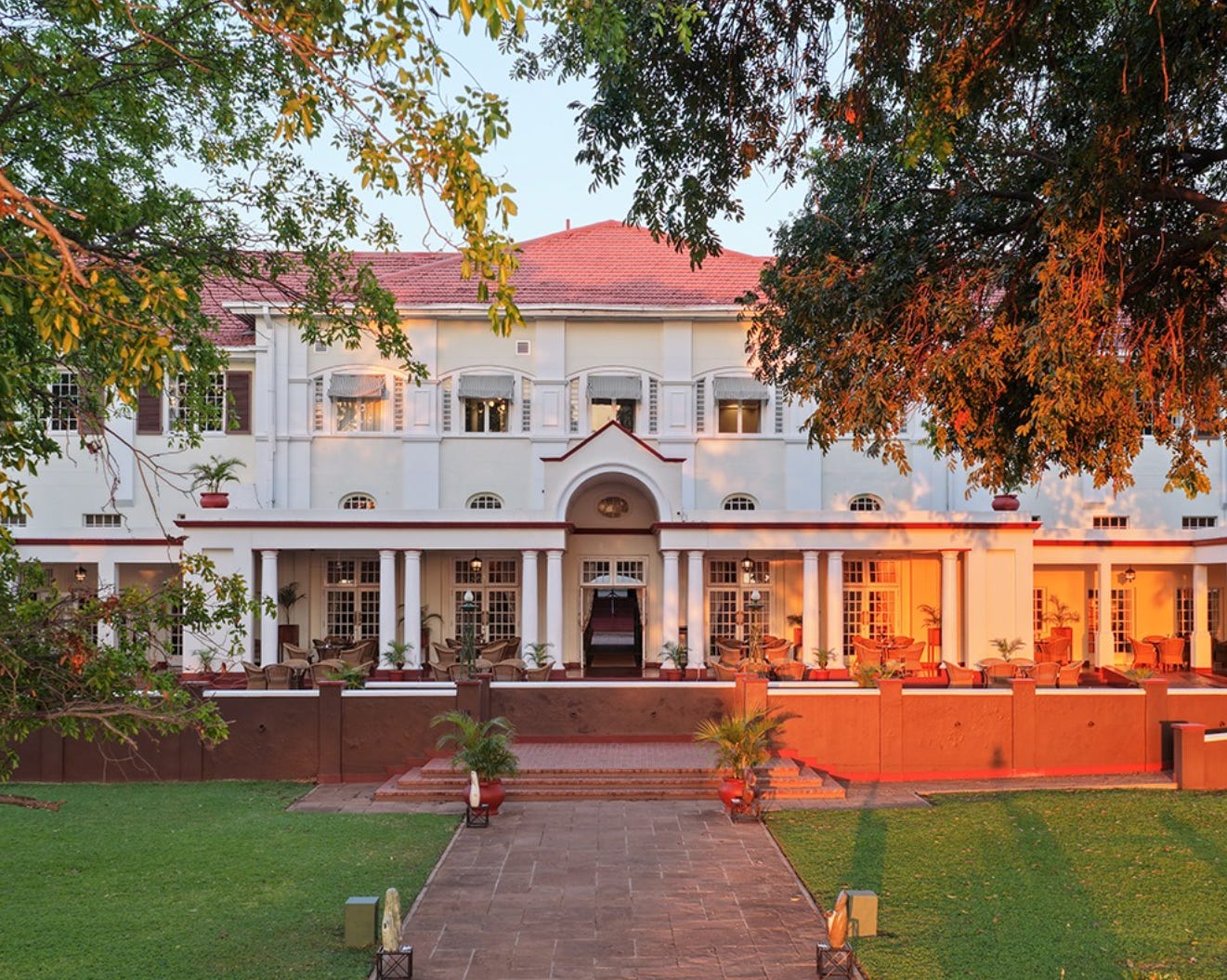
This historic gem was built in 1904 by the British as accommodation for workers on the Cape-to-Cairo railway. The location, right next to Victoria Falls, is amazing. Picture yourself with a G&T overlooking the water, the hotel’s gardens and terraces offering views of the gorge and Zambezi Bridge. With 149 rooms, it’s still a relatively boutique property and drips with old-world charm.
Linkwasha Camp, Hwange Park
Within Hwange National Park, Wilderness Linkwasha has private access to 34,000 hectares of land dotted with lala palms and pans, attracting some of the densest wildlife concentrations on the continent. Nine luxurious tents offer an eclectic mix of contemporary interiors and Ndebele culture. The walls are painted in fresh Ndebele patterns – similar to the homes in nearby communities, often decorated in light pinks, yellows, and browns. Oh, and the food is great here too. Think fire-roasted bread, sadza, and prime Zimbabwean beef with local relish.
What to buy
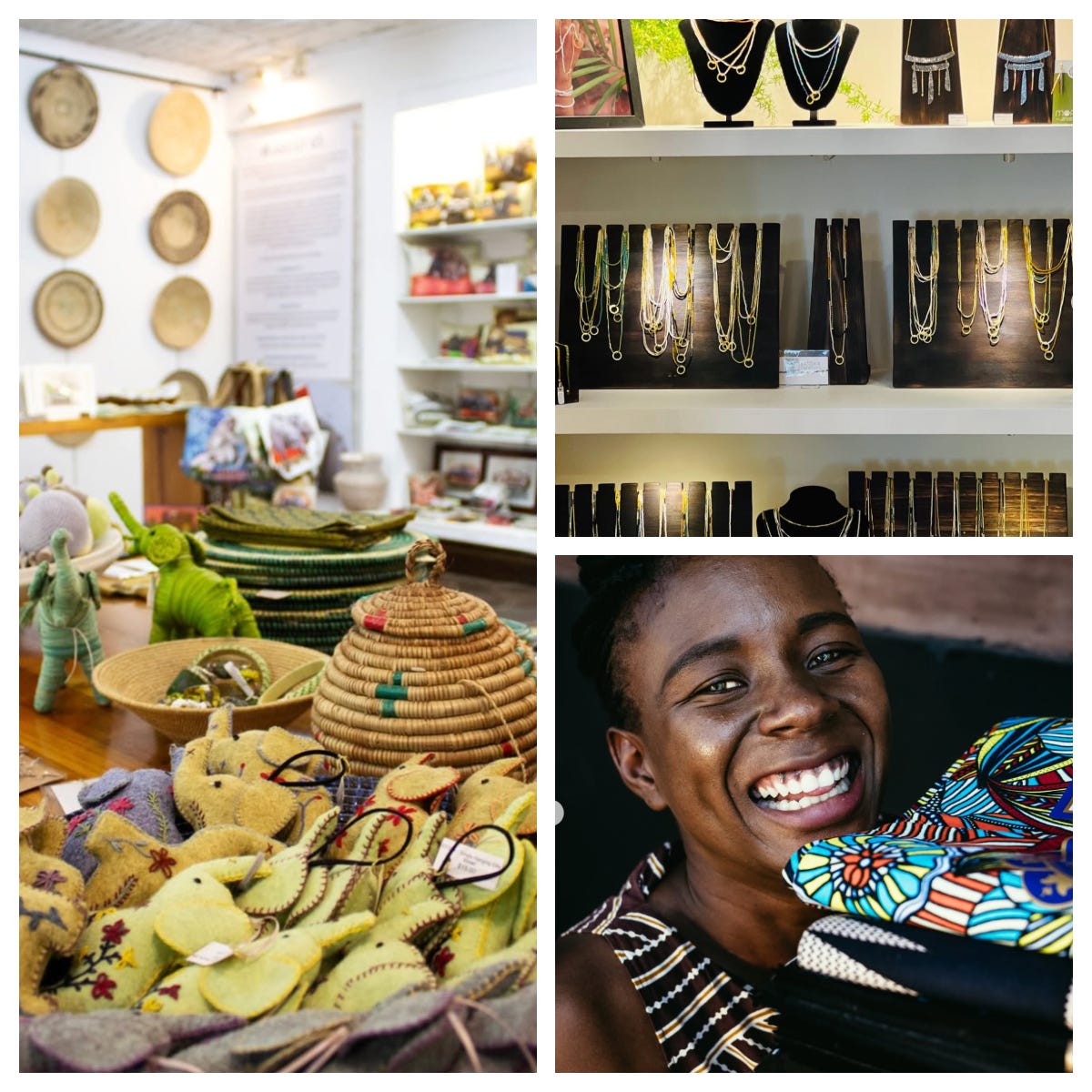
Finally, while you’re in Zambia, don’t forget to buy some Chitenge textiles to brighten up your life back home. I use them as tablecloths and throws for the end of the bed.
Local artisans in both Zambia and Zimbabwe also produce beautiful baskets (great for putting towels, bread or anything you like in).
Zimbabwean stone bead jewellery also makes a great gift. Check out the Elephant’s Walk Shopping & Artist Village near Mosi-oa-Tunya for a great selection of artisanal local crafts. I’m a big fan of Batoka Creatives in particular.
-SK
Episode Transcript
Sarah (00:22)
It is 1871, and you are perhaps the most famous European explorer and author living on the African continent. Despite your reputation, it has been months since anybody back in Europe has heard from you. Nobody knows where you are. News of your disappearance is reported in newspapers around the world, but you are unaware of any of this drama. You have more pressing concerns. You are depressed, alone, sick, and tired.
You sit on the makeshift veranda of a mud hut surrounded by flies, waiting for the air to warm and then cool, just like the day before and the one before that. Suddenly, on the path leading to the village, there is pandemonium. Turning the corner into the clearing is an enormous caravan. Drums beat, muskets fire in salute, and dozens of African porters, bearers, and guards lead a procession with... is that...
Good God, it is an actual United States flag and decorative bunting more appropriate for a Fourth of July in an American town than a Friday at a Swahili settlement on the shores of Lake Tanganyika. You stand up to get a better look. Bales of goods, tin baths, huge kettles, cooking pots, and tents make you think this must be a luxurious traveler, and not one at his wit’s end like yourself. You step out from the shade of your hut. To your shock and slight embarrassment, the parade stops right in front of you.
A white man steps forward, grandly removes his impeccably clean helmet, and utters perhaps the most famous greeting in the history of exploration: “Dr. Livingstone, I presume?”
Jeremiah (02:16)
Welcome to By Their Own Compass. I’m historian Jeremiah Jenne.
Sarah (02:20)
And I’m journalist and lifelong traveler Sarah Keenlyside. Together, we dive into the remarkable lives of those who crossed borders, bridged cultures, and made the connections that built our world.
Jeremiah (02:31)
It’s about the journey and the destination. After all, one person’s frontier is another person’s front door.
The speaker of that famous line was, of course, the journalist Henry Morton Stanley, dispatched by the American newspaper, The New York Herald, on a highly publicized stunt to find Livingstone. Who is Stanley? The short version: he’s a con man and a narcissistic fabulist with a murky past. He’s someone you wouldn’t trust to tell you the time in a room full of clocks. We’ll talk more about him later. We are here to talk about the objective of his expedition: Dr. David Livingstone.
Sarah (03:13)
In Victorian-era Britain, when anybody brought up anything to do with Africa, the question sure to follow was, “Well, have you read what Dr. Livingstone has to say on the matter?” Dr. Livingstone was the world’s leading expert on Africa—except, of course, for the millions of people who had already been living, breathing, and navigating the continent for millennia.
Jeremiah (03:33)
Leaving aside the white guy taking credit for discovering something everyone around him knew was already there, there are many reasons why David Livingstone is one of history’s most fascinating travelers. The man spent three decades grinding it out across the continent, drawing maps that were sometimes useful and sometimes so wrong they made Apple Maps look like the pinnacle of geographic precision. Livingstone also endured the kind of disease, dysentery, and misery that would kill a modern tourist—for example, me—in 48 hours.
Sarah (04:06)
He was sent to Africa to save souls, though in 30 years of preaching, his conversions wouldn’t even be enough to field a proper starting eleven for a Sunday league. But it is his record as an explorer, cultural pioneer, author, and abolitionist, rather than his missionary work, for which he is best remembered today.
Jeremiah (04:24)
Some of his guiding assumptions for how to improve Africa—Christianity, civilization, and commerce—sound a lot like he’s advocating a fourth “C” word: colonization. Yet, Livingstone was different from most of the explorers and Africa experts of his era. He learned local languages. He formed meaningful relationships with communities in central and eastern Africa, and he understood the importance of indigenous knowledge. He was the type of traveler who knew how to ask for directions in the local language and could understand the answer. He went places and saw things that few born outside the African continent knew existed, although he might occasionally name those places after a distant monarch from another country.
Sarah (05:06)
Perhaps his greatest legacy was fighting the East African slave trade. Witnessing firsthand and publishing unflinching accounts of the brutality of slavery, he became one of the world’s most well-known and—for the people who profited from slavery—inconveniently honest abolitionist voices.
Jeremiah (05:24)
Today we’re going to talk about the travels, adventures, and legacy of Dr. David Livingstone. At the end of the episode, we will talk about how you can follow in Livingstone’s footsteps today and plan your own trip to Botswana, Zambia, and Zimbabwe.
Jeremiah (05:48)
David Livingstone was born in 1813 in Blant... Blant… Blant… no. I’m not going through this again. After last year’s Edinburgh incident, I’m claiming unresolved trauma. No more Scottish place names. Sarah, you’re up. I’m tagging you in.
Sarah (06:03)
Oh, you poor, fragile flower…Okay, fine.
David Livingstone was born in 1813, a year after Charles Dickens, in Blantyre, Scotland. It’s the early years of the Industrial Revolution, which is a perfectly ghastly time to be alive, and an even worse time to be a child—unless your idea of playful youth involves 14-hour shifts in a cotton mill. Livingstone was either luckier than most or more tenacious.
Jeremiah (06:34)
Starting at age ten, Livingstone worked 14-hour days in the mill. It was dangerous, monotonous, soul-crushing work. But Livingstone was a stubborn little grinder. He bought a Latin grammar book with his wages and placed it on his machine. Every time he ran past, he snatched a sentence, memorized it, ran back the other way, tied a thread, and repeated the process.
David was preternaturally curious about everything, particularly the natural world. His father, Neil, viewed science as essentially the devil’s snare. Eventually, David found a compromise, telling his father he wished to become a medical missionary. It’s not just science, Father; it’s science in the service of the Almighty.
Sarah (07:20)
By the time he was in his twenties, he was splitting his year between medical school in Glasgow and the cotton mill to pay for tuition. When he finally applied to the London Missionary Society, they almost didn’t take him. They found him unsophisticated. His accent was thick, his delivery was rugged, and he lacked the polished veneer of a proper gentleman. It was his natural talent and tenacity that earned him a spot on the LMS roster.
In 1840, newly ordained and armed with a medical degree, he boarded the ship George, bound for Africa, arriving in Cape Town in March 1841. Africa awaited. To understand where Livingstone was heading, we have to forget the map of Africa we know today. That map is a product of a later era when European powers engaged in savage competition to carve up the continent. In the 1840s, the “Scramble for Africa” was still decades away. For most non-Africans, the interior of the continent was a giant question mark—a blank space on the parchment. Navigable rivers quickly fragmented into a maze of tangled tributaries, some blocked by rapids, others the domain of people who might not be particularly receptive to visitors.
Jeremiah (08:55)
Because, of course, the area that Livingstone would explore—what is now modern-day Botswana, Zambia, Zimbabwe, and parts of South Africa and Tanzania—was far from blank. It was a dense, complex web of politics, languages, trade routes, and shifting power dynamics.
Sarah (09:12)
Livingstone soon discovered that the economy of this region was rotting from the inside out. Merchants operating out of the island of Zanzibar were pushing deeper into the interior, fueled by a voracious global demand for ivory and human beings.
Jeremiah (09:31)
It was a brutal feedback loop. Ivory was one of the most prized commodities in the world, used for everything from piano keys to billiard balls. A single pair of large tusks could be worth more than a working man’s annual salary in London. But African ivory came from a single source, and elephants don’t usually wait on a beach to be loaded onto a ship. You need guides to find the elephants, hunters to kill them, and most of all, porters to carry the ivory to the coast.
Sarah (10:01)
It required a massive amount of human labor. To keep costs down and profits up, merchants used the cheapest form of labor available: enslaved people. Raid a village, round up the population, force them to carry the elephant tusks to the Indian Ocean ports, and then sell both to the highest bidder.
Jeremiah (10:24)
This part of Africa is one of the most beautiful and culturally vibrant regions on the planet. This is where David Livingstone would make his home for most of the next three decades. He began a long slog overland, hundreds of miles, riding in a massive tented wagon pulled by bullocks—the ill-tempered African equivalent of a draft ox.
Ten grueling weeks later, he arrived at Kuruman in today’s Northern Cape province of South Africa. Kuruman was a mission station founded by Livingstone’s mentor and future father-in-law, Robert Moffat. Moffat had filled Livingstone’s head with visions of a vibrant Christian community, but the reality didn’t meet the brochure. It was a small outpost where the strategy seemed to be: wait patiently and hope the Africans convert eventually.
That was not Livingstone’s way. Kuruman was already on the map; Livingstone wanted to go where the map was blank. He headed north into hard, rough country. Between November and January, temperatures soar into the 40s Celsius. A man might go dazed between watering holes. But it wasn’t empty. Livingstone recorded that his straight hair and prominent nose were sources of amusement for the people he met. He took the time to learn how to communicate. He also retained the curiosity of the young lad who liked to look under rocks, except that the amphibians in Africa come in sizes unimaginable in the bogs of Scotland.
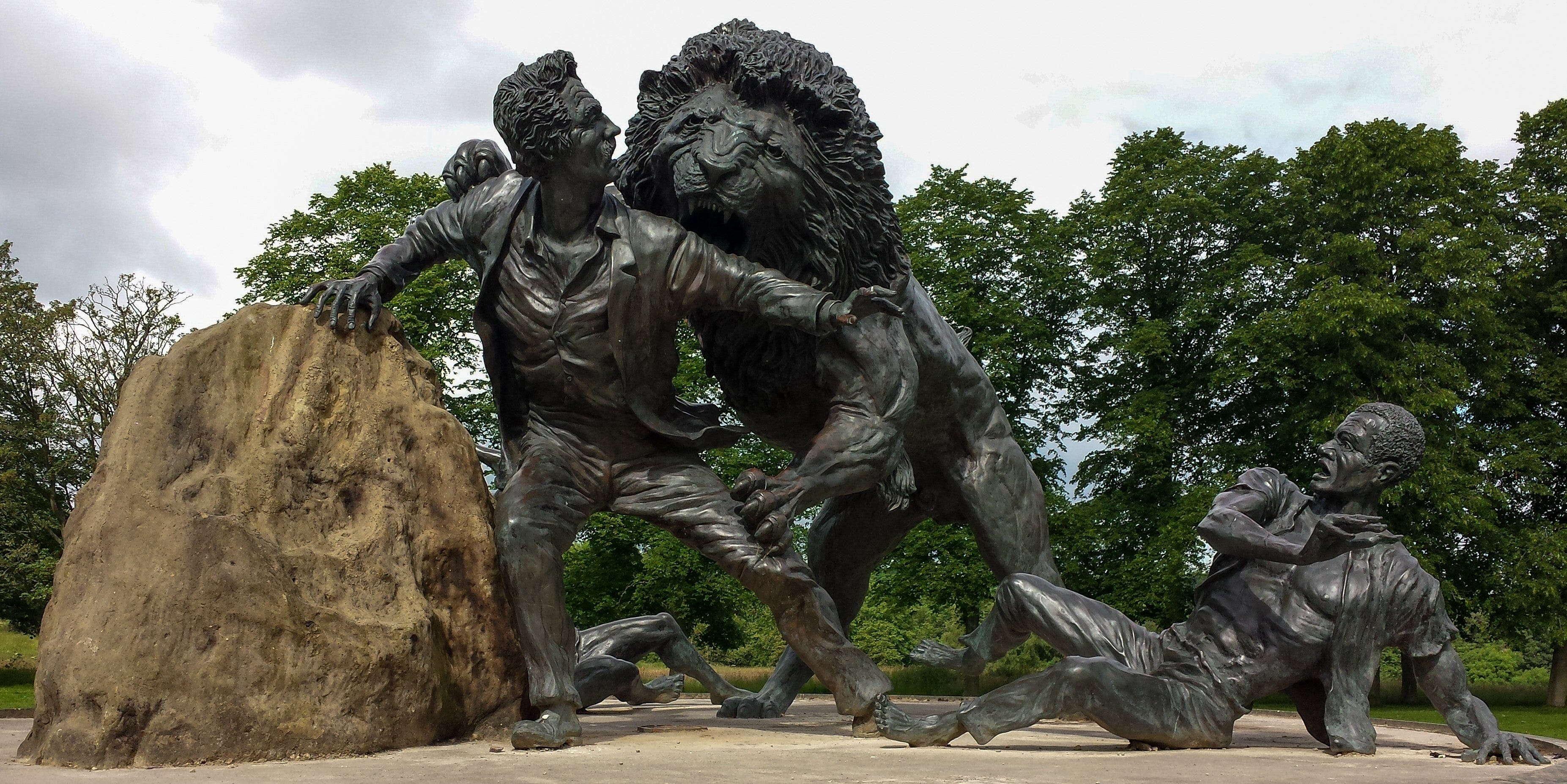
But there was wildlife far more pugnacious than frogs. In 1844, in the Mabotsa Valley, a pride of lions developed a taste for livestock. The locals believed the lions were a curse from a rival village. Livingstone offered his God; the villagers were more interested in his gun. Livingstone and the villagers tracked a massive male lion and cornered it.
Livingstone fired, and the wounded lion turned to face him. Reload times on 19th-century firearms matter a lot. The lion was only distracted when Livingstone’s companion, Mebalwe, tried to shoot it. The gun misfired. The lion attacked Mebalwe, then another man who tried to spear it. Finally, the bullets from Livingstone’s first shot took effect and the beast dropped dead. Livingstone survived, but his left arm was mauled and shattered. He set the bone himself, but it healed badly, creating a false joint that meant he could never again raise his left arm above his shoulder.
He retreated to Kuruman to recover. There he found the only person tougher than him: Robert Moffat’s daughter, Mary. Mary was born in Africa. She spoke the languages better than David did. She was practical, sturdy, and entirely unimpressed by the “romance” of the frontier because she had lived in it her entire life. They married in January 1845.
For a brief moment, Livingstone tried to settle down. He built a house, Mary got pregnant, and their son Robert was born—the first of six children. But Livingstone had itchy feet. He clashed with other missionaries over theology and strategy. After a few years, he decided it was the perfect time for a family getaway. For most families, the risks on holiday are lost chargers or flight delays. Livingstone dragged his wife and small children across the Kalahari Desert. They ran out of water. The children’s tongues turned black from dehydration. Mary was pregnant for most of the trip.
They finally reached the mighty Zambezi River. Livingstone realized the interior was riddled with waterways and decided he must find a path to the coast to open trade. But the cost was high. The children were sick, Mary was emaciated, and yet Livingstone didn’t relent. His tenacity had become an obsession. In 1852, Mary took the children and left Africa for Scotland.
Now freed from his commitments, Livingstone took to the trail. He was done being a stationary missionary. Why wait for people to come to you when you can go to them? Everywhere he went, he was confronted by the cruelty of the slave trade. He had a plan—one that relied less on the Bible than on Adam Smith’s Wealth of Nations. He needed to find a navigable water route to connect the interior to the coast. He dragged his fever-wracked body 1,000 miles west to the Atlantic, only to decide that route was too treacherous. He turned his back on the Atlantic and walked right back into the interior, following the Zambezi all the way to the East Coast.
By the time he emerged at the Indian Ocean in 1856, he had walked nearly 6,000 miles. He claimed it was the first coast-to-coast crossing of the continent by a European. Along the way, he stumbled upon something remarkable. His guides led him to Mosi-oa-Tunya, “The Smoke that Thunders.” He saw columns of vapor rising 1,000 feet into the air. He took a canoe to an island on the lip of the chasm, crawled to the edge, and looked down at a sheet of water a mile wide plunging 300 feet into a gorge. Livingstone called it Victoria Falls.
Sarah (20:05)
Amidst the lion maulings and the renaming of geographical features, I feel we’ve glossed over Mrs. Livingstone. Who marries this man, and why?
Jeremiah (20:18)
I can see what he got from it. She was missionary royalty, the daughter of Robert Moffat. Even with David’s language immersion, it’s a good bet Mary spoke several local languages, certainly Setswana, better than her husband did.
Sarah (20:42)
I understand she wasn’t a socialite dropped into the bush, but my God, the woman went through the wringer. She lived out of an ox cart, perpetually pregnant or breastfeeding, bouncing over rocks for months. That can’t be what anyone would think of as a comfortable existence.
Jeremiah (21:04)
No, and she spent an awful lot of her time in Africa pregnant. She had six children. In a private letter, Livingstone referred to her as “the great Irish manufactory.” It suggests Livingstone, a trained physician, was weirdly oblivious to his part in that process.
Sarah (21:32)
I can see why she took the children back to Scotland. I can’t imagine anyone more suited to survive Livingstone’s ambitions, but he did manage to break her, didn’t he?
Jeremiah (21:44)
The last decade of that marriage wasn’t exactly a Hallmark card. At one point, he planned a third trip across the Kalahari with the kids, and I think finally his mother-in-law put her foot down and wrote him a very direct letter. He relented and decided it was best if Mary stayed in Scotland. He must have been a tough project as a life partner. Mary missed Africa, and by all accounts, she drifted. There were rumors of drinking; she was miserable. She returns in our next section, but spoiler alert: it doesn’t end well for Mary.
Sarah (22:34)
When Mary left Africa in 1852, is that when Livingstone radicalized against the slave trade?
Jeremiah (22:47)
His commitment to abolitionism had been there since his training in London, but after the family left, he had more time for a crusade. He was no longer bound to a mission or a house. He wandered for years looking for his “highway of commerce.” I think he had that “explorer’s curse”—the same obsession that pushes climbers up a hill when their toes are falling off. They just know there is something beyond the horizon and they want to be the first to claim it.
Sarah (24:03)
Was he really the first European to cross the continent on foot?
Jeremiah (24:07)
Maybe. Probably. It depends on how you define “European.” Certainly, African and Arab traders had made that crossing before him. In terms of Europeans, two Portuguese explorers, Pedro João Baptista and Amaro José, accomplished the feat 40 years before Livingstone. Their achievement was documented but ignored in Britain. Livingstone had a hang-up about the Portuguese, partly due to their involvement in the slave trade, and routinely dismissed them as “half-castes” to preserve his claim as the “first white man” to make the crossing.
Sarah (25:14)
Dear me. What happened after he reached Victoria Falls?
Jeremiah (25:19)
He went back to Britain. The roving missionary went from eating locusts over an open fire to publishing a book and becoming a sensation of the Victorian era.
Sarah (25:35)
By December 1856, David Livingstone was the Victorian equivalent of a rock star. The Royal Geographical Society hailed him as the man who “opened up Africa.” His book, Missionary Travels, flew off the shelves—70,000 copies in a few months. But Livingstone was a terrible celebrity; he disliked the crowds. However, he needed the money. He resigned from the London Missionary Society and secured £5,000 from the British government to lead an expedition to explore the Zambezi River.
He believed the Zambezi was “God’s highway,” a navigable route to undercut the slave trade with British goods. In March 1858, he set off with a team of European experts and a steamship, the Ma Robert. It became a shambles. Livingstone, who could walk across a continent with a Bible and some quinine, turned out to be an appalling manager of men—especially Europeans. He was moody and demanding. Adding to the misery, he was wrong about the river; they hit the Cahora Bassa rapids, a wall of water no ship could pass. He had missed them on his first journey by taking a shortcut.
It got worse. In 1862, Mary joined him on the river. Within three months, she was dying of malaria. Livingstone dosed her with so much quinine she went deaf from the toxicity. She died on April 27, 1862. Livingstone buried her under a baobab tree and wept like a child. The British government pulled the plug. Livingstone returned to Britain, but the adulation had cooled. The press now dismissed him as a failure. But Livingstone was incapable of quitting. He returned to Africa alone.
Jeremiah (29:38)
Livingstone wrote: “The forest resounds with singing birds... I shall make this beautiful land better known... it is impossible to describe its rich luxuriance, but most of it is running to waste through the slave trade and internal wars.”
Sarah (30:07)
By 1866, he was done with white companions. He hired only Africans, including his loyal friends, Chuma and Susi. His goal was now to find the source of the Nile. But a porter ran off with his medicine chest. Without quinine, he was defenseless against fever. He spent years wandering through modern-day Tanzania and Zambia as a skeletal figure, sometimes reliant on the charity of the very slave traders he despised. The world assumed he was dead. All that was left was a sick old man obsessed with rivers.
Jeremiah (31:08)
After all of this, I feel compelled to ask: is Livingstone kind of a dick?
Sarah (31:16)
He’s obsessive. I’d hate to be married to him. But he seemed to truly mourn Mary. His love letters to her were moving. What do you think?
Jeremiah (31:37)
I think he found it easier to relate to the people he met on the trail than to his fellow Europeans. It’s a testament to his skills as a linguist and a certain cultural sensitivity that he could build rapport. He established strong bonds with his “attendants”—the fixers and guides. His treatment of them was notable compared to other explorers. Susi, for example, became almost as well known as Livingstone.
Sarah (32:35)
Were they converts? Did he succeed in that?
Jeremiah (32:45)
Probably not. Livingstone wasn’t much of a missionary. He had a complicated relationship with his most famous convert, Sechele. Sechele was a leader with five wives and was the local rainmaker. Livingstone wanted him to give up four wives and the rainmaking rituals. It’s possible Sechele only played along because he needed Livingstone’s guns to fight the Boers. Eventually, Sechele “backslid” when Livingstone found one of the divorced wives was pregnant.
Sarah (34:08)
I think that was his only convert, really.
Jeremiah (34:13)
He had less of a fixation on conversion, which is to his credit. On the other hand, I’m skeptical of “white savior” narratives, and that seems to be Livingstone’s brand.
Sarah (34:45)
The missionary impulse.
Jeremiah (34:48)
Exactly. Even those who adapt to local culture still can’t look past the “Three Cs.” The medicine is great, the abolitionism is amazing, but the goal is still a civilizational shift.
Sarah (35:31)
It’s not that different now. If you replace “civilized” with “developed” and “Christianity” with “democratic institutions,” a lot of missionary writing reads like modern NGO white papers about the Global South.
Jeremiah (35:54)
It really does. And the “original sin” of many of these problems was colonialism—the devastation unleashed by the Scramble for Africa.
Sarah (36:19)
And we know who played a part in that scramble as a hatchet man for King Leopold in the Congo, don’t we? Henry Morton Stanley.
Jeremiah (36:32)
Yes, Stanley. It’s a brilliantly absurd piece of performance art. Stanley says he uttered the famous line; Livingstone can’t be bothered to remember. Stanley knows a headline like “The Great Search for Livingstone” sells more papers than “Checking in on a guy we haven’t heard from.” Stanley was a born huckster, an illegitimate child from Wales who reinvented himself as a hard-charging New York journalist.
While Livingstone wasn’t exactly “lost,” he was dying of dysentery. He had recently witnessed the Nyangwe Massacre, where slavers opened fire on a market crowd of 2,000 people. Shattered, he retreated to Ujiji. That’s when, on November 10, 1871, Stanley and the circus came to town. Stanley provided food and medicine and became an unlikely companion. For five months, they traveled together. It was a rare moment of Stanley not being a truly terrible person.
When they parted, Stanley begged Livingstone to come home and “get your teeth fixed,” but Livingstone refused. Stanley took Livingstone’s journals—proof of the massacre—which shocked the world. Livingstone turned back into the bush on a suicide march into the swamps of Zambia. He never found the source of the Nile. On May 1, 1873, his servants found him kneeling by his bedside. The body was cold. The traveler had finally stopped moving.
Sarah (43:28)
You said they met on November 10, 1871. Not everyone agrees with that date.
Jeremiah (43:36)
They do not. Neither was sure of the exact date due to fever and the nature of expeditions. Let’s say they “bumped into each other” in late October or early November.
Sarah (43:56)
I’ve been to Livingstone’s grave in Westminster Abbey.
Jeremiah (44:02)
His final journey was epic. Susi and Chuma embalmed his corpse and carried it over 1,000 miles to the coast. They identified it by the crushed arm bone from the lion attack. But Livingstone’s heart remained in Africa. Literally. Susi and Chuma buried his heart under a tree in what is today Zambia.
Sarah (44:52)
And what about Stanley?
Jeremiah (44:54)
Stanley became a fixer for King Leopold II, helping turn the Congo into a personal fiefdom and unleashing one of history’s great traumas.
Sarah (45:51)
The area Livingstone explored is now divided between Botswana, Zambia, and Zimbabwe. Botswana is a favorite—famously friendly, low crime, and jaw-droppingly beautiful.
Jeremiah (46:26)
But expensive.
Sarah (46:31)
Painfully so. The government promotes high-value, low-volume tourism. It’s tough to travel there on a budget unless you are comfortable distinguish between a secluded spot and a game trail that brings lions through your camp at 2:00 AM.
Jeremiah (47:32)
Assuming I have the cash, what is the “can’t miss” spot?
Sarah (47:39)
The Okavango Delta. You can stay in high-end lodges that support programs like CLAWS (Communities Living Among Wildlife Sustainably), which uses GPS collars on lions as an early warning system for farmers.
Jeremiah (49:09)
And Zambia?
Sarah (49:13)
South Luangwa National Park is brilliant. It’s famous for “the Big Five”—though rhinos are rare there—and you’ll see massive concentrations of lions, leopards, and elephants. It’s easier to navigate than Botswana due to more local flights.
Jeremiah (50:37)
And what about the city of Livingstone?
Sarah (50:50)
It’s right next to Victoria Falls. You can take a pilgrimage to where his heart is buried, but you’ll need a 4x4 and an experienced driver. Go during the dry season (May to October).
Jeremiah (51:32)
Finally, Zimbabwe.
Sarah (51:37)
Zimbabwe boasts Victoria Falls and Mana Pools. It is also one of the world’s top birdwatching spots. You can combine Zimbabwe and Zambia on a single “KAZA Univisa.”
Jeremiah (52:52)
For those looking for reading, there is the Tim Jeal biography, or Livingstone’s own memoirs, and Stanley’s self-aggrandizing How I Found Livingstone.
Sarah (53:15)
Subscribers get the complete list and travel links. Thank you for joining us. Please tap the follow button; it genuinely makes a difference.
Jeremiah (54:03)
We’ll be back in two weeks with more stories of people who lived life by their own compass.
This article comes at the perfect time. How do you truely manage to choose what to leave out of such rich stories?