



It’s a question that’s puzzled historians for centuries: did Marco Polo really go to China – or is history’s most famous traveller also its greatest liar?
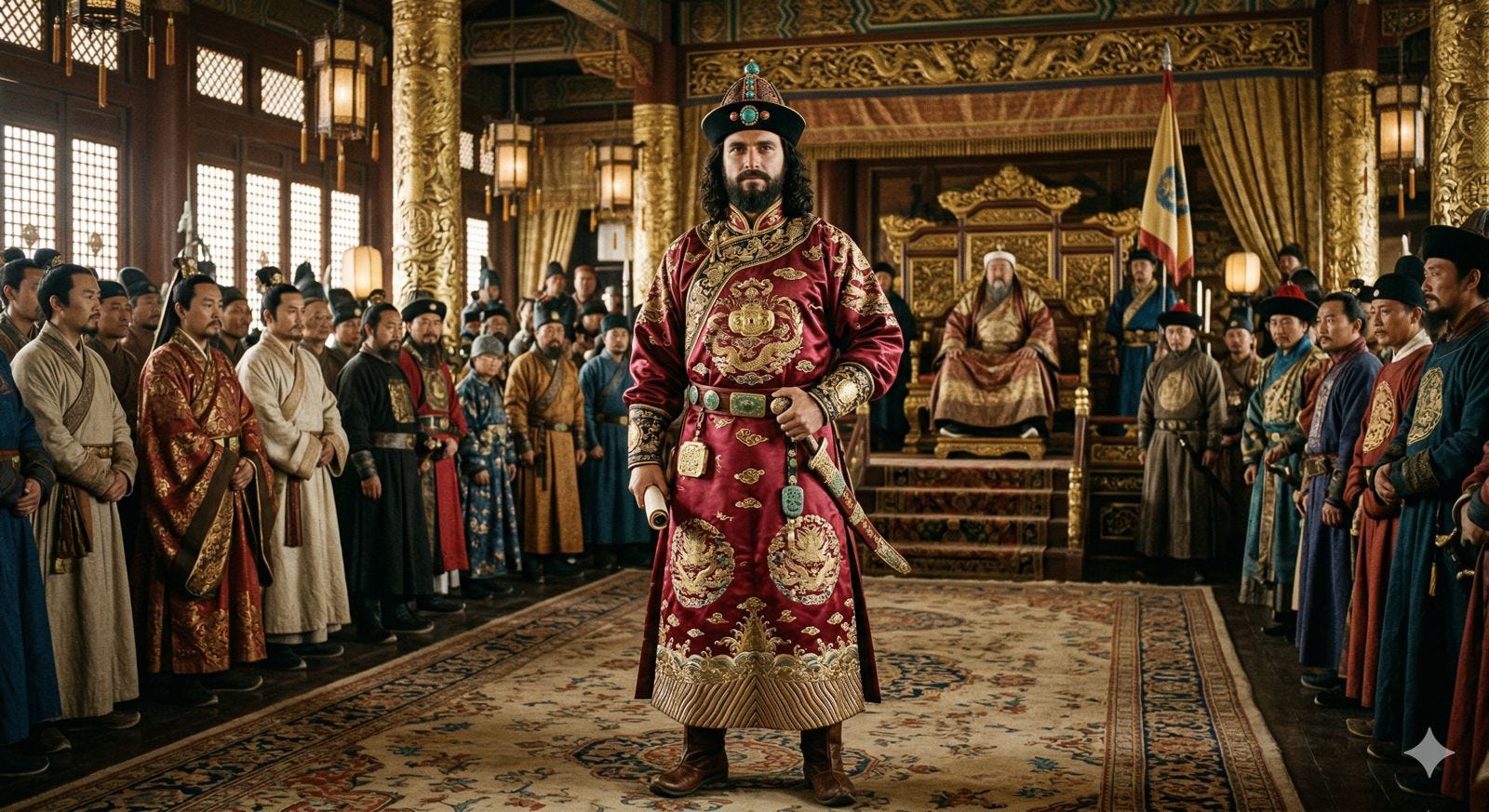
In this episode of By Their Own Compass, Jeremiah Jenne and Sarah Keenlyside attempt to uncover the true story of Marco Polo – the Venetian merchant who left home at 17, spent 17 years at the court of Kublai Khan, and came back with a tale so extraordinary that people still argue about whether it’s true.
Moreover, what was China like during the Yuan dynasty? We examine what Marco Polo actually saw – the cities he visited, the jobs he claimed to hold, the things he noticed, and, intriguingly, the things he didn’t, and ask whether those omissions work for or against him as a reliable narrator. He may not have mentioned the Great Wall, or tea, or chopsticks, but he sure went into detail about the Khan’s legions of concubines and the empire’s impressive postal system, which stretched all the way to Persia.
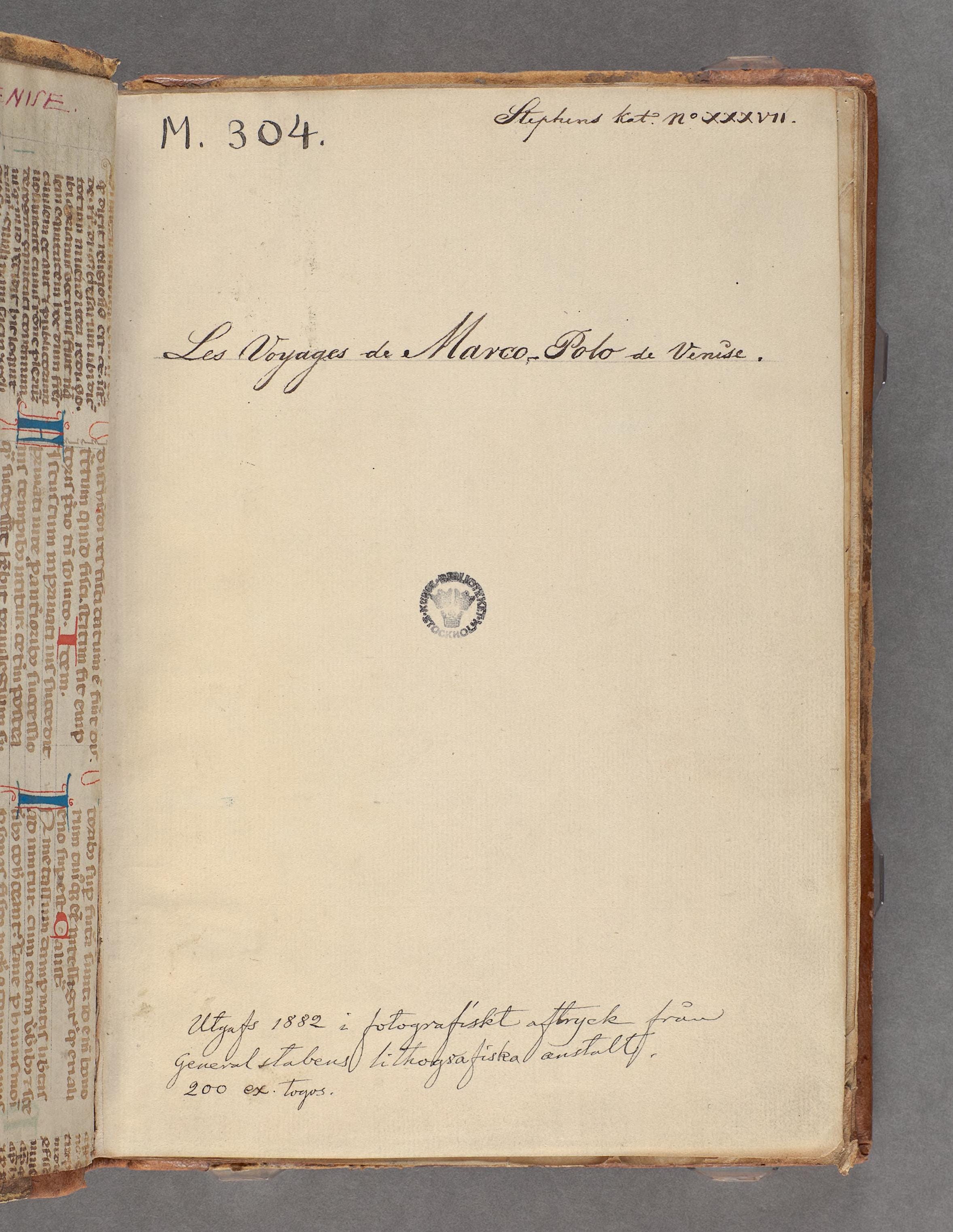
We also look at the famous book that came out of it – The Travels of Marco Polo – dictated to his cellmate Rustichello of Pisa in a Genoese prison, and ask how much of it is memoir, how much is merchant’s log, and how much is a romance writer adding colour for a medieval audience.
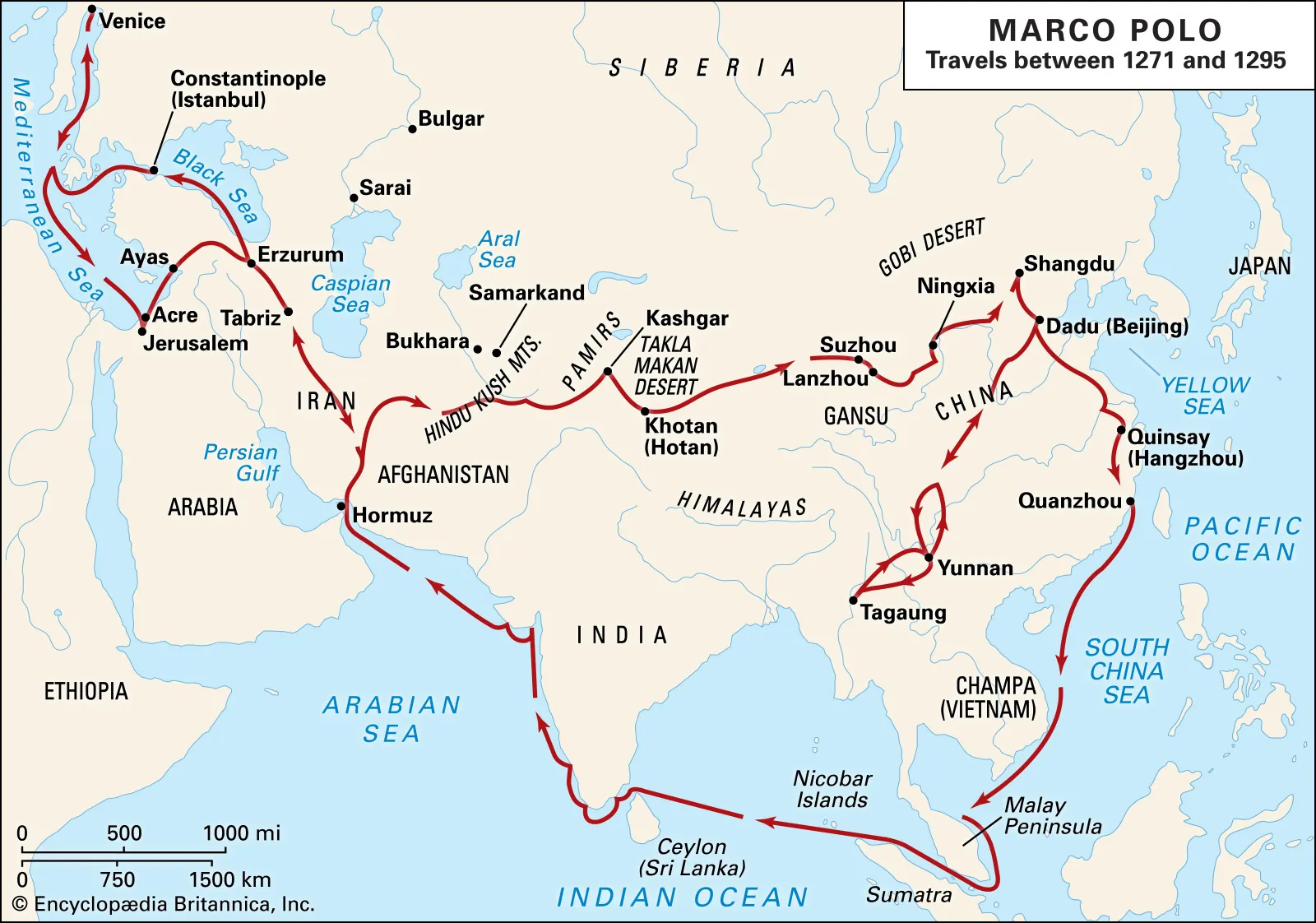
And, as always, we follow the Marco Polo trail in China today – from Beihai Park and the hutongs of Beijing, both built on the bones of Kublai Khan’s capital Khanbaliq, to the West Lake at Hangzhou, the city Marco called the greatest in the world. We also talk about why the bridge outside Beijing that bears his name is known to Chinese people for a very different reason.


